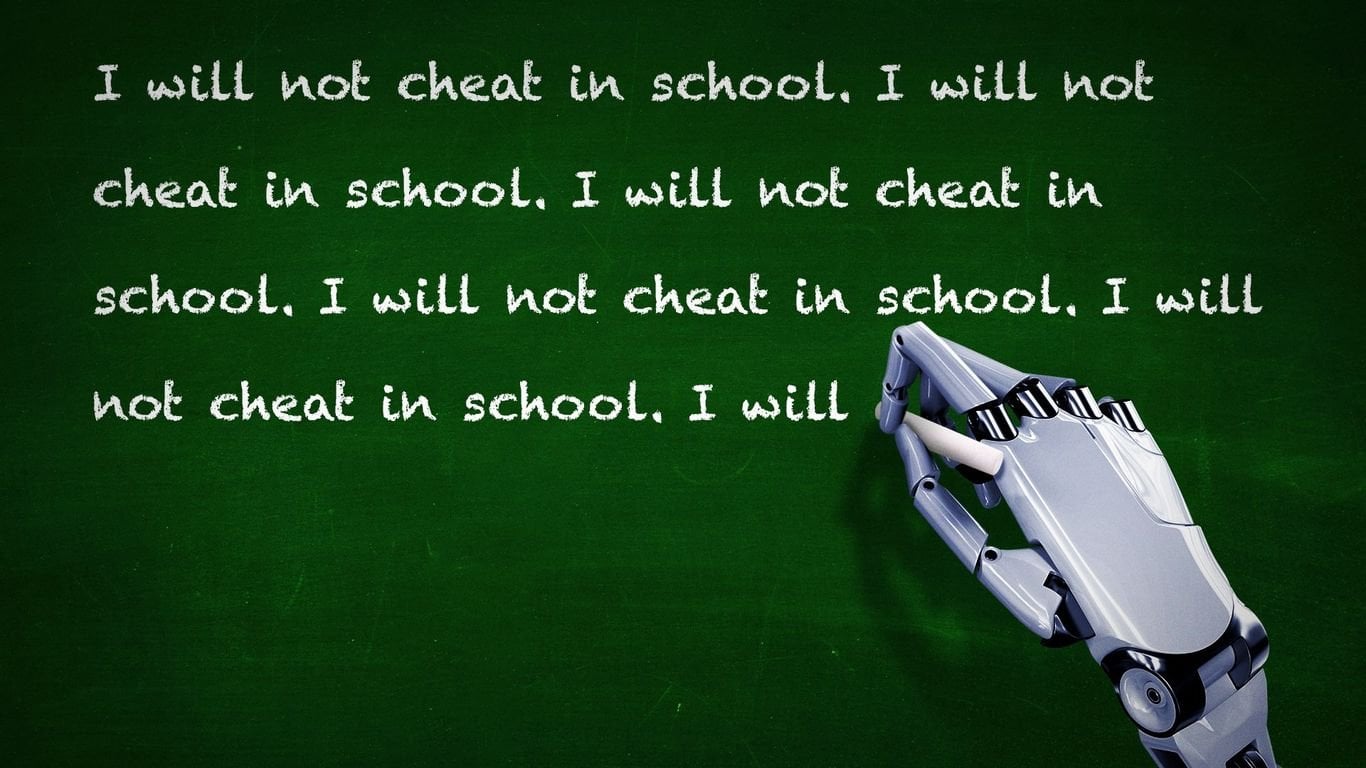
AI cheating surge pushes schools into chaos – Use of generative AI to cut corners and cheat is rampant, but there’s no clear consensus on how to fight back.
https://www.axios.com/2025/05/26/ai-chatgpt-cheating-college-teachers

AI cheating surge pushes schools into chaos – Use of generative AI to cut corners and cheat is rampant, but there’s no clear consensus on how to fight back.
https://www.axios.com/2025/05/26/ai-chatgpt-cheating-college-teachers
18 Comments
It’s not students fault that grading system is numbers obsessed. Getting a high mark is more prioritized than actually understanding and learning the course material. So if cheating is possible you’ll likely do so. Maybe it’s time to reevaluate the system as ai will only grow further. I think this is really when measuring and quantification backfires completely.
‘The other side’ of this article expresses it well. Students be be learning how to leverage AI tools. Creating agents, writing prompts and being able to review output, make adjustments require real language and critical thinking skills.
More than anything it’s a good example of institutions not keeping pace with current technology.
Can we use AI to detect when someone is using AI? Perhaps by comparing what they’ve previously written to suspected AI written papers.
This is not the fault of AI , this is a failure of the system that assigns work that lets you use AI to complete it.
Changing what work they want and what they teach would solve this. Make them show on paper they understand the curriculum and test them in class on that knowledge , problem solved. Oh noes that would require work to do, so it will fail just like the rest of the school system.
I don’t want AI-generated academic assignments to ever be valid.
I do want AI to be used for research purposes.
Why spend hours at the library or online databases if you can ask AI to fetch you all literature relevant to your subject, and also find very specific quotes and sections that pertain to a certain aspect? AI is heaven-sent for information culling.
The solution is obvious and simple: go back to pen and paper.
Don’t allow electronics in the class and make more tests, writing etc during the classes on paper.
This is actually why my sister has been assigning more in class assignments and less homework.
When she does have essays, students are given timelines of when their first drafts are due, when their second drafts are due, and when they muat turn in the final work.
**No homework; bi-weekly, short examinations, both oral, and written.**
If you ask an LLM, it will give you a 2000-word essay that includes specialist training, regulation, using AI to detect cheating, and a couple of billion dollars that comes straight out of the education board’s coffers.
Why does nobody have an answer for this?
In-person tests. Duh.
Why are people treating like this is some grand mystery? I mean, it’s a big problem for online-only colleges. That sort of dream of [MOOCs](https://en.wikipedia.org/wiki/Massive_open_online_course) taking over the world and providing everyone a cheap education. That was completely valid and doable from 1990 to 2023, but the established colleges and people accepting college degrees didn’t want to do that.
At the middle school I work for, one of the teachers has come up with a deterrent. If he suspects that a student used A.I. for a report, he will ask them to give an oral report to the class on the subject. One of three things happens at this point.
1) the student didn’t use A.I. and can do the report no problem.
2) the student did use A.I. but learned enough to still do the report. Not ideal but at least they learned something.
3) the student used A.I. and didn’t learn anything and get to do it again.
So every time he has students write reports they know they may be asked to give that report to the class.
It’s simple – stop doing homework and keep all the work at school. Homework is already disrespectful for students’ time.
On the bright side, AI has become a very decent tutor. I only say decent because the occasions it is wrong. But it has correctly helped me understand a lot of things that I couldn’t find resources online to learn from
I mean the answer is honestly quite straightforward. Just go back to the classical methods of grading. Just have people write things by hand in class; then grade them. Or have exams.
ehh it could be really simple actually, how to “fight back”
and it involves live non-digital tests with _real_ consequences like failing the course or year and being excluded from further education on a specific level.
cheat all you want, but the tests won’t lie, and there you are.
Schools and universities have an incentive to produce – on paper – the most best performing students. That business model is somewhat falling apart now.
Put the machines away. Read, write, speak, listen, play, and be human together.
Going back to pencil and paper is a great first step.
Another article said some college professors are resorting to handwritten bluebooks. In-class essays, like the old days.
But there’s a deeper problem here.
Kids used to be assured of a decent job if they got a high school diploma. Employers knew it wasn’t easy to graduate, and a high school diploma represented a certain level of dedication, intelligence, and grit.
But then they started lowering standards to increase graduation rates.
Then employers started asking for “a college degree” for entry level jobs. They didn’t care what the degree was in. They just, again, wanted a paper that demonstrated a certain level of basic competency and ability to do hard work.
That’s the time I grew up in, they were telling all of us in the 90s that all we had to do was get a college degree and we could get a job. Essentially gatekeeping a decent life behind a degree.
The critical point here is that the degree (and previously the high school diploma), *weren’t actually necessary for most of the jobs*.
This created a disconnect that is now burned into our mindset as a society. We do not value the education itself, we value the job we can get if we acquire the piece of paper.
And since we know the paper is bullshit, we don’t feel bad cheating to get it.
We could all, if we wanted to, watch all of MIT’s lectures online. We could go to the library, watch the videos, check out books, and educate ourselves in a variety of technical fields. For free. We have *full access* to the information itself. We can then apply that information to our lives, we can build and improve things.
But we can’t get a job without the paper.
By valuing the paper more than the education, we have created entire generations of people who don’t value education at all.