
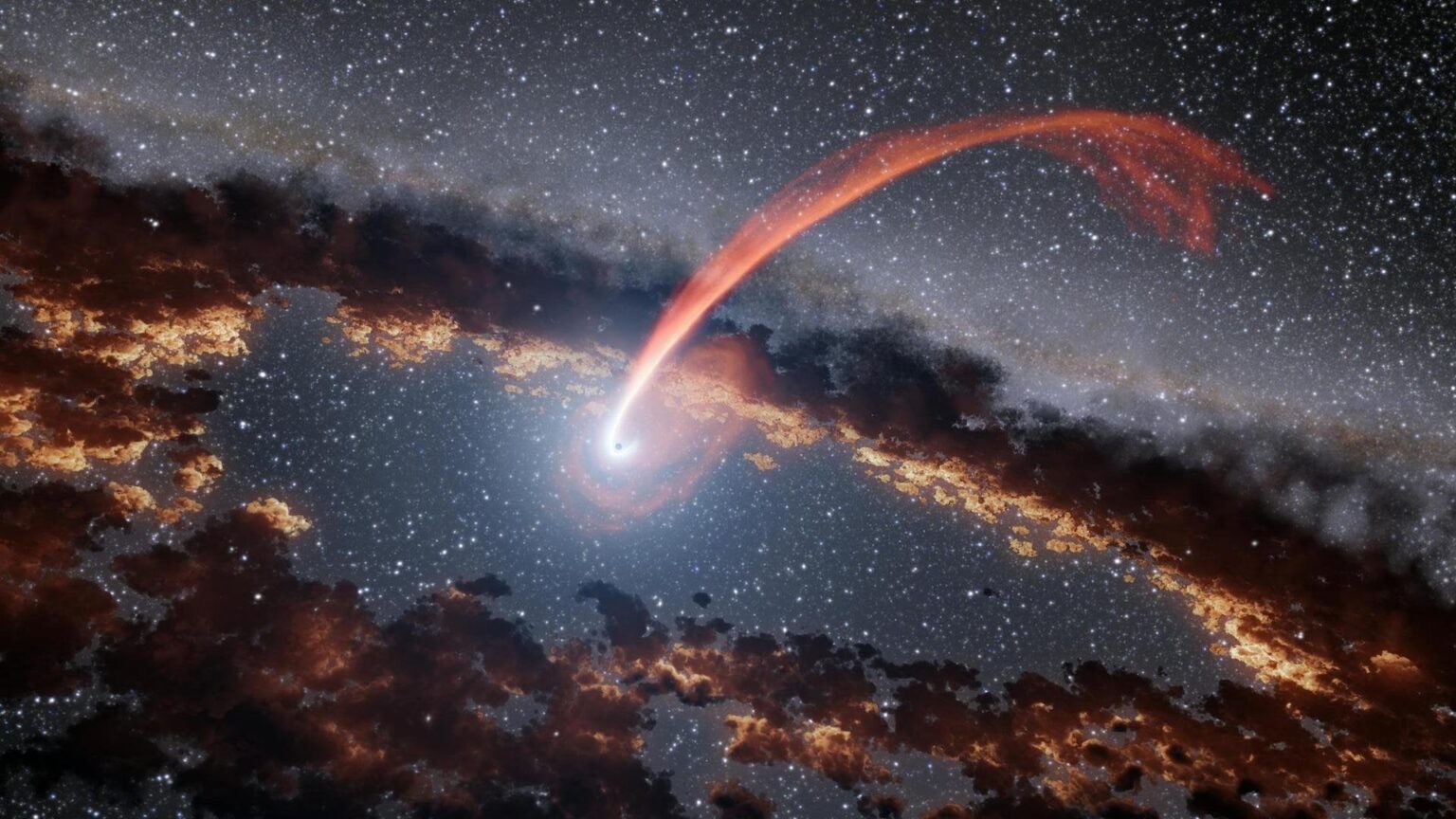
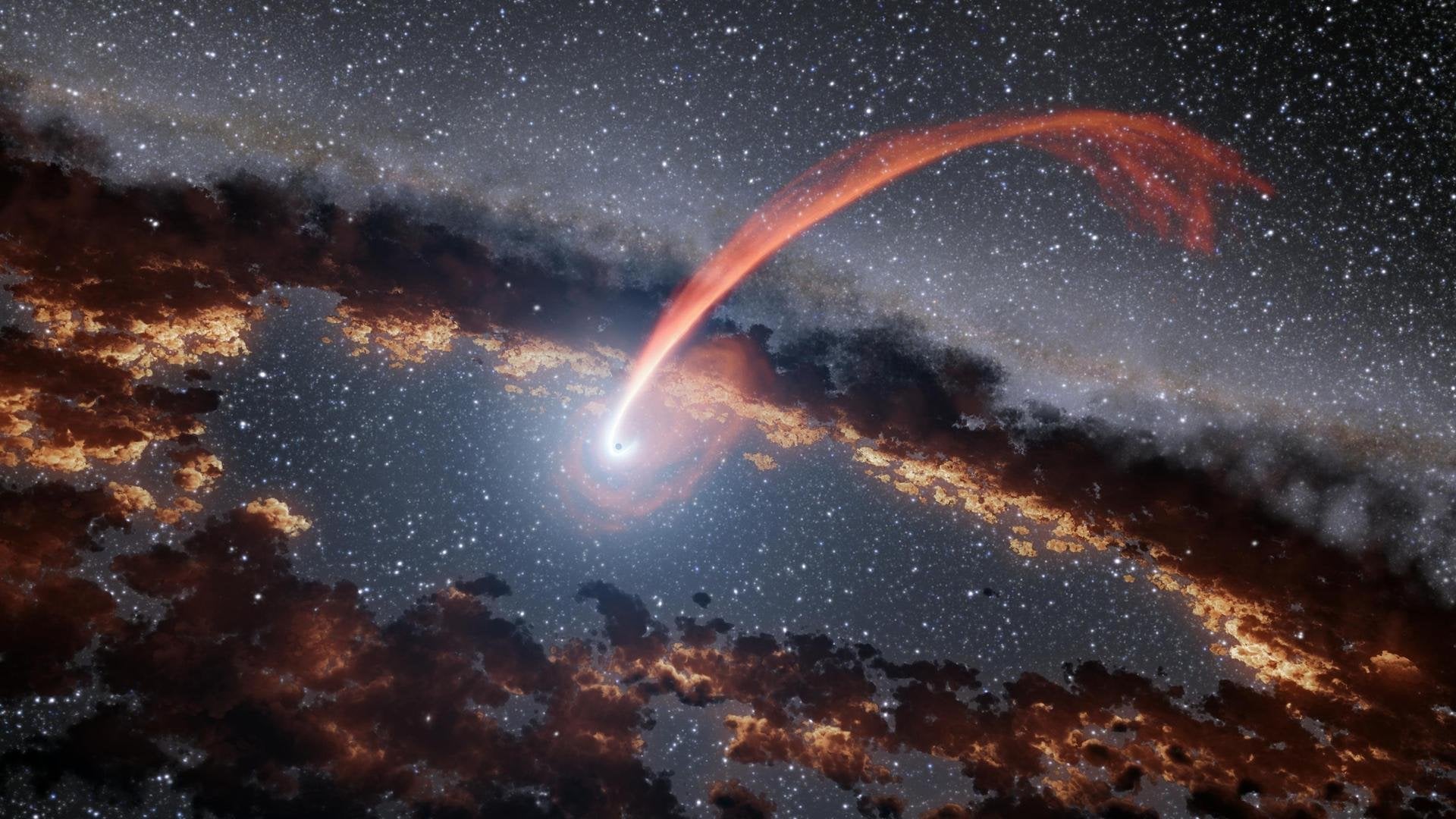
Black holes are invisible to us unless they interact with something else. Some continuously eat gas and dust, and appear to glow brightly over time as matter falls in. But other black holes secretly lie in wait for years until a star comes close enough to snack on.
A new study using space and ground-based data from NASA, ESA (European Space Agency), and other institutions describes three extreme examples of supermassive black holes feasting on massive stars. These events released more energy than 100 supernovae, and represent the most energetic type of cosmic explosion since the big bang discovered so far.
Each supermassive black hole sits at the center of a distant galaxy, and suddenly brightened when it destroyed a star three to 10 times heavier than our Sun. The brightness then lasted for several months.
Scientists describe these rare occurrences as a new category of cosmic events called “extreme nuclear transients.” Looking for more of these extreme nuclear transients could help unveil some of the most massive supermassive black holes in the universe that are usually quiet.
2 Comments
Caught? Like, were they not suppose to spoil their supper?
If your data isn’t secure from being eaten by black holes, you probably want to hire a new security person. 😉