
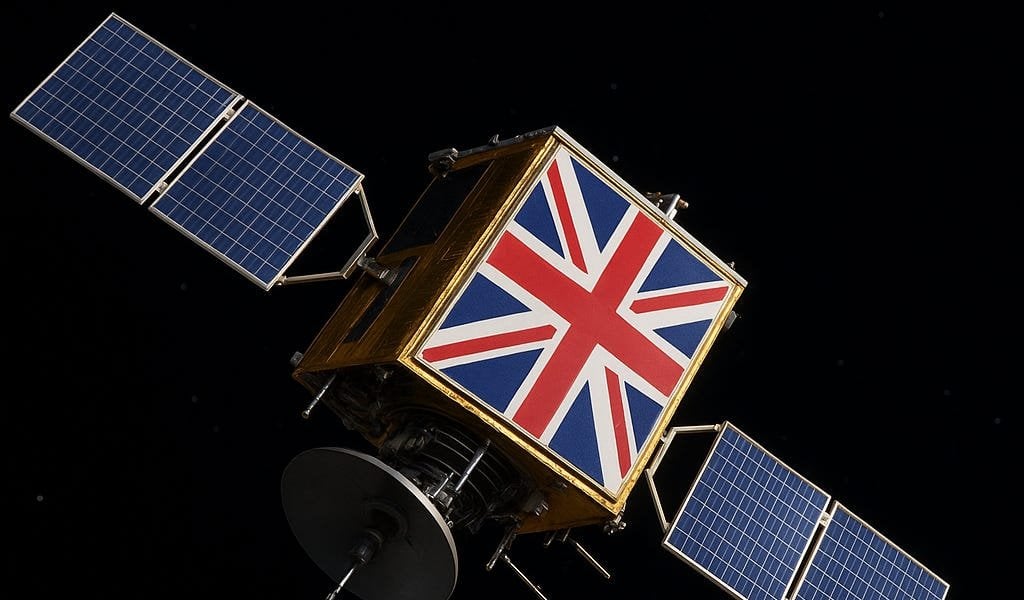
In a world where time and position are the invisible backbone of modern life, from power grids to financial transactions, aircraft navigation to precision farming, the systems that provide those signals are becoming geopolitical battlegrounds.
After Brexit, Britain was excluded from the EU’s Galileo PRS (its encrypted military-grade service), forcing the country to fallback on the American GPS. And yet, India, Japan, and even Australia are investing in regional systems for redundancy and resilience. Meanwhile, the UK has made quiet moves in quantum timing, eLoran, and LEO augmentation, but no dedicated GNSS constellation.
So… should it? Is a sovereign GNSS worth the cost in an age of increasing strategic uncertainty? Or should the UK focus on alternatives like public-private augmentation (à la Starlink), ground-based timing backups, and allied integration?
I wrote an essay exploring this question, weaving together the strategic history, technology, and future direction of Britain’s position in the satellite navigation race. Would love to hear others’ thoughts.
https://open.substack.com/pub/ahamadnooh/p/britains-lost-constellation?r=4ugbyi&utm_medium=ios
11 Comments
Submission Statement:
GNSS is the invisible backbone of everything from Uber to drones, air traffic control, and ATMs to missiles. But what happens when your satellite navigation system belongs to someone else? The UK was locked out of Galileo post-Brexit, and now depends on US GPS. As threats to space infrastructure grow, is it time for nations, even smaller ones, to build their own resilient systems? Could regional constellations, quantum clocks, and LEO augmentation offer a cheaper, smarter future? This piece explores how Britain might reclaim its timing and navigation independence, and what lessons others might draw from that path.
Its not an easily answered question. Id say redundancy is always good. Right up until we hit the already dangerous issue of space pollution.
So idk. Id like to not trap ourselves on this rock trying to have redundant satellites. Id much prefer to have redundant colonies all over the galaxy eventually.
You know we could eventually rejoin the EU then we could use Galileo which we kind of helped to develop.
It should just make whatever deal to use and fund Galileo, it would cost far to much to built their own! Plus the UK and Europe have to be far closer on security
The UK should join the EU and partake of the Galileo system and stop badly re-inventing the wheel.
Quantum based navigation will make GPS redundant anyway.
It’s already been successfully trialled by the Royal Navy.
Any time we try and do something like this on our own we either invest millions/billions into a black hole that never delivers anything, or the end result is utter crap that just gets forgotten. Either way, we’d be better off just spending the money to use an existing solution.
If it’s possible to rejoin Galileo then that’s the best option. If that’s totally off the cards then yes we should have our own. Or do a joint one with Canada, Australia and other commonwealth countries.
It’s almost as if being part of something bigger results in cost saving on large projects. Who knew?
I’ll be *slightly* tongue in cheek with my answer.
The UK has embraced capitalism and the free market so well that more of England, and particularly London, is owned by foreigners than the British.
Eg when there was a recession in the early 2000s, it was said that foreign investors lost more money in the London housing market than the British.
This means that very few foreign governments would want to destabilise the UK because it would be against so many international interests!
This also applies to excluding the UK from international trade, and publicly run services like GPS , Galileo, baido etc.
Sure.
If the EU doesn’t let us back in sufficiently, we should develop our own system.
I’m much less interested in this having a global reach, or military applicability. Any situation where we need that we should be in coalition with other countries who have the wider capabilities.
So an initial system should focus on ground based or aerial supplementation of signals across the British Isles and surrounding seas. Then as satellite deployment gets even cheaper this could be supplemented with LEO or MEO satellites, and those could be increased in numbers or repositioned to cover allies or areas of interest.