
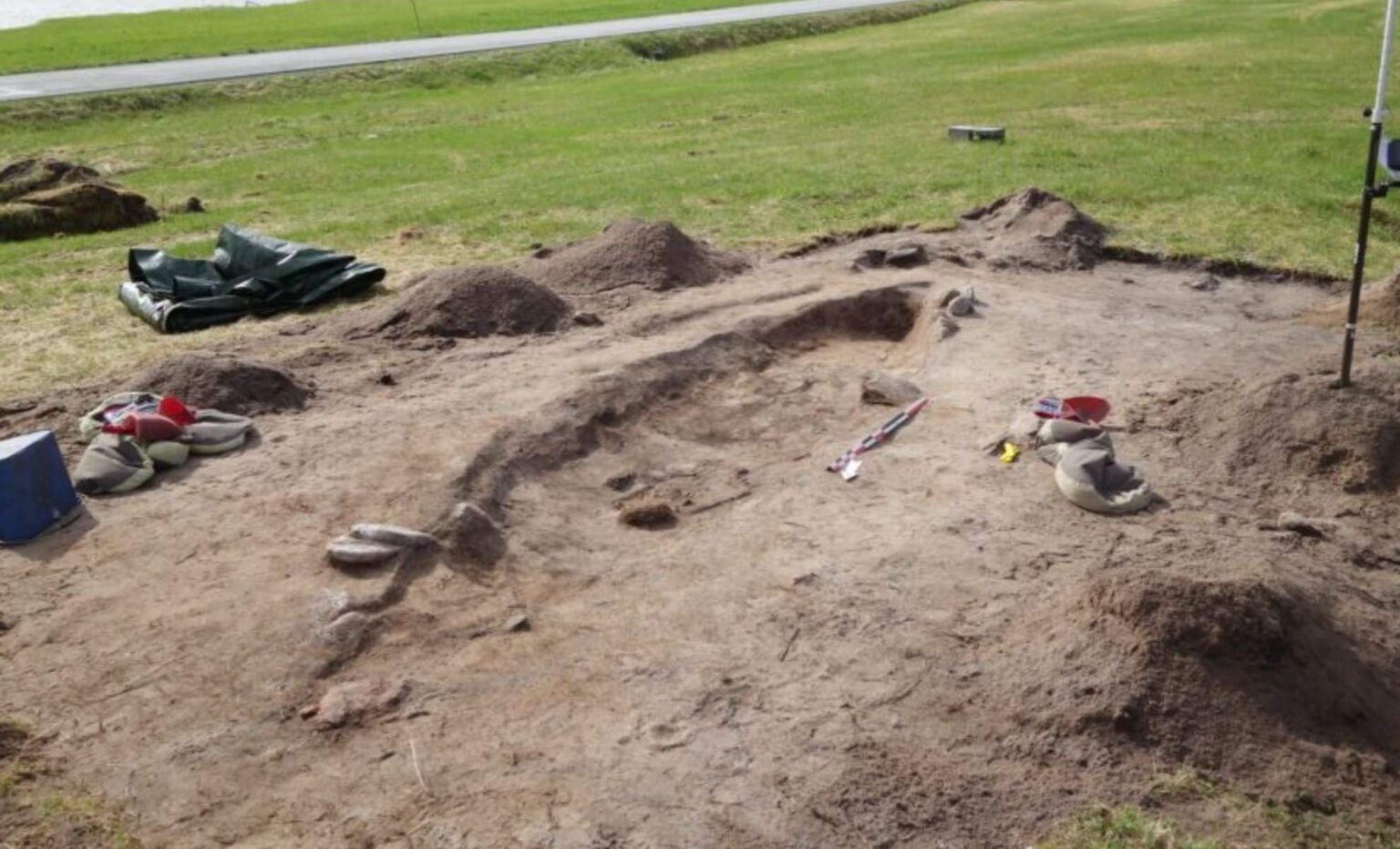
In an extraordinary discovery, archaeologists have uncovered a Viking-era boat burial on the island of Senja, located in northern Norway. The finding sheds new light on the Viking Age’s northernmost frontiers and provides significant insights into the burial practices and culture of this ancient society. The discovery was first made by metal detectorists in 2023, who uncovered brooches and skeletal remains that led to further investigation. The site was formally excavated by archaeologists from the Arctic University Museum of Norway, revealing a 5.4-meter-long boat and several fascinating funerary artifacts.
A Viking Burial in the Remote North
Senja, although rarely mentioned in the Icelandic sagas, was strategically positioned along the Norwegian Sea, making it a vital center for Viking fishing, trade, and maritime activities. This discovery not only highlights the significance of Senja in the Viking world but also offers a glimpse into the burial rituals of this ancient culture. The boat, now only represented by a dark organic imprint in the sand due to the decomposition of the wood, measured 5.4 meters in length. This is a typical size for Viking-era boats used for both sea travel and burial, further confirming the status and importance of the individual buried there.
Archaeologists believe the burial is from around AD 900-950, based on the analysis of the artifacts uncovered at the site. The placement of the boat, along with the items surrounding the body, suggests that this individual held a special place in her community. It wasn’t just the woman’s remains that intrigued the archaeologists, but the rich set of objects placed with her, indicative of her social position in the Viking society.
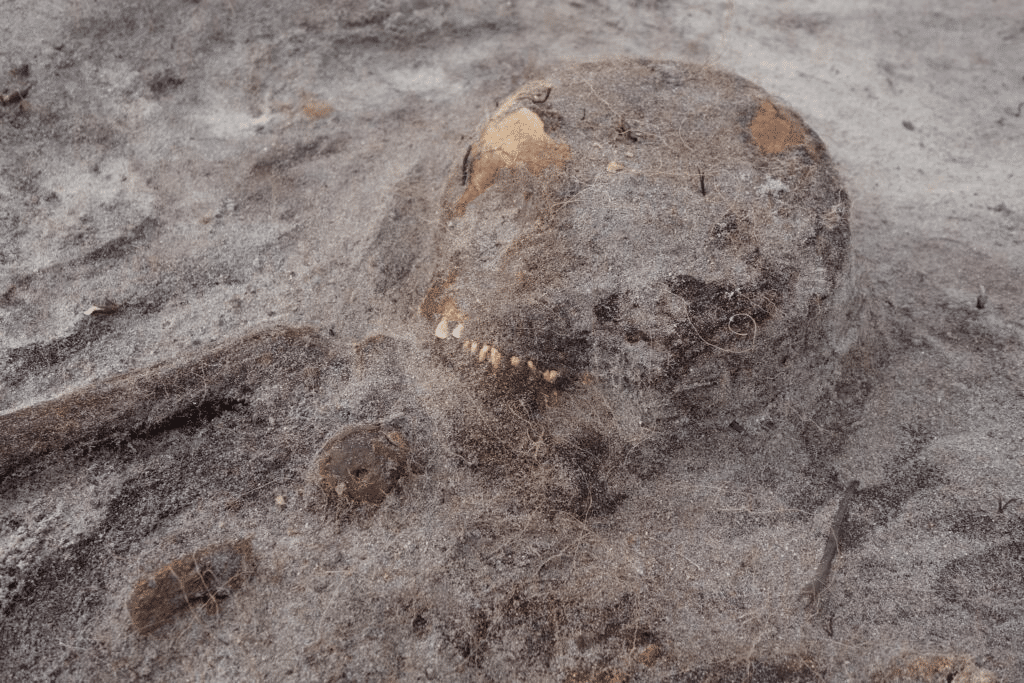 A ring-shaped pendant was discovered near the skull, possibly once attached to an earring or decorative headpiece. Credit: The Arctic University Museum of Norway, UiT (Facebook)
The Personal Touch of a Dog in Viking Burials
A particularly striking element of this burial is the presence of a dog, carefully placed beside the woman’s body. The discovery of animals in Viking graves is not uncommon, but it remains a rare find. “The dog appears to have been placed with great care,” said archaeologist Anja Roth Niemi in an interview with Science Norway. “While dogs in graves aren’t unheard of, their presence is still relatively rare. This one adds a deeply personal touch to the burial.” This statement highlights the emotional connection the Vikings had with their animals, and the dog’s placement next to the woman signifies the affection and companionship the individual likely had with the animal during her lifetime.
Viking dogs were often seen as symbols of loyalty, and they were sometimes buried with their owners to accompany them in the afterlife. This practice reflects the Viking reverence for fidelity, a key virtue in their culture. In this case, the dog might have been seen as a companion rather than a sacrificial offering, emphasizing the bond between the woman and her animal.
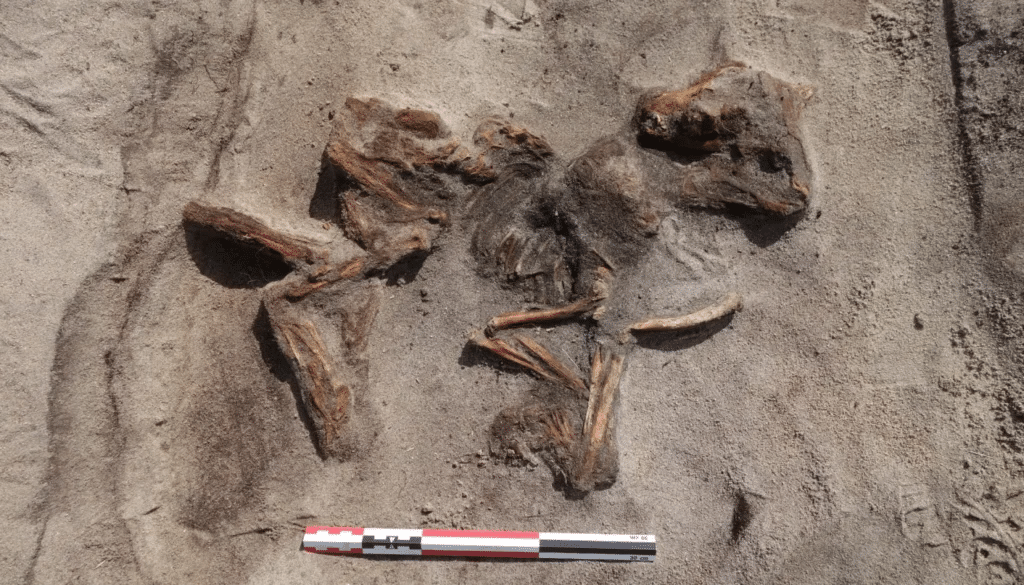 The small dog was carefully placed at the feet of the deceased. While the exact breed may remain unknown, archaeologists believe they can still determine its general type. Credit: The Arctic University Museum of Norway, UiT (Facebook)
Unearthing Artifacts That Tell a Story
In addition to the skeletal remains and the dog, archaeologists uncovered a variety of funerary objects that paint a picture of the woman’s life. Among the items were bone and amber beads, a hoop pendant, an iron sickle, and textile tools, including a spindle whorl and a weaving sword made from whale bone. These artifacts suggest that the woman was involved in the local textile industry, which was an essential aspect of Viking daily life. The weaving sword, made from whale bone, is particularly noteworthy, as it reveals the use of marine resources in crafting everyday tools.
“The presence of these items suggests she was of significant importance within her community — perhaps not at the very top of Viking society, but clearly someone of influence,” Niemi explained. This is an important insight into the social structure of Viking communities, where individuals involved in crafts such as textile production could hold considerable sway within their villages or towns. The discovery challenges traditional views of Viking society by underscoring the importance of skilled women in the cultural and economic life of the Norse people.