
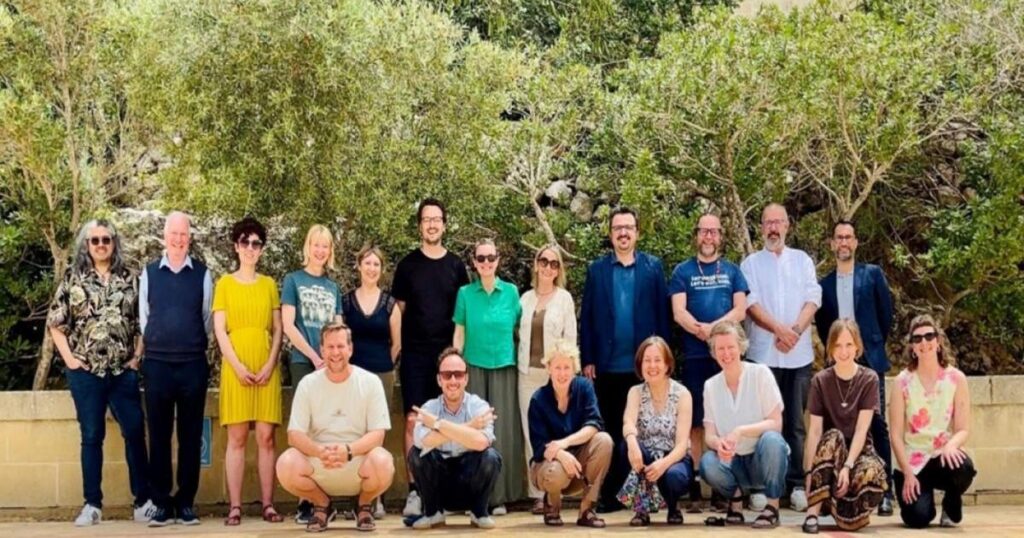
In a significant step forward for ethics education in Malta, two events in May highlighted the growing integration of philosophy for children (P4C) into the national educational landscape.
Organised under the auspices of the University of Malta’s Platform for the Teaching of Ethics in Schools, the events brought together educators, researchers and international experts to explore how philosophical inquiry can nurture ethical awareness and critical thinking in the classroom.
The first event, a public lecture held at the University of Malta, opened with welcoming remarks by the Faculty of Education’s deputy dean, Karen Mugliett, and was chaired by Roger Tirazona, head of the Department for Ethics. The lecture featured compelling presentations from three academics, each offering a unique lens on the transformative potential of P4C.
The author presented ‘Cultivating Ethical Minds: The Role of P4C in Malta’s Classrooms’, highlighting how dialogic teaching and philosophical questioning are being strategically integrated into ethics lessons to foster moral reasoning and empathy.
Erika Galea’s ‘Bridging Minds’ explored the dynamic intersection between educational neuroscience and P4C, illustrating how cognitive development and philosophical exploration can mutually reinforce one another in the classroom.
Meanwhile, Grace Lockrobin’s talk, ‘Beyond the Moral of the Story’, introduced narrative-based approaches that use storytelling as a springboard for ethical reflection and philosophical dialogue. Together, the speakers illuminated the powerful role P4C is playing not just as a teaching method but as a catalyst for nurturing students’ ethical imagination − a quality that is becoming increasingly central to the national ethics programme.
Delegates engaged in robust dialogue around the ethical challenges posed by AI in children’s lives, and how P4C methodologies can equip students to examine, question and respond to technological developments with philosophical rigour and ethical insight
The second event, held on May 24 and 25 at San Andrea School in Mġarr, drew international attention to Malta’s growing prominence in the field of P4C. Organised in collaboration with SOPHIA − the European Foundation for the Advancement of Doing Philosophy with Children − the network meeting, titled ‘Rage Against the Machine?’, tackled urgent questions surrounding the influence of emerging technologies and artificial intelligence on philosophy education.
This hybrid-format event created a lively, inclusive space for both in-person and online participants, encouraging cross-border collaboration and exchange. Delegates engaged in robust dialogue around the ethical challenges posed by AI in children’s lives, and how P4C methodologies can equip students to examine, question and respond to technological developments with philosophical rigour and ethical insight.
These two events underscore a clear and growing commitment among Maltese educators to cultivating a generation of reflective, ethically aware thinkers. By embedding P4C into the ethics curriculum, Malta is not only modernising its approach to moral education but also positioning itself as a forward-thinking hub for innovation in teaching and learning.
In an era marked by complexity and rapid change, these initiatives represent bold, timely steps towards preparing students to navigate an uncertain future with clarity, compassion and critical thought.
Lucianne Zammit is a lecturer at the University of Malta’s Faculty of Education. She coordinates the ethics programme, which consists of the Postgraduate Certificate for the Teaching of Ethics in Schools and the Master’s in Teaching and Learning (Ethics). She is also the coordinator of the Platform for the Teaching of Ethics in Schools.