Millions more to have robotic surgery in NHS plan to cut waiting lists | NHS
https://www.theguardian.com/society/2025/jun/11/millions-more-to-have-robotic-surgery-in-nhs-plan-to-cut-waiting-lists

Millions more to have robotic surgery in NHS plan to cut waiting lists | NHS
https://www.theguardian.com/society/2025/jun/11/millions-more-to-have-robotic-surgery-in-nhs-plan-to-cut-waiting-lists
2 Comments
From the article
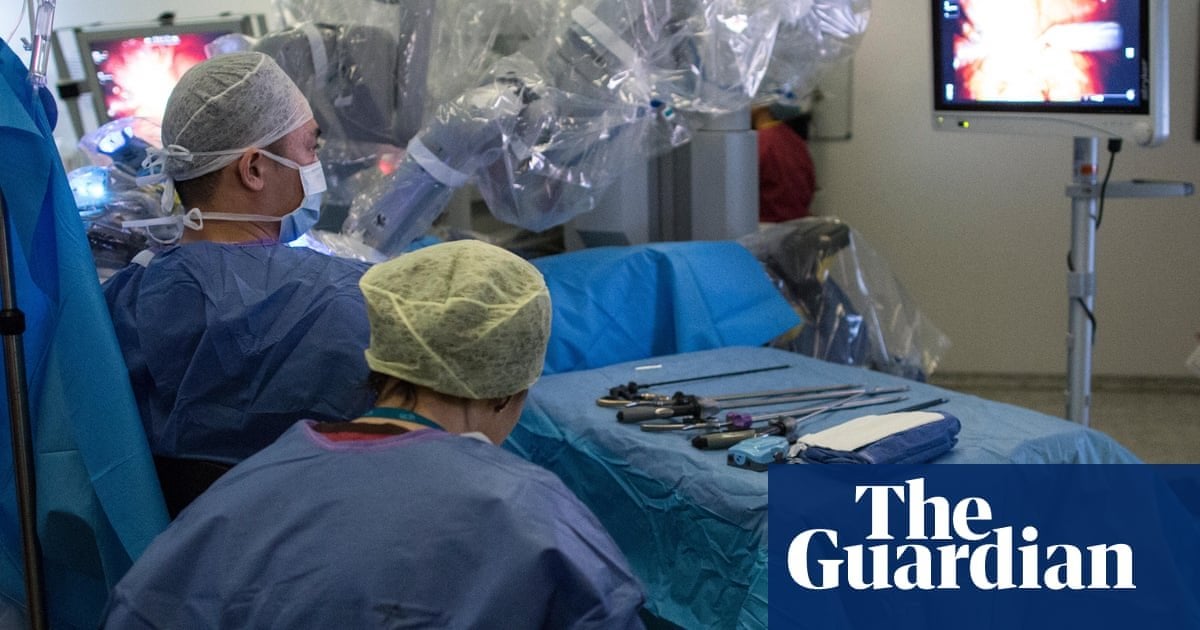
Millions more people will have robotic surgery over the next decade under [NHS](https://www.theguardian.com/society/nhs) plans to slash the huge waiting list for hospital treatment.
The move will mean a significant expansion in how often surgeons use robots when treating people for cancer, hysterectomies and joint replacements, as well as in medical emergencies.
The number of patients undergoing robot-assisted surgery is due to rise from 70,000 to 500,000 a year by 2035, the head of the NHS in [England](https://www.theguardian.com/uk-news/england) will announce on Wednesday.
“The NHS has pledged to return to shorter elective waiting times by 2029 and we are using every tool at our disposal to ensure patients get the best possible treatment.
IF this actually happens and implemented effectively than this would be a HUGE positive development.
Best case scenario, more people could get the necessary surgery that they need immediately without having to wait, and that some part of the NHS budget could be freed up to be invested into things like cancer, dementia or Alzheimer cure research.
Worst case scenario, it ‘only’ as the paper says, “speed up the number of procedures the NHS can do, but it also means better outcomes, a faster recovery and shorter hospital stays for patients” Which is still a positive.
Pray that this work, boys, be a shame if this is only a ‘mention once then never seen again article’.