
5 things in Trump’s budget that won’t make NASA great again | These are things NASA should be doing if it’s going to be reborn as an exploration agency.
https://arstechnica.com/science/2025/06/5-things-in-trumps-budget-that-wont-make-nasa-great-again/
5 Comments
From the article: If signed into law as written, the White House’s proposal to slash nearly 25 percent from NASA’s budget would have some dire consequences.
It would cut the agency’s budget from $24.8 billion to $18.8 billion. Adjusted for inflation, this would be the smallest NASA budget since 1961, when the first American launched into space.
The proposed funding plan would halve NASA’s funding for robotic science missions and technology development next year, scale back research on the International Space Station, turn off spacecraft already exploring the Solar System, and cancel NASA’s Space Launch System rocket and Orion spacecraft after two more missions in favor of procuring lower-cost commercial transportation to the Moon and Mars.
* Zeroing out nuclear propulsion. The Trump administration proposes to cancel a nuclear thermal propulsion demonstration called DRACO. This prototype mission was a partnership between NASA and the Department of Defense, and officials were already scaling back its goals before Trump took office. The Pentagon’s research and development agency, DARPA, pulled out of the project earlier this year. However, this budget goes a step beyond simply canceling a single mission. It eliminates all of NASA’s funding for nuclear thermal and nuclear electric propulsion, widely thought to be an enabler for more efficient transportation of heavy cargo and crews to Mars and other deep space destinations. For context, NASA’s 2024 budget allocated $117 million for nuclear propulsion work, an increase from $91 million the previous year.
* Terminating operating missions. The budget request would cancel at least 19 NASA science missions that are currently operating in space. Some of these missions are quite old, with improved replacements already in space or soon to launch. We won’t list them all, but we will highlight a few missions on the chopping block. The Trump administration proposes terminating the Juno mission, which is the only spacecraft currently orbiting Jupiter as well as the New Horizons probe that visited Pluto a decade ago and is now blazing a trail toward interstellar space. The budget would also turn off the OSIRIS-REx spacecraft, which is on an extended mission called OSIRIS-APEX targeting a rendezvous with asteroid Apophis after its close encounter with Earth in 2029. The White House also wants to decommission NASA’s Chandra X-ray Observatory, a flagship telescope studying the exotic environments around black holes and supernovas. Chandra is one of NASA’s most expensive robotic science missions to operate, but it’s in a class of its own with no comparable mission slated to launch until at least the late 2030s. In Earth science, NASA would lose funding for missions that monitor greenhouse gas emissions. Collectively, these missions represent more than $12 billion in investment from US taxpayers and took a combined 180 years to build, according to the Planetary Society. An assessment by Ars concluded the NASA-led operating missions slated for cancellation cost the agency less than $300 million per year, or between 1 and 2 percent of NASA’s annual budget.
* Sticking it to the Europeans, again. This budget proposal would end US contributions to support Europe’s Rosalind Franklin Mars rover, an agreement that the two space agencies completed just last year. Rosalind Franklin is the centerpiece of the European Space Agency’s multibillion-euro ExoMars program, and what a saga it has been. NASA was ESA’s original partner on ExoMars, but the Obama administration withdrew from the program in 2013. ESA turned to Russia to provide a lander and launch vehicles for the two-part ExoMars program. The first ExoMars orbiter launched on a Russian rocket in 2016, but the rover faced more delays, and ESA finally ended its partnership with Russia after the invasion of Ukraine in 2022. The fallout from the war in Ukraine brought NASA and ESA together again, with the US government committing to paying roughly $339 million for the Rosalind Franklin rover’s launch on an American rocket, along with throttleable descent engines and radioactive heaters for the Mars landing craft. Now, the ExoMars mission appears to be on ice once more. ESA is one of NASA’s closest partners in space exploration, and Trump’s proposed budget would also end US contributions on a number of other European-led missions, including the Envision spacecraft in development to orbit Venus, the LISA gravitational wave observatory, and the ARIEL mission to study the atmospheres of exoplanets.
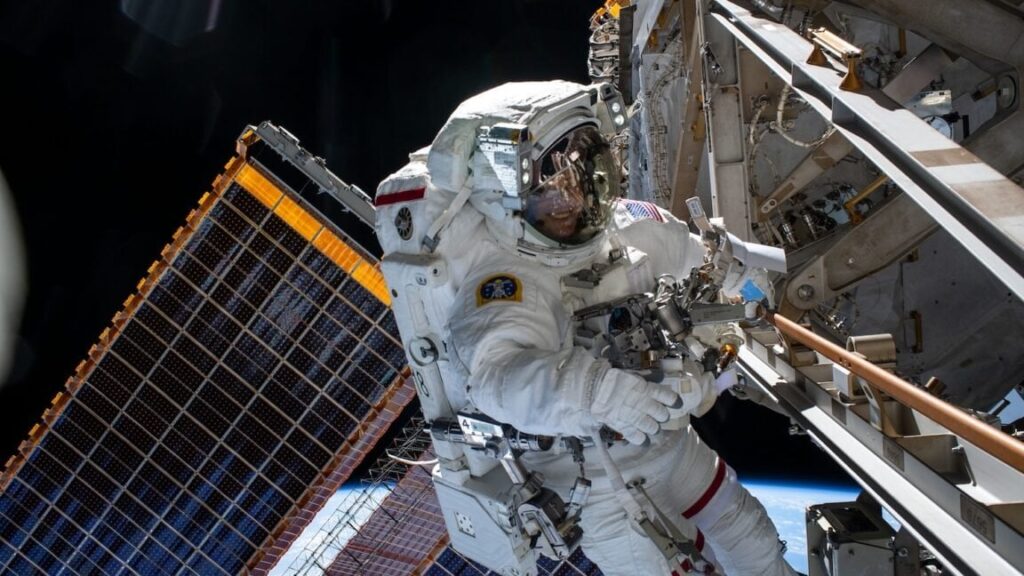
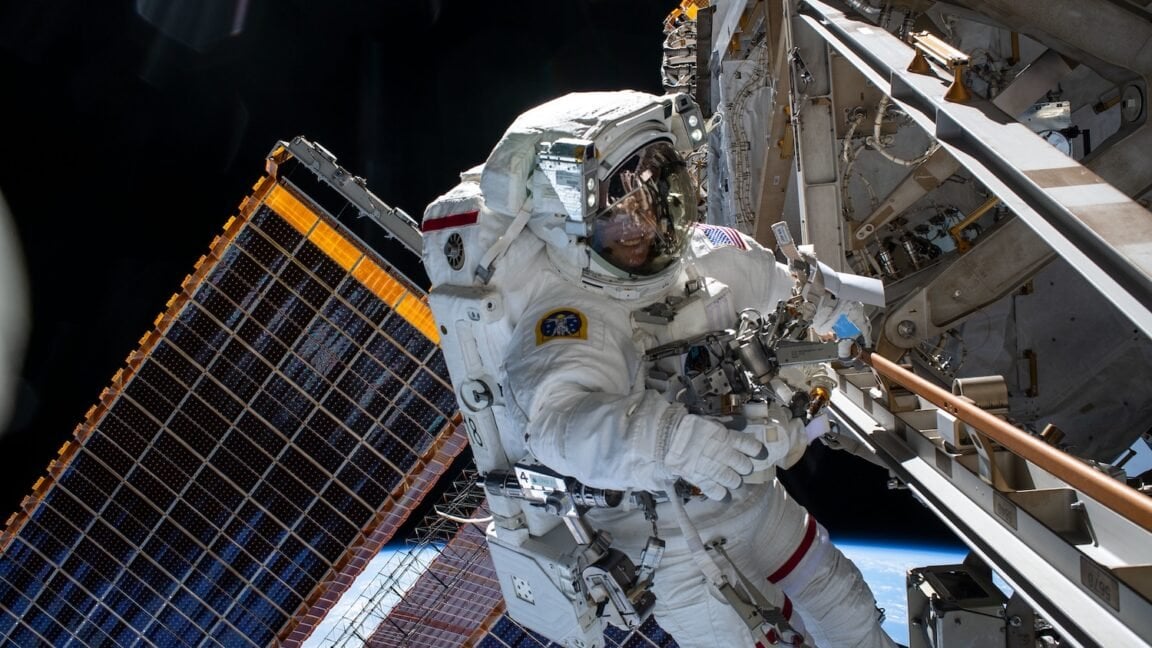
* Scaling back ISS operations. NASA officials are already studying how to cope with the Trump administration’s proposed 26 percent cut to the agency’s budget for operating the International Space Station and transporting crew and cargo to and from the research outpost. This will likely result in a smaller crew on the ISS and a reduced research portfolio. The official US government policy predating the Trump administration called for decommissioning the ISS in 2030, more than 30 years after the oldest sections of the outpost arrived in orbit. That hasn’t changed. What is different in the White House’s budget proposal is that the space station would limp to the finish line. “ISS is replanning FY2026 activities with a focus on maintaining minimal safe operations and very limited research essential to support Moon and Mars exploration until 2030, when it will be replaced by commercial systems,” officials wrote in NASA’s budget request. NASA is currently using the ISS as a testbed for life support systems that could be used on long-duration, multi-year journeys to and from Mars. This budget would also cut the number of crew and cargo flights to the ISS per year. The business outlook for commercial space stations in low-Earth orbit is uncertain, and nothing approaching the scale of the ISS is likely to be in orbit until the 2030s—if the market for such a station exists at all. So, for at least some period of time, China’s Tiangong space station will likely be the most capable research outpost—and maybe the only one—in low-Earth orbit after NASA and its partners close up shop on the ISS.
* Cuts to human research. NASA and commercial companies are focusing many of their resources on developing rockets, spaceships, instrumentation, and hardware to enable humans to make a safe journey to the Moon or Mars. However, many questions about how the human body will withstand the trip remain unanswered. Scientists have identified several health risks that crews transiting to Mars and back will likely face, as they will likely spend three or more years away from Earth. These include exposure to high radiation levels, the effects of isolation and confinement on cognitive performance and mental health, difficulties operating independent of Earth, extended time in reduced or zero gravity, and living in hostile and closed environments. Last year, the chief scientist of NASA’s Human Research Program said the agency didn’t project bringing all of these hazards from a high-risk rating to a medium level of risk until the mid-2030s. Now, the Trump administration proposes cutting the budget from this area of research from $151 million to $40 million in fiscal year 2026. Much of this research takes place on the ISS. NASA also works closely with the National Institutes of Health, another target of the Trump administration’s budget ax. “The budget will require the cessation of many individual research efforts, while preserving the highest-priority work in support of the Artemis program,” administration officials wrote in the budget request.
He’s not interested in anything that doesn’t make him money. Expect this to apply with everything he does.
This right here is the main issue with exploring. It will not be balanced. The budget can’t be balanced. It’s a long term investment not a short term one.
The author was one of the most pro Trump writers around so this Irony is hilarious to me… it’s childish to think that these people are going to get their cake and eat it.
Eric has been making insane money selling books to the Church of SpaceX. I hope he feels pure dread for his small role pre and post election. NASA is dead as we know and private Space is utterly fucked.
If Trump can’t make money on other planets, he’s not interested.