
LAKE CHARLES, La. (KPLC) – The proposed law to reorganize the State Department of Energy and Natural Resources has been a hot button this year in the state legislature.
It has so many amendments, at least one lawmaker likened it to making sausage. The fate of the bill may be decided Wednesday.
Part of the reorganization bill deals with carbon sequestration, a controversial topic that drew a crowd at a meeting in Rapides Parish Monday night.
The author of SB 244, Sen. Bob Hensgens, read House amendments to the Senate Tuesday so members can study them in time for a vote Wednesday.
Rep. Charles Owen, R-Leesville, said he likes parts of the bill and believes it’s probably as good as it will get.
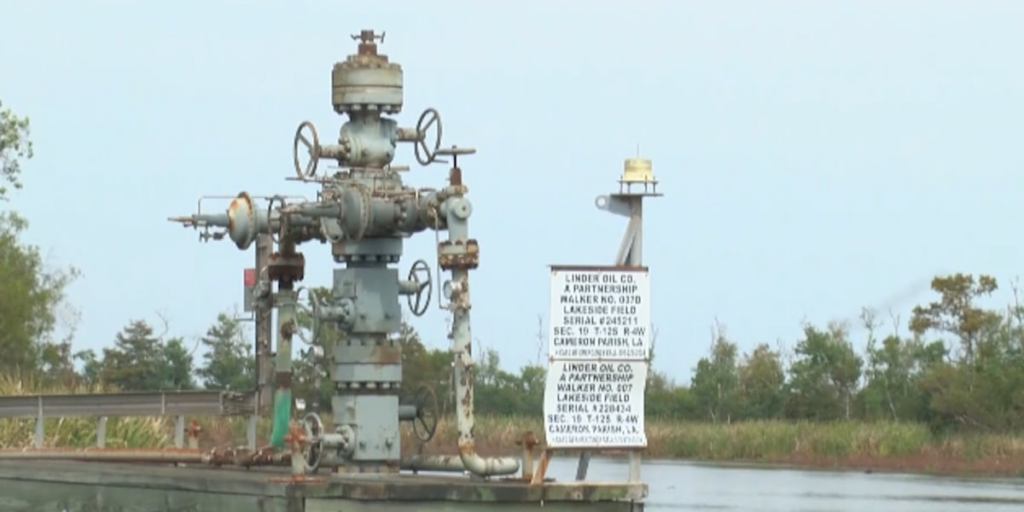
“There are a lot of different interests at stake here, interests that are tied to what’s known as legacy lawsuits, and there’s interests that are tied to the evolving activity of carbon sequestration. I honestly don’t have any idea what’s going to happen. I hope what’s going to happen is, I hope that they will accept the house amendments and send it to the governor,” said Owen.
Owen does believe the bill would make it more difficult for private interests to expropriate property for carbon sequestration and be fairer for property owners.
“It brings people who want to do carbon sequestration to a higher standard, same standard as oil and gas before they can take your land,” he said.
The bill also addresses legacy lawsuits and expands regulations dealing with water to protect the resource.
“The management of the water to make sure water is available for industry and for private individuals,” said Owen.
If House amendments are rejected, the bill could wind up in a conference committee or be scrapped since time is short.
The session ends at 6 p.m. Thursday.
Here is a summary of the amendments provided by Hensgens:
SUMMARY OF HOUSE AMENDMENTS TO SB 244
1. Make technical changes to cites and grammar throughout.
ALTERNATIVE DISPUTE RESOLUTION
2. Provide for voluntary alternative dispute resolution for matters under department jurisdiction upon mutual agreement of the parties. Provide that the process shall initiate upon request of all parties and shall proceed only upon signed agreement of all parties. PAGE 196, LINE 7
3. Require the secretary to appoint a hearing master from the retired judges list maintained by the Louisiana Supreme Court, with preference to those with experience in administrative law,regulatory compliance, environmental matters, or industry practices. Provide that the parties shall jointly select the hearing master from a list. PAGE 196, LINE 7
4.Provide for the scope, recordation, and remedies available in alternative dispute resolution, and that the hearing master may grant remedies including damages, injunctive relief, or specific performance. PAGE 196, LINE 7
5. Require the hearing master to issue a draft decision by certified mail to the parties, the department, DEQ, and LDWF for review and comment, which shall be provided within 30 days. PAGE 196, LINE 7
6..Provide for issuance of the final decision, review by a panel of three hearing masters, and publication of the decision on the department website. PAGE 196, LINE 7
7. Provide that pre-existing contractual agreements supersede the administrative alternative dispute process. PAGE 196, LINE 7
8. Authorize the secretary to promulgate rules for an alternative dispute resolution process. PAGE 196, LINE 7
CARBON SEQUESTRATION / EXPROPRIATION
9. Remove declaration that geologic carbon dioxide storage will benefit the state by reducing emissions and will make carbon dioxide available for future use. PAGE 166, LINE 25
10. For issuance of a certificate of public convenience and necessity, require that the secretary finds either the applicant requires expropriation due solely to absentee owners or the applicant is or intends to be a common carrier. PAGE 170, LINE 12
11. Require an applicant for a Class VI well permit to make a reasonable search and good faith effort to provide notice of application to well operators, mineral servitude owners, mineral lessees, surface owners, and operators acting on behalf of owners, that are located within the surface or subsurface extent of the area of review. Surface owner notice may be to current owner shown on assessor’s rolls. PAGE 177, LINE 10
12. Require an applicant for a Class V test well permit to make a reasonable search and good faith effort to provide notice of application to well operators, mineral servitude owners, mineral lessees, surface owners, and operators acting on behalf of owners, that are located within 500 feet of the proposed well. Surface owner notice may be to current owner shown on assessor’s rolls. PAGE 177, LINE 10
13. Require the department to publish notice for each Class VI or Class V application related to geologic sequestration on its website. PAGE 177, LINE 10 CONFIDENTIAL BID INFO
14. Authorize the Mineral and Energy Board, office of mineral resources, and office of state resources to promulgate rules and regulations for confidential bid or proposal information and provide for adoption of regulations exempting certain bid information from Public Records Law. PAGE 106, LINE 28; PAGE 107, LINE 7
15. Remove authority of the State Mineral and Energy Board to enter in revenue-sharing operating agreements for oil, gas, other minerals, and wind energy, where the state assumes risk for development costs or production. PAGE 112, LINE 25 EXPEDITED PERMITTING
16. Require minimum three-day notice to expedited processing applicant prior to the release of any records claimed by the applicant to be exempt from public disclosure. PAGE 21, LINE 21 ORGANIZATION
17. Authorize the legislature to establish advisory committees for matters within the jurisdiction of the Natural Resources Commission. Require that such committees be made by resolution providing the purpose and membership. Provide that committees terminate one year from effective date unless extended by the legislature. PAGE 181, LINE 21
18. Authorize the secretary to establish a certification process for academic and research institutions specializing in fields significant to the mission of the department and to enter into intellectual property agreements with such institutions. Require the secretary to coordinate with the Natural Resources Commission and promulgate rules and regulations necessary for the program. LINE 27 PAGE 185,
19. Require the office of energy to provide the department and Natural Resources Commission technical expertise, identify policy options, and coordinate with academic institutions on behalf of the department. PAGE 194, LINE 21 PIPELINES
20. Remove requirement that pipeline owners notify thedepartment of abandonment or non-use of a pipeline. PAGE 16, LINE 26
21. Define “common carrier” as a transporter of carbon dioxide by pipeline for storage with the intent to serve one or more third parties. PAGE 167, LINE 4
22. Define “pipe line” to include facilities necessary or integral to the transportation function and necessary for the common carrier’s business. PAGE 209, LINE 19
23. Provide that “pipe line” does not include pipes used solely within a terminal facility for terminaling services or any property of an entity that is not a common carrier. PAGE 209, LINE 19
24. Exclude pipes used within a terminal facility for terminaling services, from Louisiana Public Service Commission rates and regulations for transporting petroleum by common carriers. PAGE 209, LINE 20 REMEDIATION
25. Require submission of an evaluation or remediation plan within 180 days from the date a party admits responsibility or the date a court finds a party liable for environmental damage, and provide 30 days for parties to submit an alternate plan or comments. PAGE 178, LINE 7
26. Authorize the department to use the Risk Evaluation and Corrective Action Program and exceptions in StatewideOrder No. 29-B for remediation plans, and require the department to consult with the landowner. PAGE 178, LINE 7
27. Require the court to adopt the most feasible remediation plan unless a party proves by clear and convincing evidence that another timely submitted plan is more feasible. Provide appellate jurisdiction lies with Court of Appeals for the First Circuit. PAGE 178, LINE 7
28. Provide that a party’s remediation responsibility is satisfied by meeting applicable regulatory standards, absent contrary contractual provision. PAGE 178, LINE 7
29. Allow responsible party to directly pay costs for implementation of the most feasible plan and post bond equal to the total cost. Require such party to provide quarterly cost summaries to the court. PAGE 178, LINE 7
30. Provide that legally responsible party is not responsible for attorney fees or costs upon the court’s adoption of the most feasible plan. PAGE 178, LINE 7
31. Provide that a defendant found not liable for environmental damage by the court is entitled to attorney fees and costs. PAGE 178, LINE 7
32. Provide that an award for damages to fund the most feasible plan shall be paid into the court registry. PAGE 178, LINE 7
33. Require that economic loss damages be proven by preponderance of the evidence, and other nonremediation damages be limited to 300% of the fair market value of the property, as if the property had no environmental damage. PAGE 178, LINE 7
34. Provide that R.S. 30:29, as amended, shall not apply to lawsuits arising out of activity prior to the effective date and filed prior to September 1, 2027, but shall apply to those arising out of activity prior to the effective date and filed on or after September 1, 2027, and to those arising out of activity after the effective date. PAGE 213, LINE 3 REVENUE
35. Allow investment of Natural Resources Financial Security Fund monies using the Louisiana Management Pool. PAGE 58, LINE 24
36. Remove requirement that Natural Resources Financial Security Fund monies be used to reimburse other funds for financial security program costs. PAGE 59, LINE 10
37. Exclude oilfield site restoration fee proceeds from transfer to the Natural Resources Financial Security Fund. PAGE 60, LINE 3
38. Require payment into the Mineral and Energy Operation Fund of all collections by or for the Capital Area Groundwater Conservation District, require separateaccounting of such monies, and restrict use of the monies to groundwater resources within the boundaries of the district. PAGE 109, LINE 19
39. Allow investment of Mineral and Energy Operation Fund monies using the Louisiana Management Pool. PAGE 109, LINE 23
40. Allow investment of Carbon Dioxide Geologic Trust Fund monies using the Louisiana Management Pool. PAGE 174, LINE 9
41. Allow investment of Carbon Dioxide Geologic Trust Fund monies using the Louisiana Management Pool. PAGE 174, LINE 9
42. Provide that the oilfield site restoration fee is payable upon the initial disposition of each barrel of oil and condensate, and provide for fee benchmarks for crude oil and condensate and natural gas and casing head gas. PAGE 178, LINE 7
43. Authorize Louisiana Natural Resources Trust Authority to request investment of monies under its control using the Louisiana Management Pool. PAGE 190, LINE 25 WATER RESOURCES
44. Authorize the department to establish a comprehensive water resource program to promote sustainability and economic welfare and provide for administration ofprotection and conservation of water resources. PAGE 94, LINE 14
45. Provide the state exclusive jurisdiction over water resources. PAGE 94, LINE 14
46. Authorize the state to utilize tax incentives to encourage conservation through use of alternatewater resources. PAGE 94, LINE 14
47. Authorize the department to inspect surface water withdrawals under its jurisdiction. PAGE 95, LINE 5
48. Remove permit requirement for wells of over 50,000 gallon per day capacity and registration requirement for all wells and well owners. PAGE 95, LINE 21
49. Remove requirement to establish construction standards and spacing requirements for water wells PAGE 96, LINE 8
50. Remove requirement for water well owners and users to furnish certain technical data on request. PAGE 96, LINE 13
51. Remove requirement for metering devices on water wells. PAGE 96, LINE 20
52. Remove requirement to establish standards for control and abandonment of water wells. PAGE 97, LINE 8
53. Remove requirement for state to take certain measures to prevent salt water intrusion, including extraction wells, freshwater barriers, and withdrawal limits. PAGE 97, LINE 18
54. Remove department authority to audit flow measurement devices. PAGE 99, LINE 10
55. Authorize the secretary to promulgate rules and regulations for regional water districts and delegation of powers. PAGE 100, LINE 1
56. Authorize the department to collect water use resource and use data, to conduct studies, protect water recharge areas, monitor, evaluate, and inventory water resources, identify technical research, study alternative sources, investigate conservation and use incentives, and promote water sustainability. PAGE 100, LINE 2
57. Remove department authority to issue notices of violation, compliance orders, and penalties for water resource use. PAGE 100, LINE 17
58. Add exemption from regulatory and administrative oversight and use fees for agricultural water use. PAGE 101, LINE 10
59. Change the Capital Area Conservation Groundwater Conservation District from a body politic and corporateand political subdivision of the state, to a geographic area and remove the membership requirements of its board of commissioners. PAGE 196, LINE 16
Here is another summary to show amendments by individual lawmakers.
1. Amendments by House Committee (Document #3360):
• Adjusted statutory references to ensure completeness and accuracy.
• Clarified procedural requirements for expedited processing applications, including timelines, notifications, and administrative processes.
• Directed excess state appropriations to the Natural Resources Financial Security Fund. • Made terminology and administrative clarifications, including changing references from “mineral” to “state” resources.
• Specified inclusion of the Louisiana Asset Management Pool for financial management.
• Ensured consistency in statutory numbering and terminology adjustments (e.g., “$50,000,000.00″ to “fifty million dollars”)
2. Amendments by House Committee (Document #3521, Representative Kim Coates):2
• Created a specific agricultural water use exemption to prevent regulatory burdens on agricultural activities such as irrigation and livestock watering, clearly stating participation in relevant initiatives is voluntary.
3. Amendments by House Committee (Document #3569, Representative Geymann):
• Consolidated multiple previous amendments and explicitly nullified several earlier proposed amendments (#11, #29, #30, #33 from doc #3360, and #2 from doc #3521).
• Provided detailed procedures for handling oilfield site restoration fees, specifying fee assessments based on production rates and market prices.
• Emphasized public water supply prioritization, mandating that department actions must ensure no adverse impacts to public water supplies.
• Clarified confidentiality standards for information submitted to the department.
• Adjusted language related to geological storage of carbon dioxide and established a clear policy framework for carbon dioxide sequestration.
• Set forth explicit guidelines on notification requirements for applications related to carbon capture, including detailed notification procedures and timelines.
• Revised oilfield site remediation processes, ensuring court oversight and departmental approval for remediation plans and related costs.3
4. Amendments by House Committee (Document #3571, Representative Geymann):
1 HCASB244 3209 3360
2 HCASB244 3209 3521
3 HCASB244 3209 3569
• Added the Executive Director of the State Soil and Water Conservation Commission to a relevant committee.
• Enabled legislative establishment of advisory committees for the Natural Resources Commission, including guidelines on committee formation and duration.
5. Amendments by House Committee (Document #3977, Representative Geymann):
• Further refined statutory references and legal clarity. • Updated definitions, notably the inclusion of “common carrier” for carbon dioxide pipelines.
• Established procedural rules for the expedited permitting process, judicial review of departmental decisions, and public notice requirements.
• Directed the transfer of unspent appropriations to the Natural Resources Financial Security Fund.
• Provided a statutory framework for oilfield site restoration fees and included specifics for fee calculations based on crude oil and natural gas market prices.
• Enhanced public notification requirements for Class VI and Class V wells related to carbon sequestration.
• Detailed judicial processes for remediation of oilfield sites, ensuring robust oversight, environmental standards adherence, and cost allocations
HOUSE FLOOR
6. Amendments by Rep. Jack McFarland (Document #4167):
• Transfer of Capital Area Groundwater Conservation District: Integrated this District into the Department of Conservation and Energy, specifying management, jurisdictional scope, and operational funding.
• Financial Clarity: Directed that funds from the Capital Area Groundwater Conservation District are strictly segregated for accounting and auditing purposes.
• Operational Clarifications: Outlined detailed governance and operational adjustments, including authority for groundwater monitoring, usage data collection, registration processes, and enforcement capabilities.
• Legal and Regulatory Enforcement: Established authority for judicial processes, penalties for violations, and compliance enforcement related to groundwater management.
7. Amendments by Rep. Brett Geymann (Document #4027):
• Removal and Modification of Committee Amendments: Deleted specific committee amendments (#18, #44, #35), and modified provisions related to storage facility certificates, public convenience, and necessity requirements.
PAGE 2 of 3 DRAFT
• Class VI Permitting and Notice Requirements: Clarified public notification processes for geologic sequestration projects and adjusted terminology for clarity and practicality.
• Oilfield Site Restoration Fees: Detailed recalculation processes, specifying how restoration fees are set and administered based on market conditions for crude oil and natural gas.
8. Additional Amendments by Rep. Brett Geymann (Document #4155):
• Water Resource Management Program: Reinforced state-level jurisdiction for water resource management, preempting local government jurisdiction, while still allowing zoning authority at local levels.
• Regional Water Districts: Authorized the establishment of regional districts to support statewide comprehensive water management programs.
• Technical Certification Program: Established formal certification and collaboration with academic and research institutions on specialized fields relevant to energy and natural resources.
9. Amendments by Rep. Jacob Landry (Document #4158):
• Environmental Remediation Valuation: Clarified property valuation methods in cases involving environmental damage, specifying fair market value calculations independent of contamination.
• Applicability Dates for Environmental Claims: Defined clear cut-off dates determining when specific provisions of the bill apply to environmental lawsuits, differentiating between activities occurring before and after the bill’s effective date.
10. Additional Amendments by Rep. Brett Geymann (Document #4159):
• Technical and Legal Refinements: Adjusted numerous legal references for accuracy and coherence throughout the bill text.
• Simplified Terminology and Procedures: Streamlined certain procedures and administrative language, ensuring consistency and avoiding redundancy.
• Clarified Enforcement and Regulatory Authority: Reinforced the department’s authority to enforce regulations effectively, including the removal of redundant procedural clauses.
PAGE 3 of 3 DRAFT
Copyright 2025 KPLC. All rights reserved.