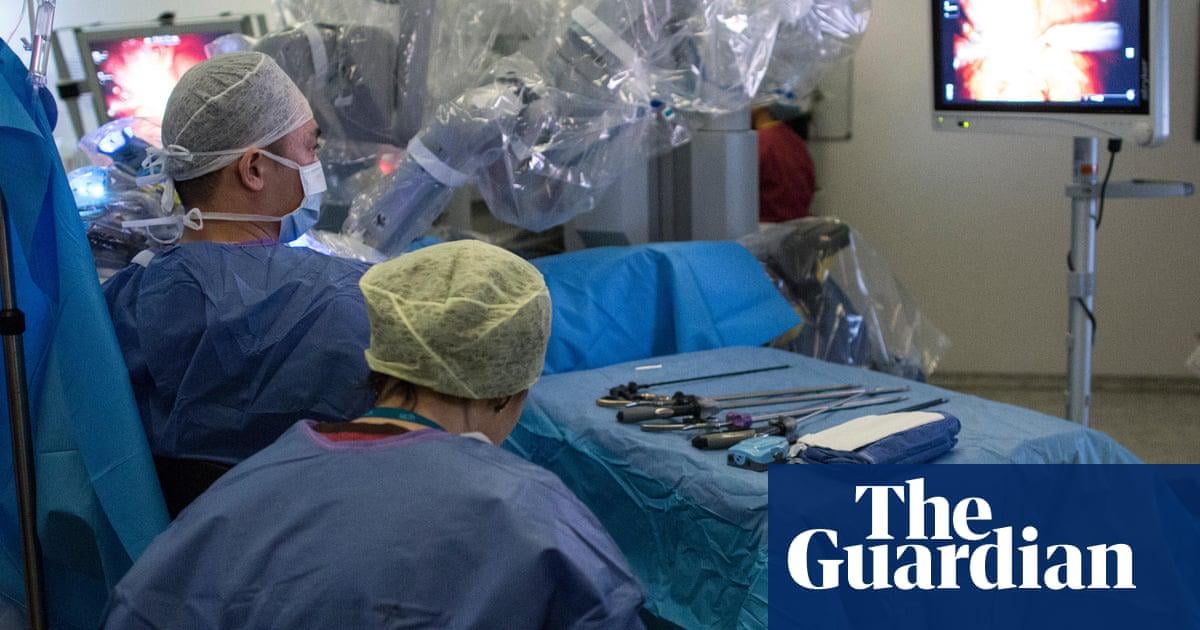
In England, 90% of keyhole surgeries in the public health system to be performed by robots by 2035, government says.
https://www.theguardian.com/society/2025/jun/11/millions-more-to-have-robotic-surgery-in-nhs-plan-to-cut-waiting-lists?

In England, 90% of keyhole surgeries in the public health system to be performed by robots by 2035, government says.
https://www.theguardian.com/society/2025/jun/11/millions-more-to-have-robotic-surgery-in-nhs-plan-to-cut-waiting-lists?
4 Comments
Submission Statement
By 2035 I’d expect humanoid robots will also be making a significant impact in healthcare. In particular, doing a lot of basic nursing assistant/healthcare assistant tasks.
When people worry about the burden of an aging population in the 2030s & 40s, I rarely see them factor in how much robots will reduce the need for human workers to do this.
This is about robot assisted surgery, as in a surgeon is still making all the decisions and manually controlling it. This has nothing to do with automation.
Surgical robots are still operated by a surgeon as well as an entire team of nurses and assistant surgeons with an anaesthetist.
Here’s another line of text because apparently my comment is too short and needs to be deleted.
This would be unfortunate if it comes to pass. In my experience, robotic assisted surgery, although allowing more complex procedures, is slower, particularly for shorter and simpler procedures.
As usual, I suspect some surgeons are purely looking at their operating time in the dock and comparing it to operating time doing it directly, and totally ignoring the ancillary time, which is far longer with a robot.