
England is facing a “devastating water shortage” that will threaten “our current way of life” unless urgent action is taken to protect supplies, the chairman of the Environment Agency has warned.
The agency estimates that England is on track for a daily shortfall in public water supplies of five billion litres by 2055 — equivalent to more than a third of current daily usage, which is about 14 billion litres.
The estimate is included in the National Framework for Water Resources, which is published every five years. The latest edition, released on Monday, outlines how climate change, population growth and ageing infrastructure are combining to place intense strain on the system.
It adds that a further one billion litre daily shortfall is expected to hit industries including food production by the 2050s. That estimate may rise, officials said, since it does not yet include the demands of water-thirsty data centres used to power artificial intelligence, a technology that the government has placed at the centre of its growth plans.
Alan Lovell, who has been chairman of the Environment Agency since 2022, said: “Emerging industries, such as carbon capture and data centres, are exciting with various benefits for society. But, unless they are well designed, they are also thirsty.
“The nation’s water resources are under huge and steadily increasing pressure. This deficit threatens not only the water from your tap but also economic growth and food production … There has been too little investment in infrastructure in recent years.”
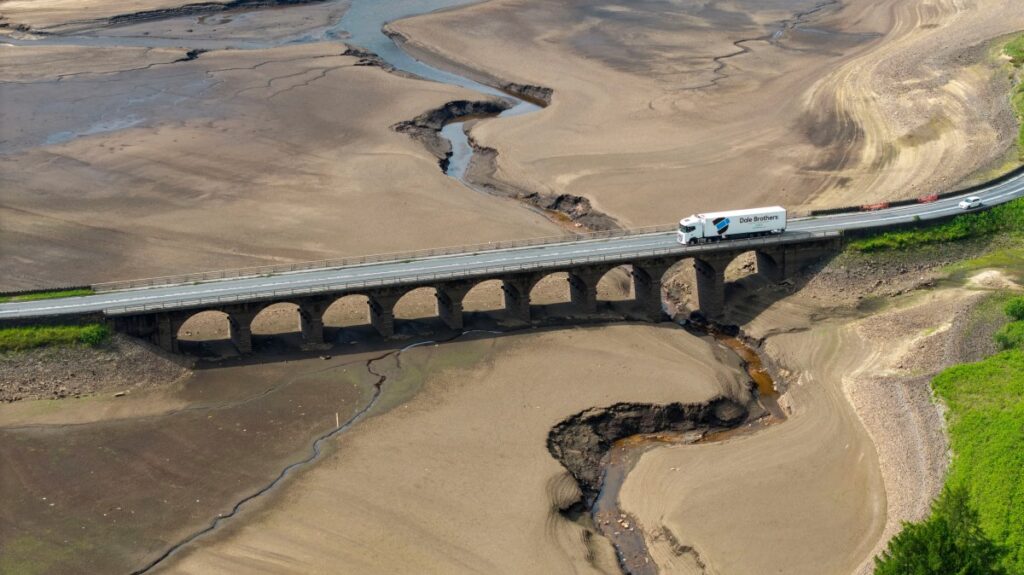
England has had its warmest spring on record, and the driest since 1893. Drought has been declared in northwest England and Yorkshire. Some reservoirs are extremely low, farmers are struggling to grow crops and households face the prospect of hosepipe bans.

The dry bed of the Woodhead reservoir near Tintwistle
REUTERS
Lovell said there were early signs that investment in water infrastructure was increasing. The government says it expects £104 billion in private sector investment for water infrastructure over the next five years, with £8 billion allocated to water supply projects. Plans include ten new reservoirs, nine desalination plants and seven water recycling schemes by 2050.
However, critics have pointed to the continued scale of water company leaks — about 2.7 billion litres a day — as a source of growing public anger. Lovell acknowledged that more must be done to fix leaks and manage demand, with water companies pledging to halve leakage by 2050.
• Water companies face record number of criminal investigations
David Black, chief executive of Ofwat, said the regulator strongly supported efforts to improve infrastructure and reduce abstraction to protect the health of rivers.
Public frustration has also been fuelled by the industry’s record on pollution, leading to calls for tighter regulation of profits and executive pay. The Times’s Clean it Up campaign has been calling for better and stronger regulation.
Lovell added: “While we are waiting for infrastructure to be built, we need to be using what we have more efficiently. This means more water is retained in the environment and we have additional capacity for growth.
“Our dishwashers, toilets, showers and washing machines can do the same job, with less. The EA is working with government on a mandatory efficiency label and how new housing developments can also be more efficient. Progress is being made — but we need to speed up.”