
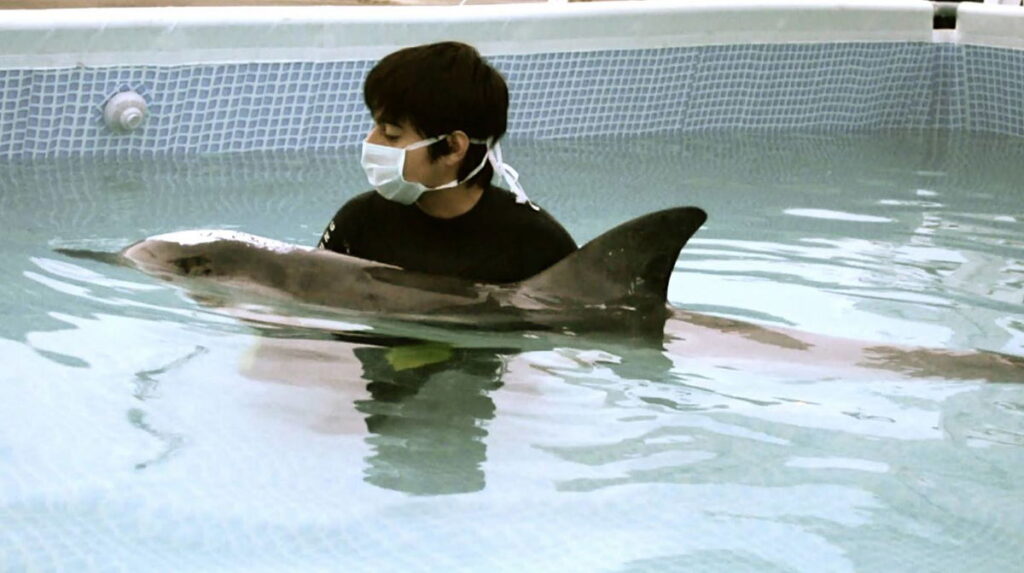
A sick striped dolphin is assisted by Marine Biologist Alexander Sánchez. Photo Credits: Equinac/Pelagics Conservation
Strandings of marine animals such as dolphins, sea turtles, and even whales are rare but not unheard of along the Spanish coastline. These events are often alarming to witness, particularly for those unfamiliar with what to do. Yet these moments are critical — not only for the animal’s welfare but also for scientific research and conservation efforts. If you encounter a stranded marine animal, acting quickly, calmly, and appropriately can make all the difference. Here’s what you need to know — and what you must avoid — should you come across a dolphin or turtle stranded on the beach.
Understanding Why Strandings Happen
Strandings occur when a marine animal becomes trapped in shallow water or is washed ashore. This can happen for a number of reasons: illness, injury, age-related decline, entanglement in fishing gear, pollution-related disorientation, or in some cases, sonar disturbances or natural navigational errors. In mass strandings — where multiple animals beach simultaneously — social dynamics often play a role, particularly among highly intelligent and social species like striped dolphins or pilot whales.
It’s crucial to understand that a healthy animal rarely strands. Most have an underlying problem. That is why it is never appropriate to try to return the animal to the sea without expert assessment and supervision.
Most Read on Euro Weekly News
Step One: Do Not Attempt to Return the Animal to the Sea
One of the most common but dangerous mistakes people make is trying to push the animal back into the ocean. While this may seem like a helpful or humane act, it is almost always harmful.
Animals that strand are usually suffering from illness, injury, or other impairments and in most cases need to be humanely euthanised . Forcing them back into the water not only risks their immediate safety but also prolongs their suffering, as they may strand again in worse condition — or drown.
Step Two: Create a Calm and Safe Environment
Marine animals are exceptionally vulnerable to stress. Loud noises, large crowds, and excessive handling can cause physiological shock, organ failure, or even death. If you come across a stranded dolphin, turtle, or whale, remain calm and avoid shouting or calling others over unnecessarily.
Ideally, only one or two people should remain near the animal. Keep dogs and children at a distance, and ensure that curious onlookers do not crowd the animal.
Step Three: Contact Emergency Services Immediately
Call 112, Spain’s national emergency number, and report the incident. Be prepared to give:
- Your exact location (use GPS if possible),
- A description of the animal (species if known, size, condition),
- Whether the animal is alive or deceased.
The operator will notify the nearest stranding response network or conservation organisation. These trained teams include veterinarians and marine biologists equipped to assess and treat the animal or — if necessary — perform a humane euthanasia to prevent prolonged suffering.
Important: Even if the animal is deceased, you must still report the case to 112. This applies to dolphins, whales, and turtles alike. All are protected species under Spanish and international conservation law, and authorities must document the case and may collect the body for scientific examination, necropsy (animal autopsy), and data collection.
While You Wait: Essential Do’s and Don’ts
DO:
- Keep the animal damp. Cover its back with wet towels, sheets, or blankets. Use seawater to keep the fabric moist, especially in hot conditions. This helps regulate body temperature and prevents sunburn.
- Shield from direct sun. If possible, create shade over the animal without obstructing its blowhole or crowding it.
- Wear protective equipment. If available, wear a surgical mask and gloves to protect both you and the animal from possible disease transmission.
- Stay nearby, but quiet. Monitor the animal discreetly while awaiting professional help.
DO NOT:
- Do not cover the blowhole. This is the animal’s only way of breathing. It must remain completely unobstructed.
- Do not attempt to move the animal. Even small dolphins are extremely heavy and delicate. Lifting or dragging them can cause serious injury or worsen existing trauma.
- Do not touch, stroke, or talk loudly. Their skin is fragile and stress responses can be fatal.
- Do not try to remove hooks, fishing line, or other debris. What may appear to be a foreign object could be stabilising a deeper wound. Only veterinarians should assess and remove such items.
Legal Protection and Your Responsibility
In Spain, all cetaceans (whales, dolphins, porpoises) and marine turtles are classified as strictly protected species. Handling them without authorisation, intentionally harming them, or interfering with their remains may lead to criminal or administrative penalties, including fines.
However, reporting a stranding and protecting the animal from further harm until professionals arrive is both lawful and commendable. By doing so, you are supporting marine conservation and enabling better understanding of threats to ocean life — from fishing gear entanglements to marine pollution and climate change.
Your Role in Marine Conservation
Witnessing a stranded dolphin or turtle can be heartbreaking, but your response can be vital. Whether you are a coastal resident, beachgoer, tourist, or local fisherman, your actions in those first few moments can mean the difference between recovery and unnecessary suffering.
Respect the animal, protect the scene, call 112 — and trust that trained responders will take over.