
4-minute read

NJ disability community rallies against federal Medicaid cuts
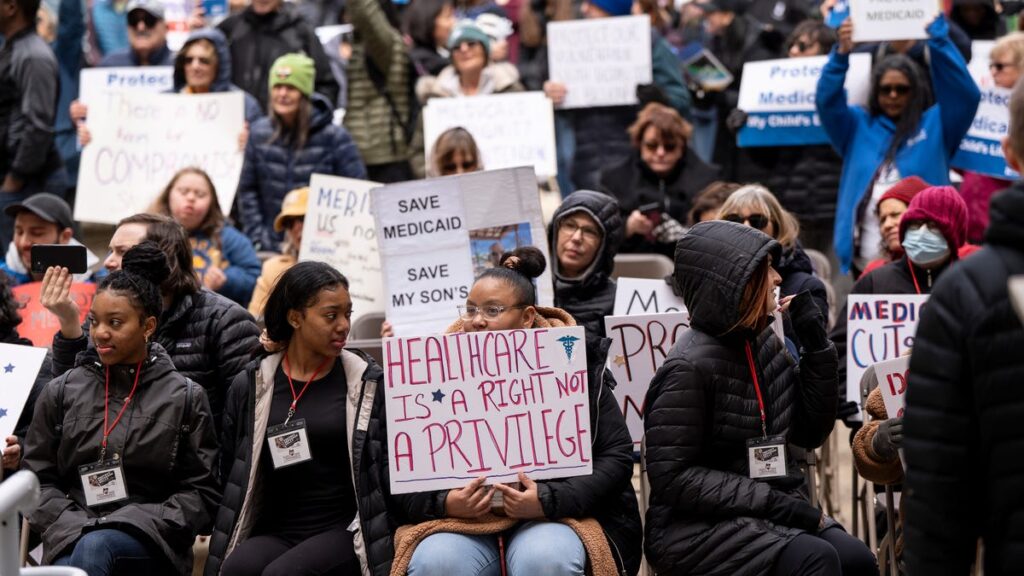
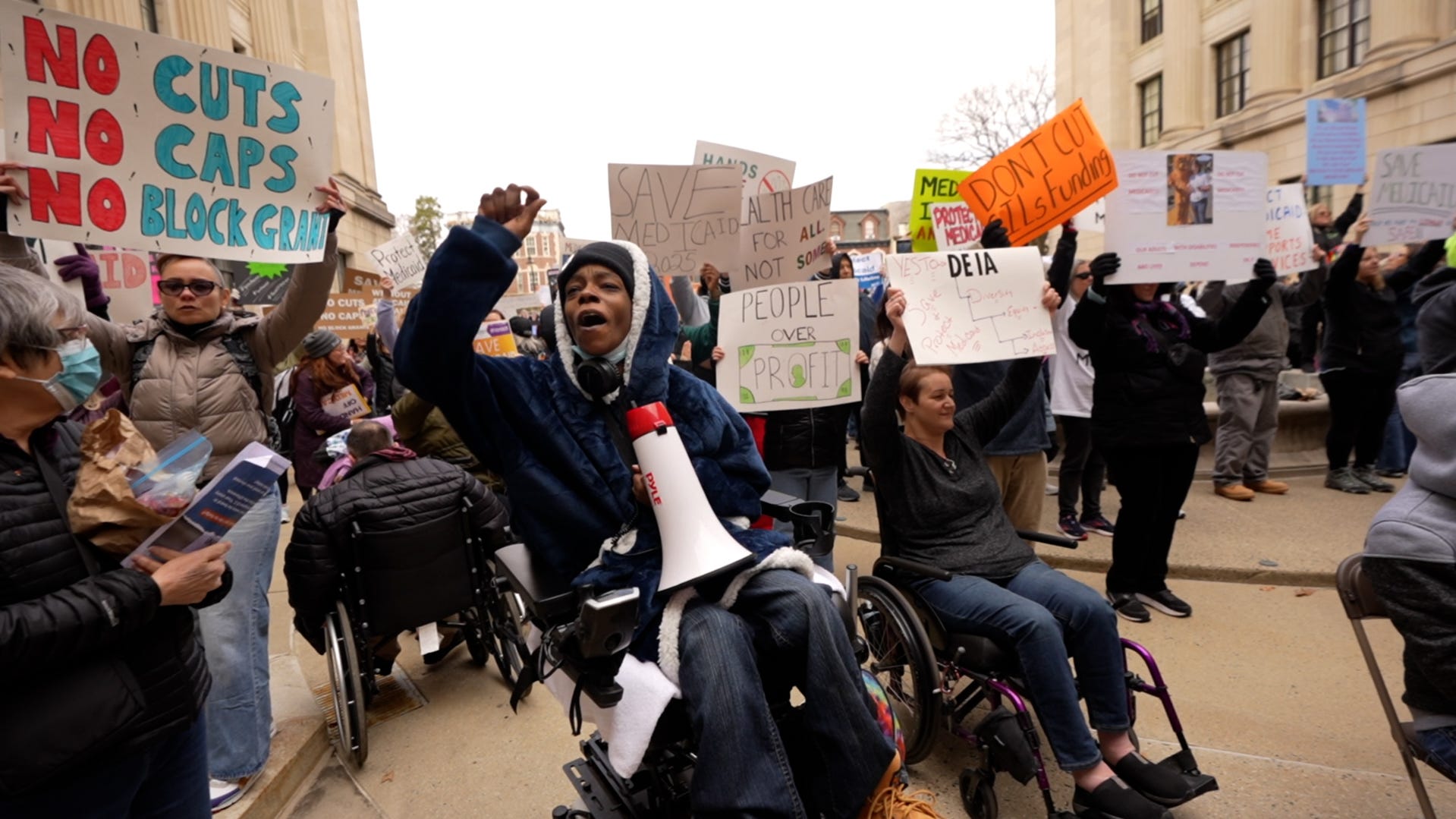
Hundreds gathered at the Statehouse annex on Thursday to protest federal medicaid cuts.
- The proposed $1 trillion in health care cuts in President Trump’s “big, beautiful bill” also would take another $5 billion out of New Jersey’s economy in uncompensated care for the newly uninsured.
- New Jersey would be hit the 14th hardest among states in overall health care spending cuts.
New Jersey’s $53 billion health care sector has been growing at such a rapid rate over the past three decades that it has become one of the state’s biggest economic engines.
But like any engine, this one is prone to stall if there’s problem with the fuel.
New Jersey is poised to lose $19.2 billion over the next nine years in health care spending from the controversial House budget bill that includes steep cuts to both Medicaid and subsidies that discount insurance premiums under the Affordable Care Act, according to an analysis issued this week.
The proposed $1 trillion in health care cuts in the measure dubbed by President Donald Trump as a “big, beautiful bill” would also take another $5 billion out of New Jersey’s economy in uncompensated care for the newly uninsured, the national report by New Jersey-based Robert Wood Johnson Foundation and the Urban Institute said.
Story continues below photo gallery
New Jersey would be hit the 14th hardest among states in overall health care spending cuts.
The total impact of the cuts has been difficult to gauge and state government and nonprofit groups have offered different estimates. While Robert Wood Johnson put the loss at roughly $2.1 billion a year, the state Department of Human Services, which administers Medicaid, said New Jersey would lose $3.6 billion annually.
And nothing has been finalized. The bill, which seeks to extend tax cuts from Trump’s first term, is still being debated heavily in the Senate, where some Republican opponents believe it needs to include even more spending cuts to avoid a mammoth addition to the federal deficit.
The latest version of the Senate bill released on June 16 would have even deeper cuts to Medicaid, which is health insurance for low-income earners used by 1.8 million New Jerseyans.
“The Medicaid cuts Congress is considering would be the largest funding reduction in the program’s history, and it is hard to overstate just how devastating the impacts would be,” said Katherine Hempstead, a senior policy adviser at the Robert Wood Johnson Foundation.
Conservatives argue Medicaid has become bloated
Fiscal conservatives have argued that Medicaid has become bloated, has made too many Americans dependent on it and has been taken advantage of by those who can instead get insurance by working a full-time job.
They argue that in order to make the U.S. more economically sound, taxpayer-funded programs need to be scaled back to ease the federal deficit. Still, the bill with its tax cuts would raise the deficit by $2.8 trillion over the next decade despite leaving 11 million uninsured, according to a report this week by the Congressional Budget Office.
Medicaid is one of the government’s most expensive programs with a $24 billion budget in New Jerey this fiscal year — covered by $14 billion from Washington and $10 billion from the state’s coffers.
But the cuts apply to more than just Medicaid. There would be a significant increase to insurance premiums purchased under Get Covered New Jersey, the state’s Affordable Care Act marketplace used by more than 500,000 residents who don’t get their medical coverage through an employer.
Under the House bill, New Jersey would lose more than $500 million in special tax credits that would affect more than 450,000 residents, many of whom would see their premiums doubled, according to the state Department of Banking and Insurance. That represents about 88% of those enrolled.
Health care employment has grown every year since 1990, and its more than 600,000 workers represent 13% of the state’s total work force.
Hospitals would be biggest sector impacted by cuts
The biggest sector impacted by the bill would be hospitals, especially those that serve low-income areas. They would take a hit of $6.9 billion in lost revenue over a nine-year period in addition to $1.5 billion that they are expected to provide in charity care.
New Jersey Hospitals Association CEO Cathy Bennett said the report’s figures are conservative and the cuts would have “far-reaching impacts.” She didn’t address what the impact would be from such a large shortfall especially for smaller hospitals that have a higher percentage of Medicaid patients and are struggling to stay afloat as is.
“These cuts will have a grave impact on the most vulnerable — seniors, veterans, people with disabilities, pregnant women, children and low-income working families,” she said in a statement to NorthJersey.com. “The effects will reach even deeper — threatening local economies, jobs and hospital services that people depend on in their 18 million patient visits each year.”
Projected health care cuts to New Jersey from 2025 to 2034
- Hospitals: $6.9 billion
- Physicians: $1.8 billion
- Other services*: $5.3 billion
- Prescriptions: $5.1 billion
- Overall: $19.2 billion
*The term “other services” includes dental care, home health care and all other services delivered by providers other than hospitals and office-based physicians.