
The bad news is diabetes numbers in Wayne County are high, and worsening.
The good news is diabetes is a reversible condition that can be prevented or changed by lifestyle choices.
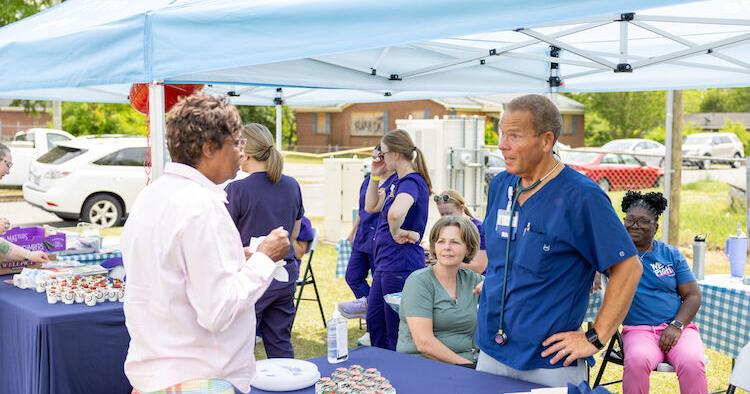
Fortunately, Dr. Billy Tart is passionate about helping people live their healthiest life.
Tart has spent 35-plus years working in health care, as a registered nurse at the hospital and then department chair at Wayne Community College. Then an opportunity came up to take his interests on the road.
“I’m not a medical doctor. I’m a nurse doctor,” said Tart, whose job title now is diabetes health program coordinator with UNC Health Wayne. The mobile van effort launched in October.
“The program is sponsored by Wayne Memorial Hospital Foundation and the purpose is to increase awareness of risk factors for Type II diabetes and to provide education to the public about those risk factors and the importance of lifestyle changes that can reverse the likelihood that they’d develop diabetes.”
His role is not to sound an alarm, but rather encourage the community to “start the conversation” and pay attention to their own health before they get sick.
It concerns him that diabetes and prediabetes cases continue to increase.
“Wayne County has one of the highest rates in the state and we’re above the state average, and in North Carolina is above the national average,” he said.
It’s definitely not a category local residents should want to be known for, he says, especially when it is such a reachable fix.
A large part, no pun intended, relates to the obesity epidemic.
“People are heavier than they’ve ever been and there’s a lack of awareness,” he said. “They do not to seek out preventative care (and) typically go to see a health care provider whenever they’re seeing a problem.
“By that point it’s probably too late and they already have diabetes.”
Symptoms can be vague and unrecognizable, so it’s important to know the risk factors.
“It is a reversible condition that can be changed through lifestyle changes — changes in diet, weight management, activity,” he said. “In general in this area, we have a lot of people who don’t pay attention to what their diet is.
“Most people eat because of convenience, because of taste, the price and really don’t pay a lot of attention to the health issues that are related to their diet.”
Consuming foods that are highly processed, contain a lot of sugar content or fat leads to weight gain and with it, many chronic diseases.
Beyond that, complications include high blood pressure, heart attack and stroke, even blindness.
“Either you pay attention to your health now or you’ll pay attention to the disease later,” Tart cautioned.
Diabetes is not just something people are born with, or it’s in their DNA. It isn’t caught, but essentially can be taught, as it is truly a societal issue.
We live in an age where folks no longer get up to change the TV channel, or go shopping, Tart said — as modern conveniences allow for online options or to wait in their cars while an employee brings groceries to them.
Likewise, children don’t play outside as much and spend a lot of time on phones or in front of screens.
The mobile Diabetes Health Check program is for everyone, insured or uninsured. Staff conducts screenings and focuses on education and providing resources.
There are also prevention seminars offered periodically and a support group that meets monthly.
“There’s so many diets and medications out there now that people are confused,” Tart said. “Our program and educational efforts are to try to help people understand how to make good choices.
“We want to give them what they need to make those changes.”
To kickstart the effort, Tart recommended a short list of steps to help move the needle.
1.Take a prediabetes screening test online and find out risk factors.
2. Become more active. Try to make decisions intentionally to become more active every day.
4. Know what their healthy weight would be. Take steps to reduce calorie, fat and added sugar intake and set achievable goals.
“It’s very much a behavioral issue,” Tart said. “It’s not just a scientific one where you just take a pill or a shot.
“We want to curb the epidemic of diabetes by making lifestyle changes that are sustainable, doing things that people can live with.”