
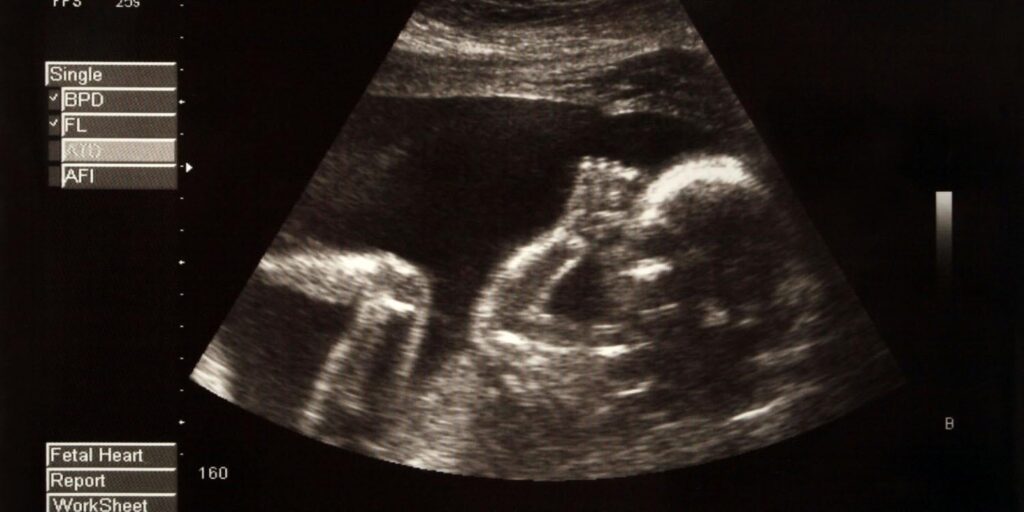
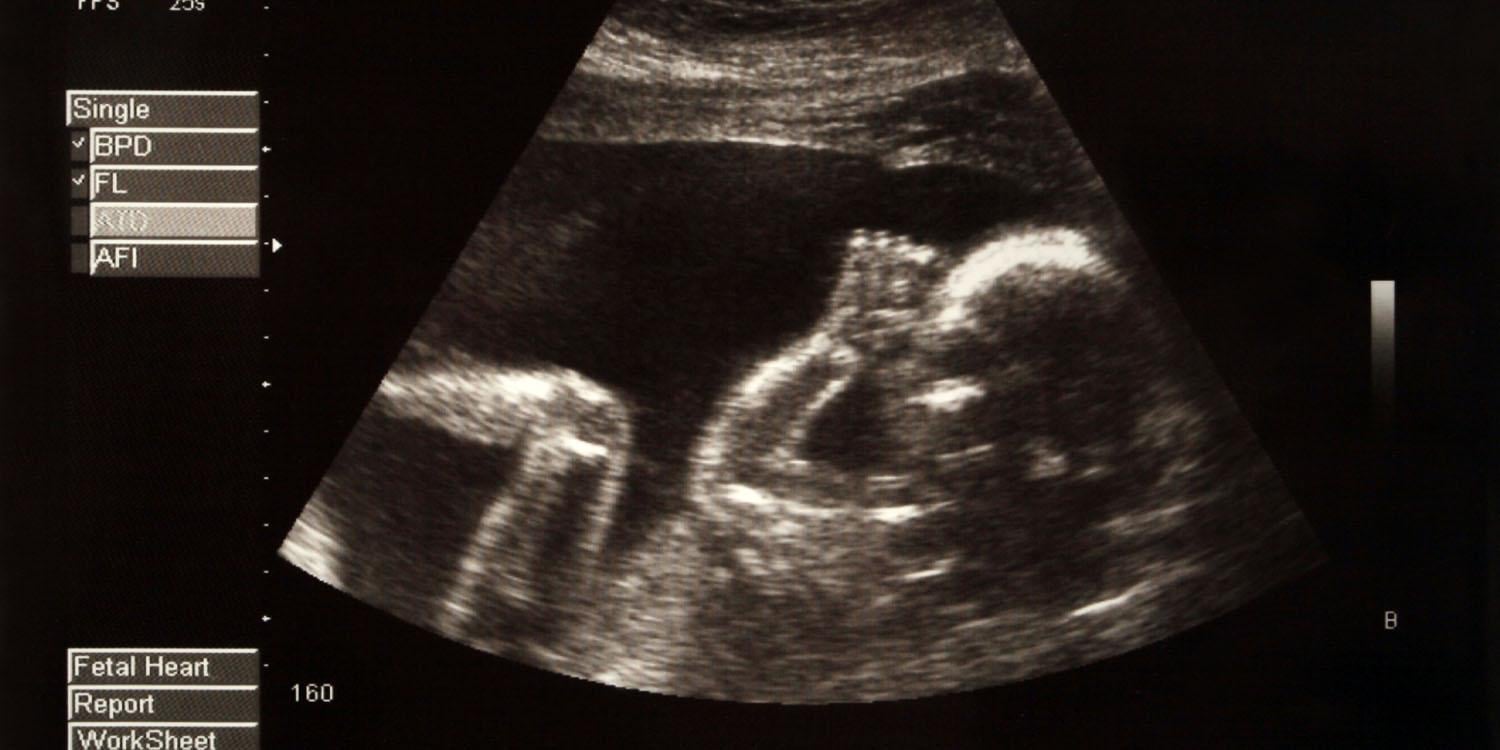
Almost all unmarried pregant women say that the fetus resembles the father, study finds. In the absence of any valid visual cues for establishing resemblance, 93% of women who were not married said that their fetus resembled the father, compared to 68% of married women and 47% of married men.
Almost all unmarried pregant women say that the fetus resembles the father, study finds
20 Comments
I’ve linked to the news release in the post above. In this comment, for those interested, here’s the link to the peer reviewed journal article:
https://www.sciencedirect.com/science/article/abs/pii/S1090513825000194
From the linked article:
**Almost all unmarried pregant women say that the fetus resembles the father, study finds**
A study asked expectant parents who they thought their fetus resembled during an ultrasound. Results showed that mothers, but not fathers, were more likely to say the fetus resembled the father. **In the absence of any valid visual cues for establishing resemblance, 93% of women who were not married said that their fetus resembled the father, compared to 68% of married women and 47% of married men**. The paper was published in Evolution and Human Behavior.
Without dedicated medical tests, a man cannot be completely sure that he is the biological father of his partner’s child. This is known as paternity uncertainty, and it has been an important issue throughout human evolution. It remains a relevant topic even today. Unlike females, who can be certain of their biological connection to the child due to internal gestation, males face a degree of uncertainty because fertilization occurs internally.
Among fathers, 49% said the fetus resembled themselves, while 51% said it resembled the mother. In contrast, only 26% of mothers said the fetus resembled themselves, while 74% said it resembled the father.
The researchers then analyzed responses by relationship status. Among married men, 47% said the fetus resembled themselves, compared to 58% of men in a relationship. Among married women, 69% said the fetus resembled the father, compared to 93% of women in a relationship who were not married.
“By claiming phenotypic similarity with the father, mothers are reducing paternity uncertainty and, consequently, securing investment for their offspring from when they are in utero,” the study authors concluded.
yep, they want the fathers to stick around (short version of the scholarly article below)
Lots of jokes that I’m not going to get into, but certainly random and interesting
**Based on only 38 unmarried women.** Who all were in a relationship with the father.
In Europe? It’s not uncommon to have lifelong serious relationships that do not end in marriage. You just buy a house together, have kids, get a dog.
If you two weren’t in a relationship when she got pregnant or it’s very early dating? Reasonable to get a DNA test. But this study isn’t that interesting.
**Edit: did they control for number of children and age of couple?**
Bc I imagine the unmarried are more likely to be younger couples expecting their first baby. When it’s your first baby ever? Ultrasound will be a really exciting and emotional experience. And young couples are less pragmatic, more emotional overall. If you feel emotionally moved and you are sobbing with joy? Ofc you see baby looks like his dad. dad. I’m not sure author has met any first time mothers before.
They could have done this study simply by doing data analysis of Maury.
Genuinely fascinating to me, given that I haven’t had a single thought about who the *fetus* resembles with any of my pregnancies, other than the 3d scan I had (and even then, everyone agrees they looked like my sister). I kind of assumed everyone else would just be looking at them like they’re strange little blobs too!
It’s kind of weird that they are asking who a 20-week-old fetus resembles, but I guess ultrasound technology has gotten a lot better since I’ve had kids. Out of the 190 people they asked, only 20% were unmarried, and if I’m doing the math correctly, the number of married men who thought the fetus resembled them was roughly the same as the number of unmarried women who thought the fetus resembled their partners. I sort of find it more interesting that less than half of the married men felt like the fetus resembled them. I also wonder if all the participants knew the gender of the fetus, and if they did, what role that played (are they more likely to see a resemblance if it’s a boy?), and if this was the first, second, etc. child.
“pregant” surprised no one mentioned the obvious typo yet?
That’s actually a very sad statistic.
90% of pregnant evolutionary biologists say their fetus resembles a fish
It’s patently ridiculous to say that a fetus resembles any fully grown adult, parent or not, let’s be real.
I’ve heard before but have never seen any actual data collection that a child is more likely to resemble the father at birth. But that could be just bias
another way to look at this:
– 7% of unmarried women don’t want the father to stick around.
– 32% of married women aren’t sure whose it is or are just in shock that they are carrying the spawn of their husband.
– And 53% of married men have their own doubts.
Well, in genetics there is a tendency of father /daughter mother/son inheritance physical traits , and if you pay attention you can see it.
“Almost all” of 38 people.
I love your hands, cuz your fingerprints are like no other
I love your eyes, and their bluish brownish greenish color
I love it when you smile, that you smile wide
And I love how your torso has an arm on either side…
Solo mother here, my son looks exactly like me albeit with lighter brown hair.
I mean where I live whenever a baby is born almost always everyone says they look like a father.
It’s mostly to ensure fathers that the baby is 100% theirs.
A sample size of 30+ to allows the law of large numbers to be used which makes the data set a reflection of the entire population. There could be numerous reasons for the conclusion to be wrong but the data and subsequent statistically work are statistically sound. This is why statistics kinda don’t mean a thing.
Paternity has only really been a core issue since agriculture was established. Until that point it wasn’t a concern but as “inheritance” and land ownership began so too did paternal lineages. This was only exasperated by the emergence of city states and petty kingdoms.