
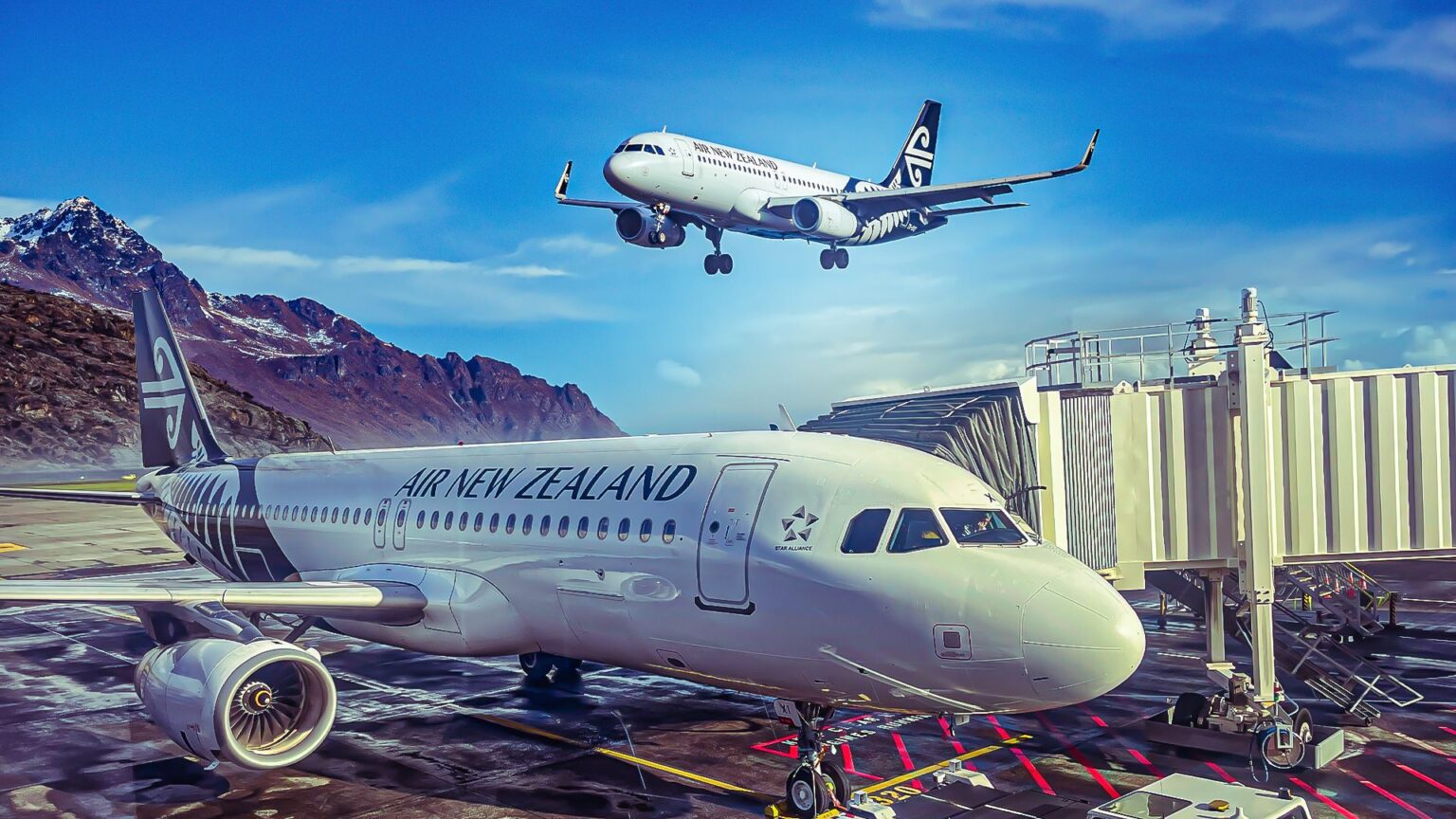
On Friday, June 13, I was returning home from a three-day trip on New Zealand’s East Coast for business. For my return flight home, I was booked to travel from Gisborne to Christchurch Airport, a flight that is not operated directly, resulting in a stopover in the country’s biggest city, and busiest airport, Auckland. My first flight, an Air New Zealand Bombardier Dash 8 Q300 service, took around 40 minutes to travel gate to gate.

- Year Founded
-
1965
- CEO
-
Greg Foran
For my second flight, I traveled on an Air New Zealand Airbus A320 (ZK-OXA) from  Auckland Airport to Christchurch, the largest city on New Zealand’s South Island. My trip was in economy, in a ‘seat fare’, which is exactly how it sounds: seat only, with paid preferred seat selection. I had only been away from home for a couple of days, so I was traveling solely with a carry-on suitcase and a laptop. As a frequent flyer, my expectations for the flight home were high.
Check-In
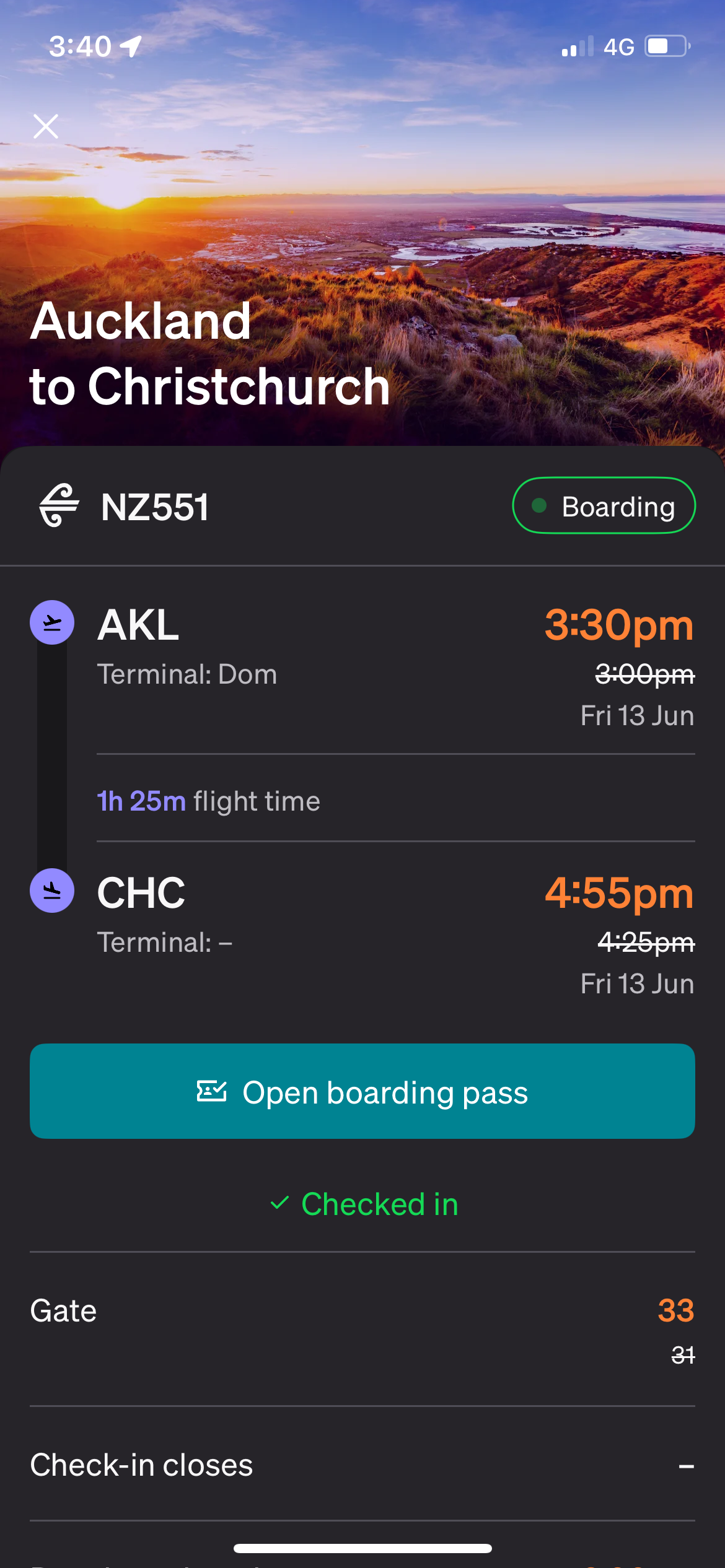
Photo: Aaron Bailey | Simple Flying
Being able to easily check in online avoided any long queues at the airport to get my boarding pass. This allowed me to bypass the check-in counters and head straight through security to board my next flight. My flight was scheduled to depart at 15:00, a quieter time at the airport before the early evening rush. I was able to clear security with little wait, with only a dozen people in the security area, with three x-ray machines in operation, I was airside in just minutes.
Auckland Airport does not have priority security screening lanes, and at this time of day, on this occasion, wouldn’t have been necessary anyway. The hub is currently undergoing a thorough transformation that will see a new domestic jet terminal built, directly accessing the international section of the airport. While this is still under construction, did required me to find a spare seat in a somewhat crowded part of the old terminal. The new terminal is expected to be completed by 2029.
Departure Airport Experience
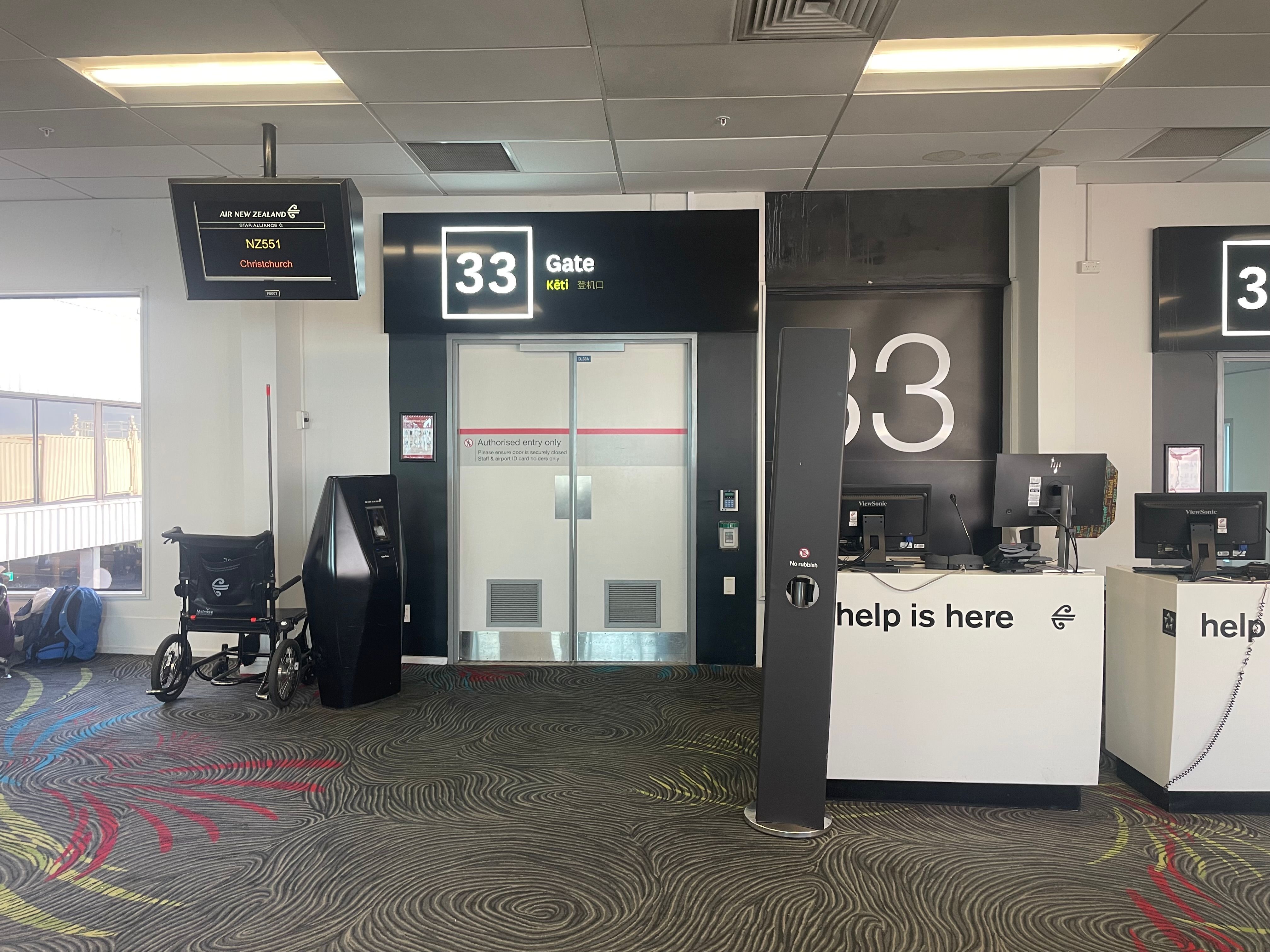
Photo: Aaron Bailey | Simple Flying
The terminal itself is split into two, regional and jet services, with the latter being the only one where passengers are required to pass through airport security. The jet portion of the terminal is used by only two domestic operators in New Zealand, Air New Zealand and the Australian low-cost carrier Jetstar (a subsidiary of the Qantas Group).
Jetstar occupies one end of the terminal, while Air New Zealand occupies the majority of all other gates. Other regional carriers, including Air Chathams and Barrier Air, have their dedicated check-in counter at the regional end of the terminal. There is also a range of food and shopping outlets you can explore.
The Lounge
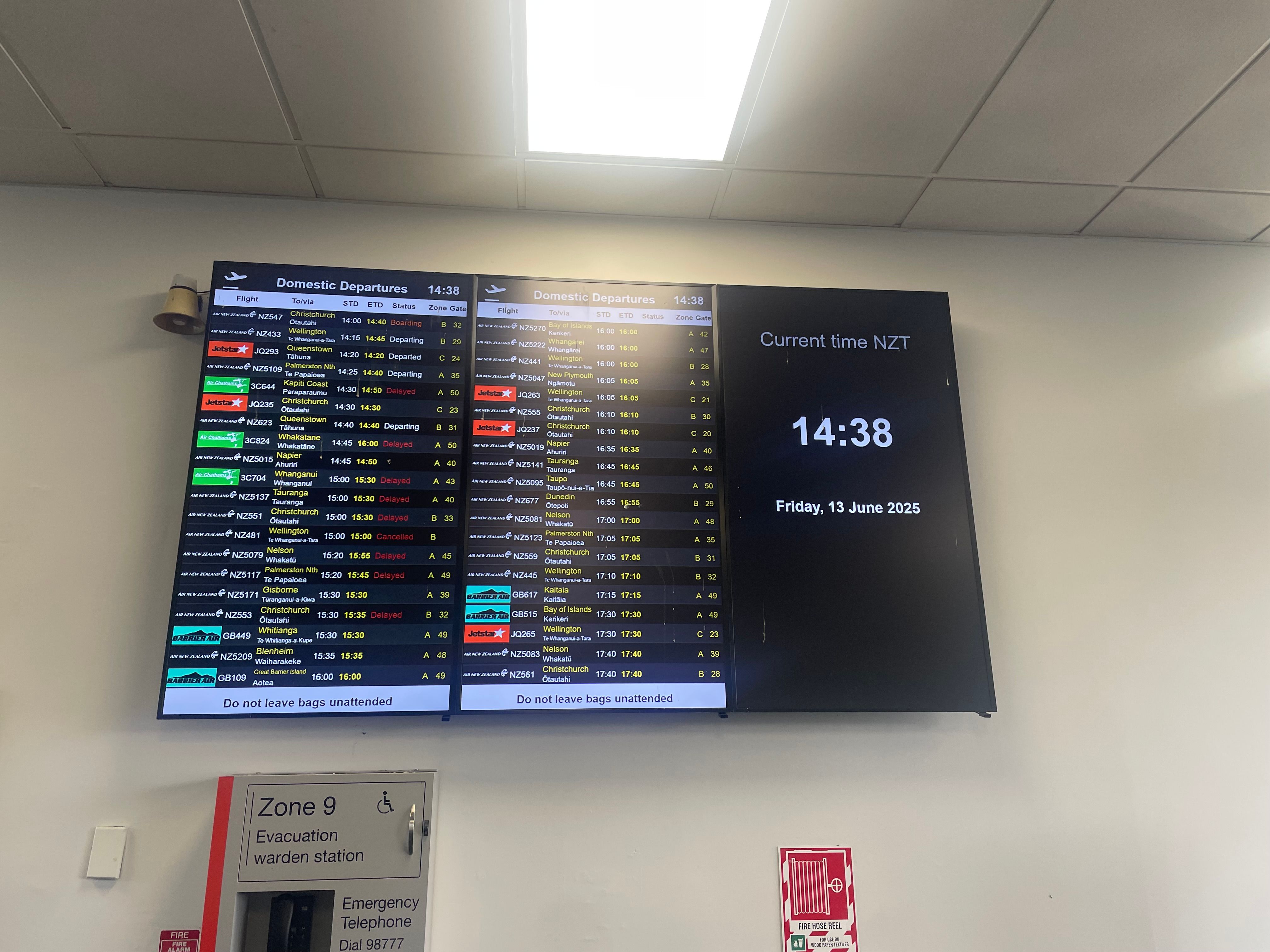
Photo: Aaron Bailey | Simple Flying
There is an Air New Zealand lounge located near gates 32 and 33, which is large enough to usually cater for eligible travelers, and you can read more about my Air New Zealand lounge reviews here. Today, I was not accessing the lounge as I had a short amount of time to connect to my next flight, so I found a seat near gate 31, and plugged in my devices to charge from an easy-to-find plug on the wall. I settled in and waited briefly for my flight (or so I thought).
As I sat down, an announcement came over the intercom that our service, Air New Zealand flight 551 to Christchurch, would be delayed by around 30 minutes due to the inbound service running behind schedule. This was communicated clearly multiple times over the intercom, and a last-minute gate change fortunately had me only needing to move two gates over (from 31 to 33).
The Boarding Process
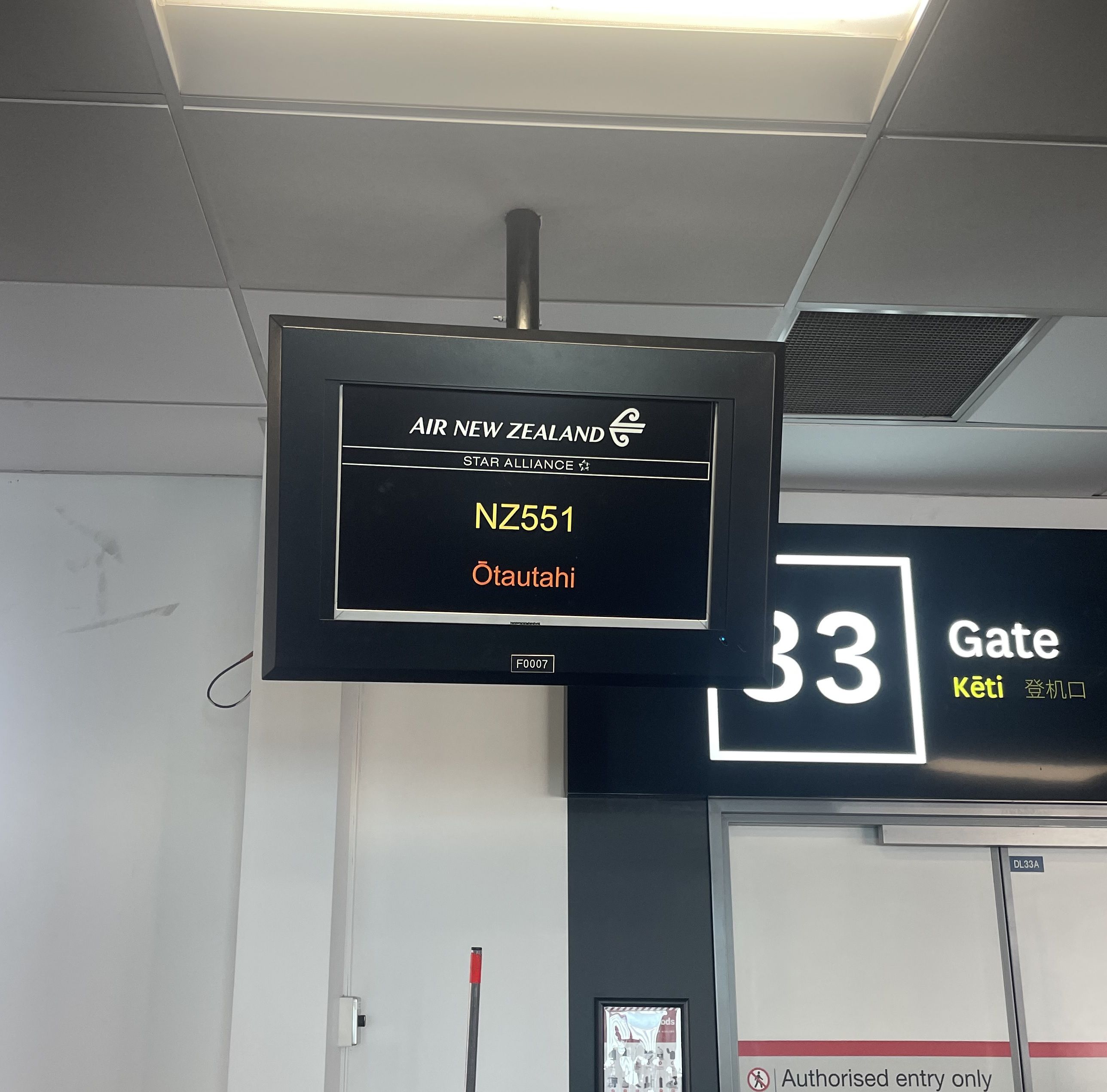
Photo: Aaron Bailey | Simple Flying
Boarding began at 15:10, with passengers walking down the airbridge to the aircraft, and, by 15:18, I was walking down the aisle to my allocated seat. I’m fortunately a frequent flyer with Air New Zealand (find out more about the membership program here), and was one of the first onboard, making it easy to stow my bag in the overhead lockers, find my seat, and buckle in.
The cabin was clean and well presented, and the aircraft we were flying was an Airbus A320. It bore the registration ZK-OXA, and it has been in operation for 12 years for the  Star Alliance carrier, dedicated to domestic jet routes.
According to the Air New Zealand website, it has two types of A320 in its fleet: 17 Airbus A320ceos, for domestic operations, which have slim seats and no seat-back IFE, and can carry up to 171 passengers in 29 rows, and 17 Airbus A320neos and A321neos, which are dedicated to short-haul international flights. These aircraft have more comfortable seating and touch-screen seat-back entertainment. Air New Zealand plans to add five more A320neo / A321neo aircraft in the next few years.
The Seat
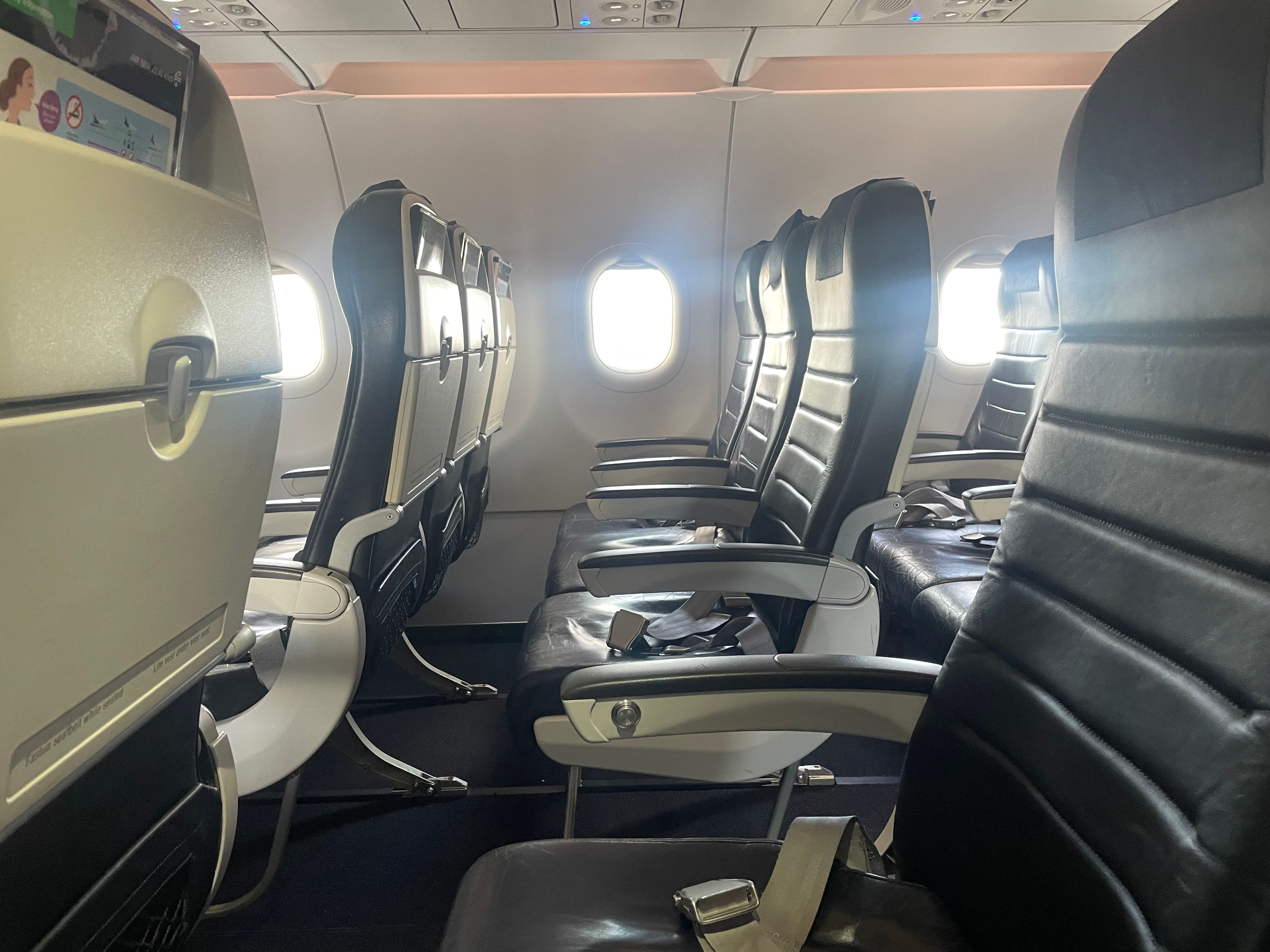
Photo: Aaron Bailey | Simple Flying
The seat was comfortable and in the classic Air New Zealand navy blue tone, with a seat pitch was between 30 and 33 inches (76 – 84 cm). The seat tray was clean, and my seat could recline enough to get comfortable for the one-hour, 20-minute service to the Garden City (CHC). There are two toilets located onboard, one at the front of the aircraft and one at the rear.
In-flight amenities onboard included a complimentary copy of the airline’s ‘Kia Ora’ magazine, and there is a shared television that shows the popular ‘Great Air New Zealand Quiz’, which showcases some top Kiwi trivia. WiFi is not currently available onboard all domestic jet services, but this is set to be trialled with partner Starlink later this year. Before we took off, we all got to enjoy the famous Air New Zealand Safety Briefing, which, in its latest version, involved famous sports stars and comedians.
In-Flight Service
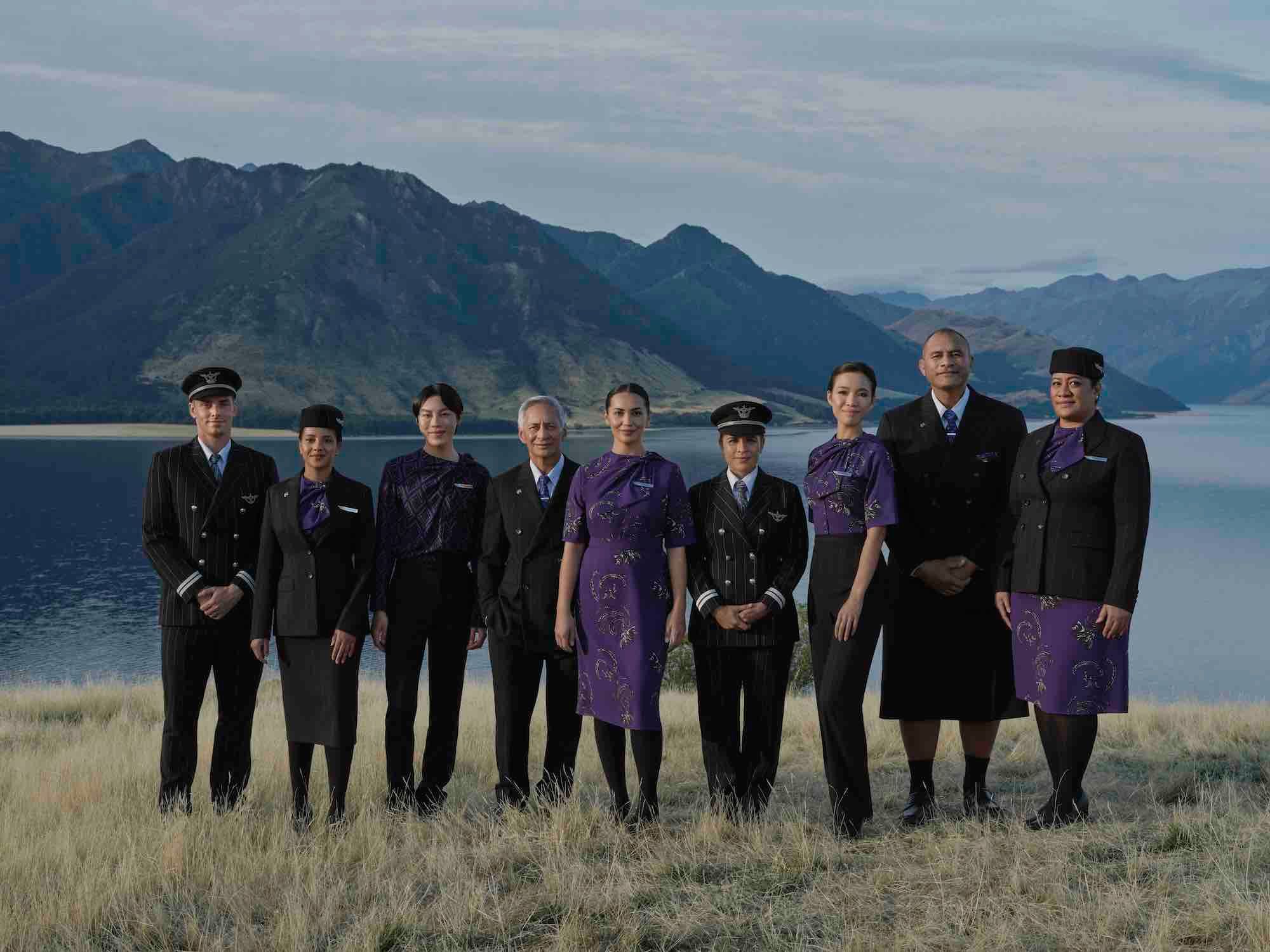
Photo: Air New Zealand
The flight was crewed by four friendly female flight attendants, three of whom were in the current Air New Zealand uniform designed by Trelise Cooper. However, fortunately for us, they were also showcasing and testing the newly announced ‘Anything But Uniform‘, of which one flight attendant wore throughout the flight. The impression of the new uniform was fantastic, and a timely update to the current uniform. It’s soft and attractive purple tones, paired with beautifully created design prints.
Throughout the flight, the crew were attentive and polite to all passengers onboard, and both the flight attendants and pilot came onto the loudspeaker to apologise for the late running of the aircraft. Once boarding was completed, we pushed back from the gate at 15:40, 40 minutes behind the scheduled departure time.
During our taxi, there was a problem that was brought up by a passenger a few rows ahead, and three cabin crew attended to the individual. Soon enough, we were sorted and all the crew were seated. The aircraft eventually took off at 16:03, shortly after an inbound Air New Zealand A320 service had arrived from Wellington (the nation’s capital).
Meals And Beverages
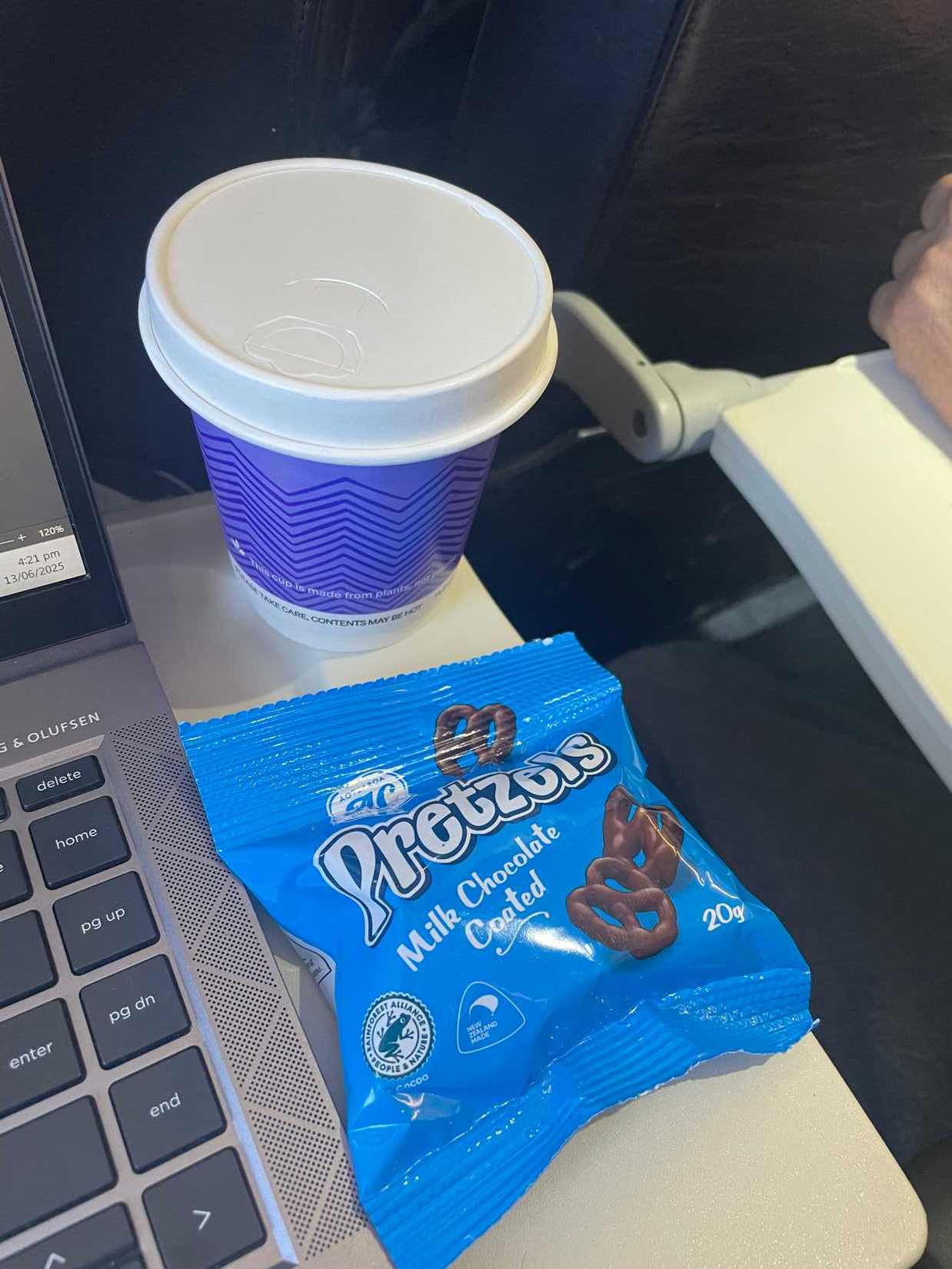
Photo: Aaron Bailey | Simple Flying
Onboard short domestic services, Air New Zealand offers a complimentary cup of tea, coffee, or water. I selected a cup of tea with a dash of milk. It is safely stored in a reusable cup with a paper lid to avoid any hot spills. This is accompanied by a free snack, which was either corn puffs, Finns fudge (gluten-free option), or chocolate-flavoured pretzels. I am a big fan of these pretzels, so this was my decision for today’s flight.
A unique addition to some flights, unfortunately not for me today, is that Air New Zealand offers ‘Koru hour’. Which delights passengers with complementary alcoholic and non-alcoholic beverages, in addition to cheese, crackers, and chips – a nod to what it is like to be an Air New Zealand lounge member. These Koru Hour flights are offered on select services during the week in the early evening. Today, unfortunately, I missed out.
Arrival Airport Experience
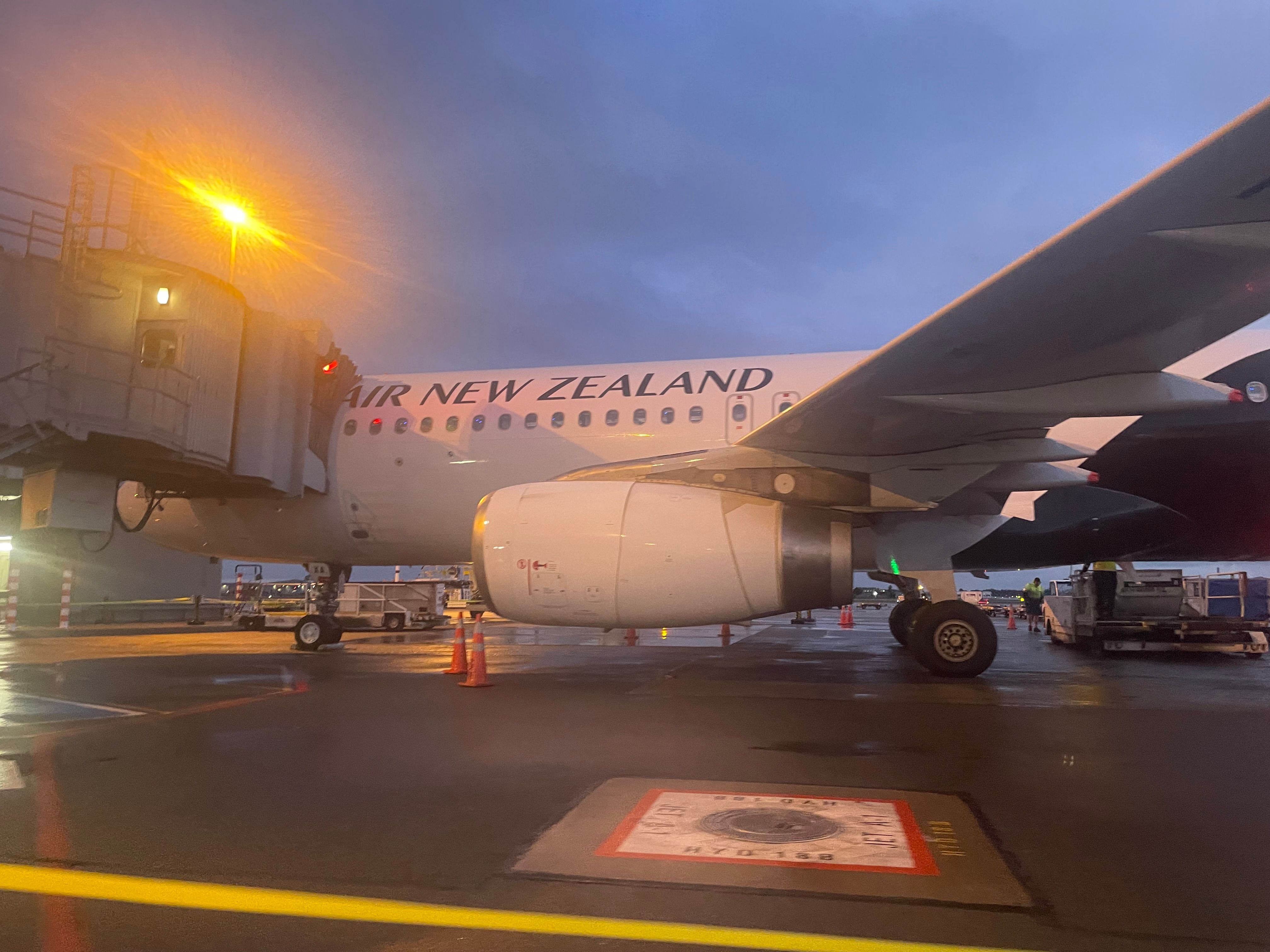
Photo: Aaron Bailey | Simple Flying
The descent started at 16:46, with the pilot announcing our estimated arrival time of 17:15, and again apologizing for the late arrival of the aircraft. The crew then came through the cabin to collect any rubbish with the seat belt sign coming on at 16:54. The flight landed on the Christchurch Airport’s southerly runway at 17:11, 44 minutes behind its original scheduled arrival time. Our friendly crew were polite and welcomed us to Christchurch, and again apologised for the late running of the flight.
The aircraft was at the airport’s Gate 18 by 17:14, and disembarkment commenced at 17:20. Passengers had the choice to exit via the front air bridge, or via the rear stairs across the tarmac, of which I opted for the latter.
Christchurch Airport is the busiest airport on New Zealand’s South Island, and caters to multiple domestic airlines (Air New Zealand, Jetstar, Air Chathams, and Sounds Air). All of these airlines operate domestic flights around the country, but only Air New Zealand and Jetstar operate domestic jet flights.
Upon disembarking, we entered the domestic terminal and made our way to the arrivals area to exit the building. There were no queues, and exiting the airport was a dream. As I had no checked baggage, I was out the door in no time, and walking to my vehicle, which was parked in the airport’s long-term parking lot.
The Flight Details
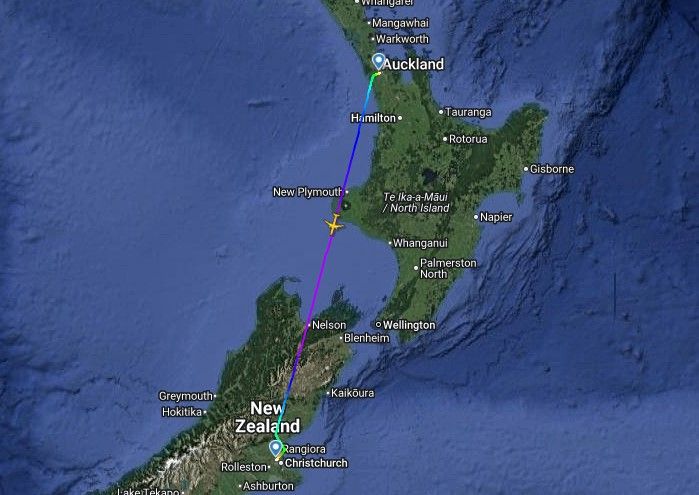
Image: Flightradar24
According to ch-aviation, the aircraft took its first test flight on May 16th, 2013, under French Airbus registration F-WWBH. The aircraft was eventually delivered to Air New Zealand on June 15th, 2013, where it was registered as ZK-OXA. It holds the serial number 5629.
The aircraft is owned by Air New Zealand and has operated for 12.1 years, powered by two IAE V2527-A5 engines. As of March 31, 2025, the aircraft has completed a total of 23,979 flight hours and encompassed a total of 23,216 flight cycles. Its average daily utilization is five hours and 32 minutes, with an average annual cycle total of 1,953, or 2,017 hours.