
Israel-Iran conflict, Saturday: Another energy price increase in Kosovo would be a shock to the economy

Express newspaper
23/06/2025 16:20
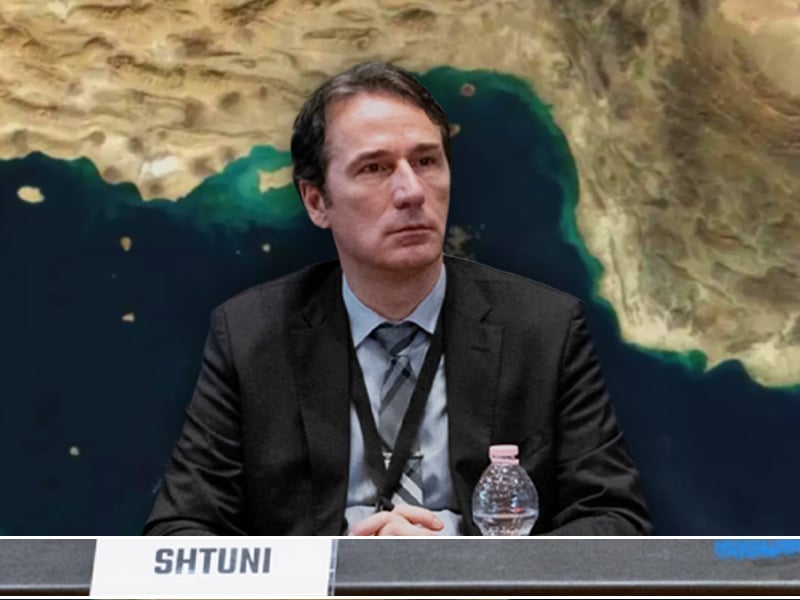
Security expert Adrian Shtuni, speaking about developments in the Middle East, said that the nature of the global crisis is such that no one remains immune to its consequences, but not everyone is affected equally.
“Kosovo is generally moderately vulnerable, but comparatively more so than other Western Balkan countries,” he says, citing economic, political and security reasons.
Adrian Shtuni, from the International Counterterrorism Center, emphasizes that Kosovo is particularly vulnerable to the economic consequences that this crisis could cause.
He explains that the situation would deteriorate significantly if Iran decides to close the Strait of Hormuz, through which about 20 percent of global oil and natural gas consumption passes.
For a country like Kosovo, which has already experienced a significant increase in the price of electricity of 16% this year, “further increase would be a shock to the economy,” Shtuni tells Radio Free Europe.
He underlines that, with an economy heavily reliant on imports and remittances – which account for around 13% of Gross Domestic Product – any shock to the global economy would immediately translate into pressure on Kosovar families.
“Also, the fact that Kosovo has a significant trade deficit, which in December 2024 increased by 17.5% compared to a year earlier, exposes it even more to a global crisis, which would increase not only the price of energy, but also of food and consumer goods, which the country mainly imports,” says Shtuni.
The Washington-based expert warns that the economic consequences cannot be separated from the political and security challenges.
In times of crisis, when the attention of strategic partners is scattered, he says that Kosovo risks falling off the radar of even its most important allies.
Along the same lines, Shtuni adds that actors with unfriendly intentions towards the Western Balkans, especially those who are traditionally against the membership of the countries in the region in the EU and NATO, may exploit the stagnation of global crises to destabilize the region.
According to him, these threats target two weak points, Bosnia and Herzegovina and Kosovo, by instrumentalizing the divisions and interethnic tensions in these two countries.
Radio Free Europe contacted the acting Government of Kosovo to ask whether concrete measures have been taken to protect the economy and energy sector from a potential global crisis, but received no response.
In this challenging context, experts underline the urgent need to strengthen institutions and deepen regional and international cooperation.
Shtuni emphasizes that the fact that Kosovo, even more than four months after the elections, does not have a constituted assembly and functional government, severely weakens its capacity to face security challenges.
He calls this a “self-inflicted weakness” from a lack of political will.
“This constitutes the most damaging disarmament of leadership in Kosovo, disarmament from political accountability and practical thinking for compromise solutions. If there is no rapid awareness, this crisis risks bringing costly and long-term consequences for the country,” says Shtuni.