
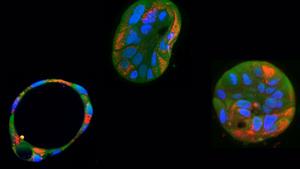
In a step toward treating mitochondrial diseases, researchers successfully edited harmful mutations in mitochondrial DNA using genetic tool known as base editor in human cells in the lab, restoring healthy mitochondrial function. The results offer new hope for people with rare genetic conditions.
https://www.eurekalert.org/news-releases/1087554
1 Comment
Scientists use gene editing to correct harmful mitochondrial mutations in **human cells**
**In a step toward treating mitochondrial diseases, researchers in the Netherlands have successfully edited harmful mutations in mitochondrial DNA using a genetic tool known as a base editor. The results, published June 24th in the open-access journal PLOS Biology, offer new hope for people with rare genetic conditions.**
Mitochondria, often called the powerhouses of the cell, have their own small set of DNA. Mutations in this mitochondrial DNA can lead to a wide range of maternally inherited diseases, cancer, and aging-related conditions. While the development of CRISPR technology has given scientists new ways to correct mutations in nuclear DNA, this system cannot effectively cross the mitochondrial membrane and reach mitochondrial DNA.
In the new study, the researchers used a tool called a base editor—specifically, a DdCBE (double-stranded DNA deaminase toxin A-derived cytosine base editor). This tool allows scientists to change a single letter in the DNA code without cutting it, and it works on mitochondrial DNA.
The team showed that they could effectively generate and correct mitochondrial DNA mutations in multiple disease-linked cell types in the lab. First, they engineered liver cells to carry a mitochondrial mutation that impairs energy production. Then they showed they could fix a different mutation in skin cells taken from a patient with the mitochondrial disorder Gitelman-like syndrome, restoring key signs of healthy mitochondrial function.
To help move the therapy toward clinical use, the researchers also tested the efficacy of delivering the mitochondrial base editors in mRNA form, rather than as DNA, and within lipid nanoparticles for delivery. They showed that these approaches are more efficient and less toxic to cells than older methods like DNA plasmids. Importantly, the edits were highly specific, with minimal off-target changes detected in nuclear DNA and multiple detected in mitochondrial DNA.
Here’s the link to the peer reviewed journal article:
https://microbialcell.com/researcharticles/2025a-alao-microbial-cell/