
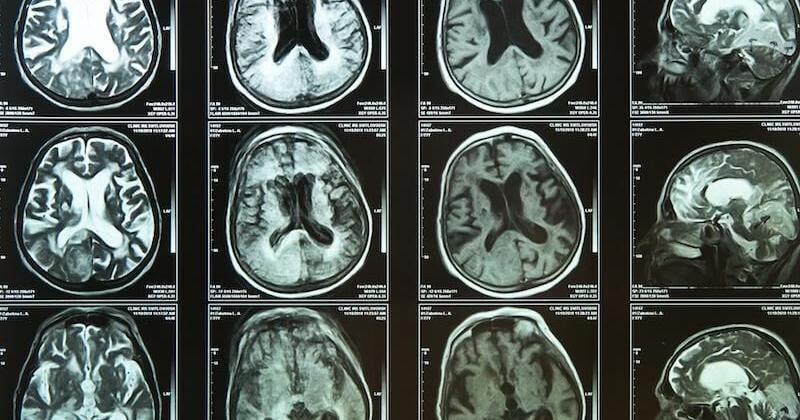
Tulane University researchers created a first-of-its-kind subcellular map of an area of the brain commonly affected by Alzheimer’s disease, a key step toward unraveling the mysteries of how the degenerative brain disease develops.
The Center for Biomedical Informatics and Genomics at Tulane, a large research center established in 2011, were groundbreakers in national osteoporosis research with over 17,000 medical subjects involved. Since then, the center has been sought out for growing technologies and studies across the country — its latest venture is the brain.
Led by Dr. Yu Gong and Dr. Hui Shen, the study applied nanotechnology to analyze specific tissues in the brain in order to map differences in the “normal” brain and the Alzheimer’s brain. In this study, the pair looked at six brains from Alzheimer’s patients between the ages of 70 and 90 years old — the late-onset classification of the disease.
The researchers used stereo sequencing to examine a small section of the prefrontal cortex — the region responsible for decision-making and emotional control — at varying stages of Alzheimer’s.
The study, published in Nature Communications, looked at genetics that cause the loss of brain cells that allow the disease to progress. The study also identified a key protein as a potential target for treatment.
This technology allowed them to “map” the brain tissue at nearly 250 times the resolution of older tools, essentially zooming in to reveal genetic interactions within a single cell and how those shift as the disease progresses.
More than 55 million people worldwide suffer from dementia, with Alzheimer’s accounting for 60% to 70% of those cases. Despite the prevalence, little is known about its cause and existing medications can only temporarily ease symptoms, not prevent the disease from progressing.

Dr. Yu Gong, an instructor at the Center for Biomedical Informatics and Genomics at Tulane University in New Orleans, led the team at Tulane on a new, novel technology mapping the brain.
Photo provided by Tulane University
Gong, an instructor at the Center for Biomedical Informatics and Genomics at Tulane University in New Orleans, received both his master’s and doctorate degrees from Tulane and was the lead author of the groundbreaking study.
What was significant about this study?
The most important thing is that we’ve identified several interesting interactions at the molecular level that work to protect neurons under stress, and these interactions disappeared in Alzheimer’s patients.
If we can find a way to target a protein in the brain called ZNF460 that could be essential for treatment, in a way that keeps these modules functioning, then we might be able to inhibit the progression of Alzheimer’s.
In another surprising discovery, the study found that layered structure of the brain disappears as the disease advances, a phenomenon had not been observed before.
There’s another area that we’re working on right now for the hippocampus, a smaller part of the brain primarily responsible for forming memories, navigation and processing emotions.
We’re working to map this area of the brain next.
What makes this research important for all brain diseases?
After mapping of the brain, we can understand what is going on there. We can compare the normal brain to the Alzheimer’s disease brain — and what the difference is between them.
Once we understand the molecular mechanisms of Alzheimer’s disease, in the future, we can develop targets. We can create drugs based on the mechanisms we identified so that we can maybe cure, or maybe just postpone, the progression of Alzheimer’s.
The most important part of Alzheimer’s is the diagnosis, especially the early diagnosis. not only the Alzheimer’s disease, but there is a specific stage of the Alzheimer’s disease, the precursor stage, that only identifies one particular Alzheimer’s genetic mark — but we cannot identify another one.
When we identify this stage, we can start the therapeutic interventions that may help to postpone the progression of the disease. I think that is what we’re going to be looking at in the future.
Another study that is ongoing at the center is trying a “drug repurposing study.”
This study will look at brains after using currently available Food and Drug Administration-approved drugs to see whether any of them have beneficial effects on the Alzheimer’s disease on the molecular level.
This will be an alternative way to develop drugs, because we know developing a new drug is very expensive and time consuming. The “drug repurposing” is a cost efficient way to identify alternative drugs and identify new treatments for the disease.
How did you come across this research, this technology?
The technology we used is called stereo sequencing — a cutting edge technology.
Spatial transcriptomics, a technology that maps gene patterns in specific locations within a tissue sample, is a very hot area in the medical world right now.
We don’t have that technology here at Tulane yet, but we use data from the University of Kansas Medical Center. When we attended the national conference for the American Society of Human Genetics, we met with the company that develops this technology and applied for a pioneer project.
We got selected and spent a half a year to figure out different pipelines and algorithms to analyze the data.
We applied this novel technology on the human brain to understand what is going on in our brains and what happens in the brain from the individuals with the Alzheimer’s disease.