
Record-Breaking Results Bring Fusion Power Closer to Reality – Breakthroughs from two rival experiments, Germany’s Wendelstein 7-X and the Joint European Torus, suggest the elusive dream of controlled nuclear fusion may be within reach
https://www.scientificamerican.com/article/record-breaking-results-bring-fusion-power-closer-to-reality/
4 Comments
From the article
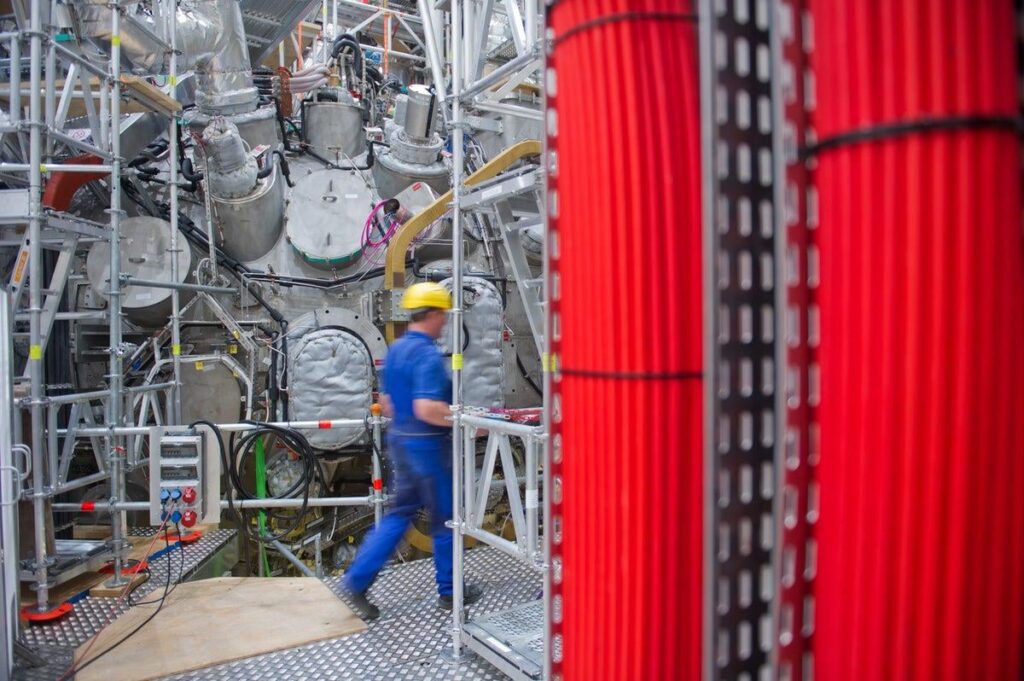
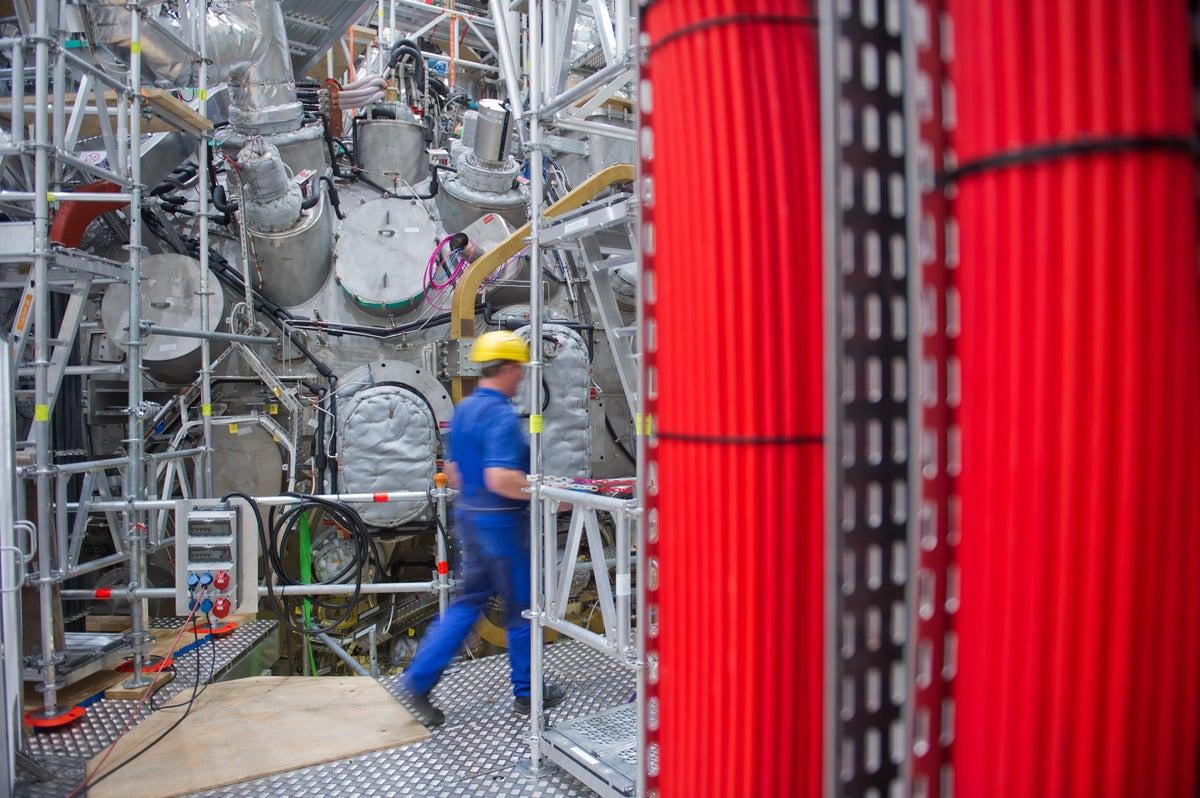
The ribbon was a plasma inside Germany’s Wendelstein 7-X, an advanced fusion reactor that set a record last May by magnetically “bottling up” the superheated plasma for a whopping 43 seconds. That’s many times longer than the device had achieved before.
It’s often joked that fusion is only 30 years away—and always will be. But the latest results indicate that scientists and engineers are finally gaining on that prediction. “I think it’s probably now about 15 to 20 years [away],” says University of Cambridge nuclear engineer Tony Roulstone, who wasn’t involved in the Wendelstein experiments. “The superconducting magnets [that the researchers are using to contain the plasma] are making the difference.”
And the latest Wendelstein result, while promising, has now been countered by British researchers. They say the large Joint European Torus (JET) fusion reactor near Oxford, England, achieved even longer containment times of up to 60 seconds in final experiments before its retirement in December 2023. These results have been kept quiet until now but are due to be published in a scientific journal soon.
According to a [press release from the Max Planck Institute for Plasma Physics in Germany](https://www.ipp.mpg.de/5532945/w7x), the as yet unpublished data make the Wendelstein and JET reactors “joint leaders” in the scientific quest to continually operate a fusion reactor at extremely high temperatures. Even so, the press release notes that JET’s plasma volume was three times larger than that of the Wendelstein reactor, which would have given JET an advantage—a not-so-subtle insinuation that, all other things being equal, the German project should be considered the true leader.
This friendly rivalry highlights a long-standing competition between devices called stellarators, such as the Wendelstein 7-X, and others called tokamaks, such as JET. Both use different approaches to achieve a promising form of nuclear fusion called magnetic confinement, which aims to ignite a fusion reaction in a plasma of the neutron-heavy hydrogen isotopes deuterium and tritium.
The Chinese fusion project EAST achieved 1066 seconds.
So we’re not far behind in Yurop 🤤
> It’s often joked that fusion is only 30 years away—and always will be. But the latest results indicate that scientists and engineers are finally gaining on that prediction. “I think it’s probably now about 15 to 20 years [away],” says University of Cambridge nuclear engineer Tony Roulstone, who wasn’t involved in the Wendelstein experiments. “The superconducting magnets [that the researchers are using to contain the plasma] are making the difference.”
So if its taken about 50 years to go from 30 years to 15 years, we are optimistically just about 50 more years from cutting that time in half again, to 7.5 years away. Think of how great that will be!
The greedy energy corporations will still charge us the same amount or more.