
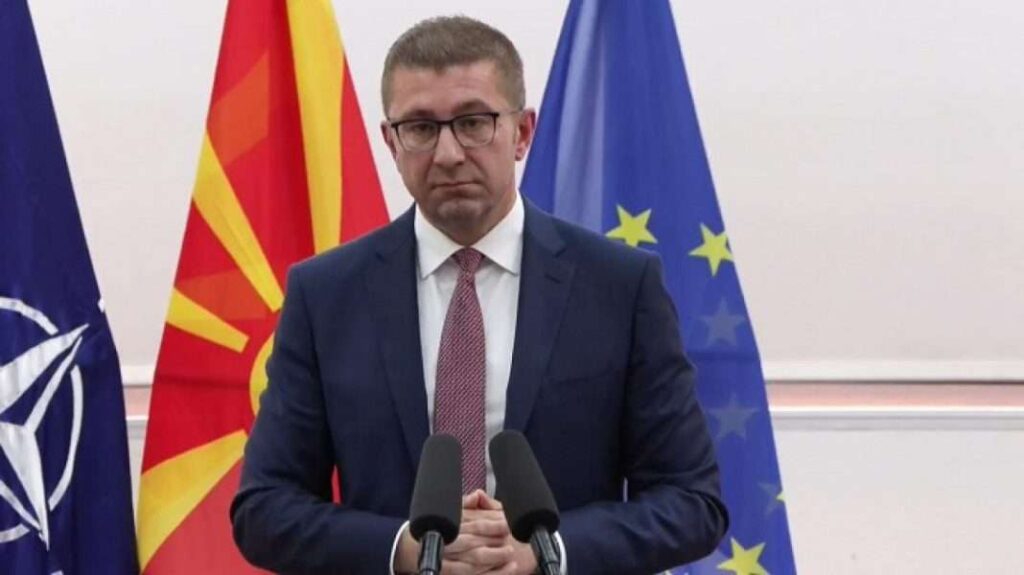
North Macedonia taxing unmarried people to increase birth rate? What Mickoski warned

Express newspaper
04/07/2025 20:52
Macedonian Prime Minister Hristijan Mickoski is considering introducing a tax on unmarried people. Although he did not clarify exactly what this would mean, namely from what age a single person would pay the tax, he said that more and more people are living alone and fewer and fewer are getting married, and as a result, fewer children are being born.
“Let’s build a state in which hope is more important than a passport. We know that there is no magic solution, but there is a deliberate and sustained state struggle – and we have started it. Every measure, investment and policy we take is aimed at restoring trust, and we are seriously considering imposing additional taxes on unmarried people,” declared Hristijan Mickoski – Prime Minister.
Mickoski said the data is alarming – the death rate is higher than the birth rate – and accused previous governments of not addressing the problem of low birth rates seriously. The birth rate has fallen from 12.5 per thousand in 2010 to 8.8 in 2024, he added.
“The facts are clear. In 2024, 16.061 children were born, while 20.201 people died. This is a natural decrease of 4.140 people in just one year. In the last four years, we have lost over 33.000 inhabitants – as if an entire city the size of Kavadarci or Kichevo had disappeared. I hope, Professor Janevska, that this year in the primer they will not only write ‘mom, dad and me’, but also ‘brother, sister, me, mom and dad'”, emphasized Prime Minister Hristijan Mickoski.
How will the birth rate be stimulated? What measures will the Government implement? The Minister of Social Policy, Demography and Youth, Fatmir Limani, announced financial assistance.
“Increase in one-time financial support for the first child – this is one of the measures we are planning. Drastic increase in financial assistance for the second child, as well as financial assistance for twins. For employed mothers, we foresee additional financial support after the birth of the first child”, said Fatmir Limani – Minister of Social Policy, Demography and Youth.
National Coordinator for Demography and Youth, Vlatko Gjorgjiev, added that the size of the financial assistance will be determined later and that budgetary possibilities are currently being reviewed. In addition, he stressed that work is also being done to reduce youth emigration.