
July 6 is a public holiday in the Czech Republic, observed with religious services, historical reenactments, and public gatherings across the country. Commemorative events take place in Hus’s birthplace of Husinec in South Bohemia, as well as at Prague’s Bethlehem Chapel, where Hus delivered many of his most influential sermons challenging the corruption and excesses of the Catholic clergy.

A Catholic priest and rector of Charles University in Prague, Jan Hus was deeply influenced by the ideas of English reformer John Wycliffe. He advocated for church reform, the return to a more modest and moral clergy, and the translation of the Bible into the vernacular so that ordinary believers could read it for themselves.
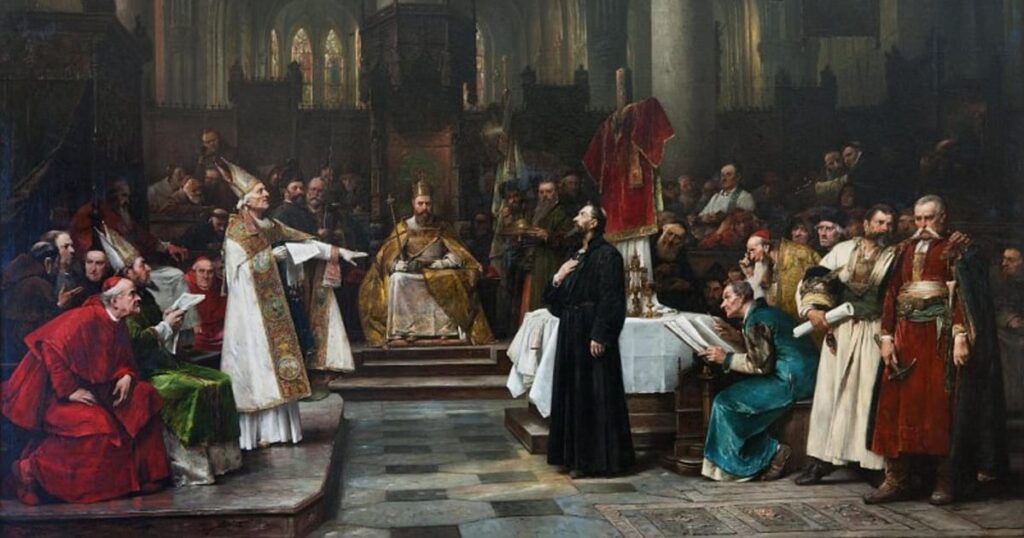
Hus’s teachings gained widespread support among Czech people, especially in Prague, but met fierce opposition from Church authorities. Excommunicated in 1411, Hus was summoned to the Council of Constance under the promise of safe conduct. Instead, he was arrested, tried, and burned at the stake on July 6, 1415.
His martyrdom sparked the Hussite Wars, a series of revolutionary religious conflicts that would shape the political and religious landscape of Central Europe for decades. Today, Jan Hus is remembered as a national hero and a symbol of moral courage, truth, and resistance to tyranny.