
China and Russia have signaled that they are prepared to become the first nuclear-armed states to sign a Southeast Asian nuclear treaty, while the United States is reportedly reviewing its stance.
Malaysia’s foreign minister made the announcement at last week’s summit of the Association of Southeast Asian Nations, where regional leaders urged fresh momentum on a protocol to a 1995 accord in which ASEAN members renounced the pursuit of nuclear weapons.
Newsweek contacted the Chinese and Russian foreign ministries and U.S. Department of Defense for comment via email.
Why It Matters
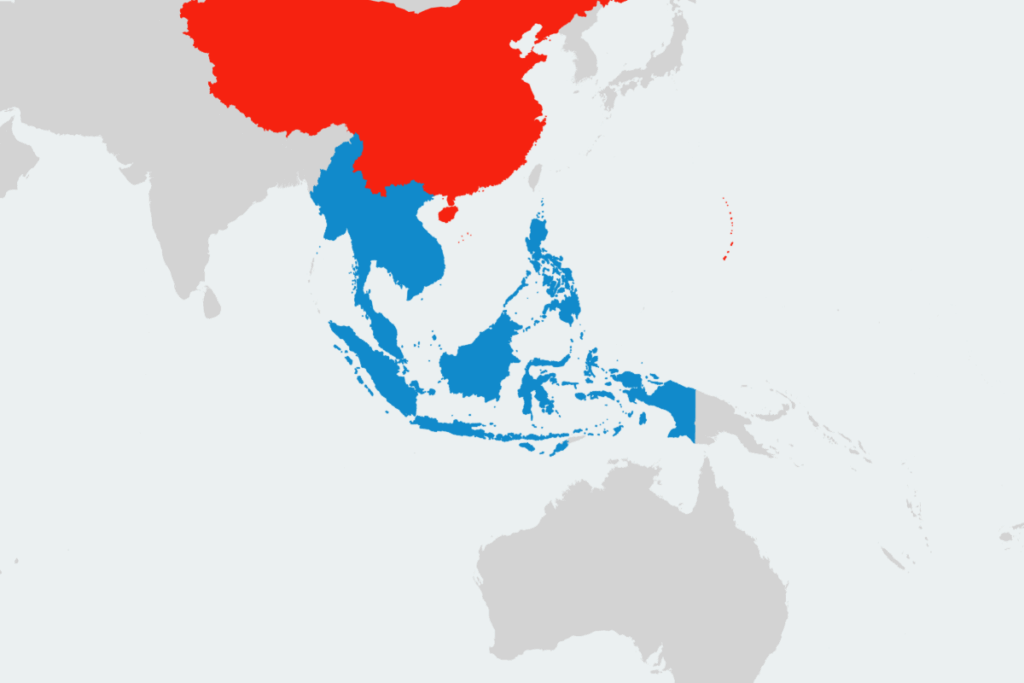
A Newsweek map highlights the 10-nation bloc, whose leaders hope that the three major nuclear powers will sign the Southeast Asia Nuclear Weapon-Free Zone Treaty protocol barring use of nuclear arms in the strategic region.
The renewed momentum to secure these commitments comes amid heightened tensions in the region between China and several neighbors—including U.S. defense treaty ally the Philippines—and growing calls from within ASEAN for neutrality.
What To Know
States with nuclear weapons have historically resisted the protocol because of concerns over mutual security guarantees and the right to free navigation.
However, during his remarks at the 58th ASEAN Foreign Ministers’ Meeting on Wednesday, Malaysia’s top diplomat, Mohamad Hasan, said efforts to bring the world’s top three nuclear powers on board were gaining momentum.
Russia and China have both committed to the protocol, and the U.S. is considering whether to follow suit, he said. Hasan added that having powers as signatories would help safeguard Southeast Asia as a nuclear-free region.
The following day, during the Chinese Foreign Ministry’s regular news conference, spokesperson Mao Ning said China was a “comprehensive strategic partner and friendly neighbor” to ASEAN.
“We have said more than once that China is ready to take the lead in signing the Protocol to the SEANWFZ Treaty,” she added. “We will maintain communication with ASEAN countries on this matter.”
Of the five recognized nuclear-armed states under the 1970 Treaty on the Non-Proliferation of Nuclear Weapons, China is the only one to have adopted a no-first-use policy.
What People Have Said
Dato’ Sri Amran Mohamed Zin, the secretary-general of the Malaysian Foreign Ministry, said during the 58th ASEAN Foreign Ministers’ Meeting: “Talks are ongoing, and important decisions have previously been made on whether nuclear-weapon states can participate with or without reservations. We believe there is progress, even though the matter has taken a long time.”
Gilberto Teodoro, the Philippine defense secretary, said, as quoted by the Philippine Daily Inquirer: “How can they take the lead if they’re not showing any good faith? During COVID, they refused an international study. Now they say they’re willing to lead. That’s just hot air without action.”
What Happens Next
While China still trails Russia and the U.S. in sheer nuclear numbers, the East Asian power has rapidly expanded its arsenal—adding about 100 new warheads per year since 2023, according to estimates from the Stockholm International Peace Research Institute. China’s stockpile, now at 600 warheads, is expected to surpass 1,000 by the end of the decade.
This, combined with China’s increasingly advanced nuclear delivery systems and strengthening defense ties with Russia, has Washington scrambling to shore up its footing in the Asia-Pacific.
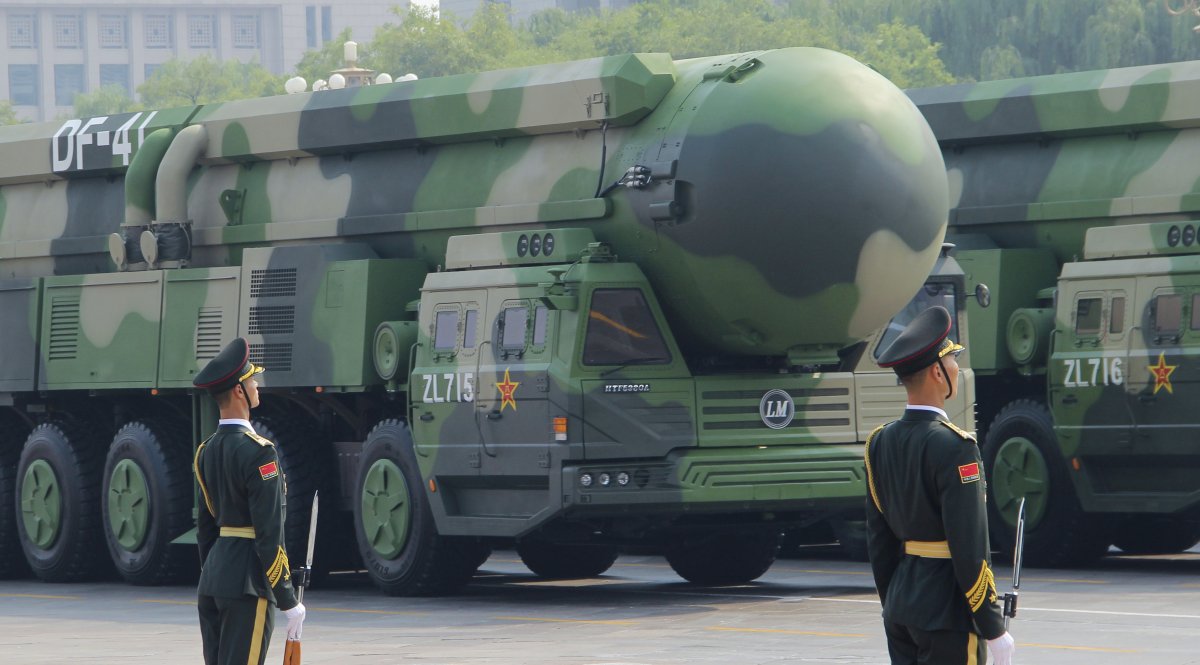
Military vehicles in Beijing carrying DF-41 intercontinental ballistic missiles driving past Tiananmen Square during the military parade to celebrate the 70th anniversary of the founding of the People’s Republic of China.
Military vehicles in Beijing carrying DF-41 intercontinental ballistic missiles driving past Tiananmen Square during the military parade to celebrate the 70th anniversary of the founding of the People’s Republic of China.
Anna Ratkoglo/Sputnik via AP