
Malta has long demonstrated how thoughtful diplomacy, grounded in principle and partnership, can help advance global norms and foster meaningful international cooperation.
From visionary proposals in international law to forward-looking diplomacy on climate and maritime governance, Malta has consistently played a role in shaping global conversations and promoting shared standards.
The recent launch of the Global Centre on Maritime Sanctions Monitoring, headquartered in Valletta, is the latest step in this enduring commitment to responsible and innovative multilateralism.
This legacy traces back to 1967, when ambassador Arvid Pardo addressed the UN General Assembly to propose that the deep seabed be declared the “common heritage of mankind.” That groundbreaking idea laid the foundation for the United Nations Convention on the Law of the Sea (UNCLOS) and remains a cornerstone of international maritime law.
Two decades later, Malta again led from the front, putting climate change on the UN agenda for the very first time in 1988, a move that ultimately contributed to the UN Framework Convention on Climate Change.
These were not isolated acts of diplomatic foresight but part of a broader national tradition. Institutions such as the International Maritime Law Institute (IMLI) and the Mediterranean Academy of Diplomatic Studies (MEDAC), both based in Malta, have trained generations of legal and diplomatic professionals, particularly from developing and Mediterranean countries, contributing meaningfully to global governance, capacity building and legal integrity.
Today, that tradition continues through the Global Centre on Maritime Sanctions Monitoring, a landmark initiative co-chaired by Malta and Antigua and Barbuda and developed in close partnership with the United Nations Office on Drugs and Crime (UNODC). With its own international legal personality, the Centre is designed to enhance accountability at sea, combat flag hopping and support the effective implementation of UN sanctions.
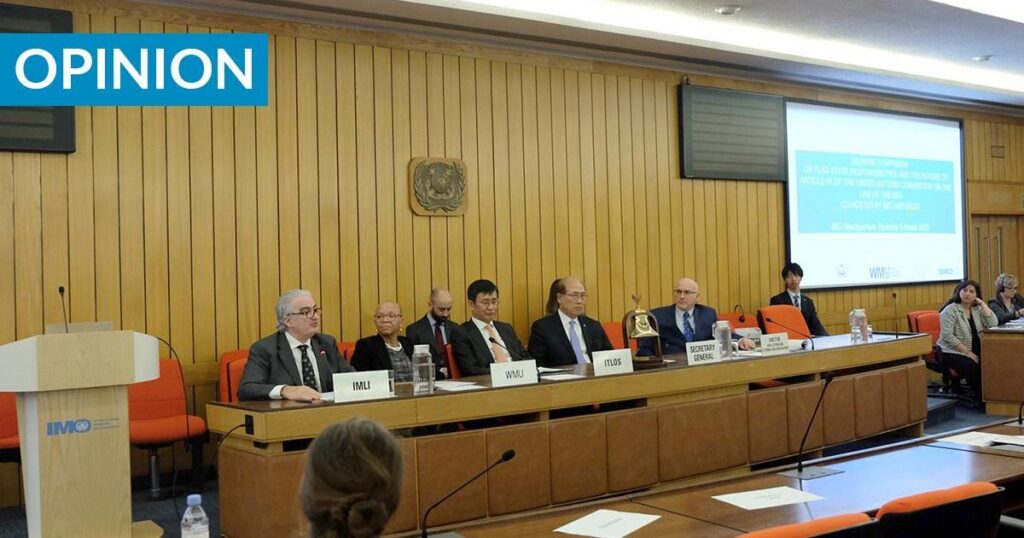
The Centre’s origins can be traced to a 2020 paper presented by Malta at an IMO symposium co-hosted by IMLI and the World Maritime University. The event, organised under the leadership of Prof. Judge David Attard, who, as Malta’s ambassador, had earlier promoted the unanimous adoption of a UN resolution formally recognising climate protection as a concern for present and future generations, reignited global discussion on flag state responsibility and the future of article 91 of UNCLOS.
The paper, which I had the privilege of leading on Malta’s behalf, drew on this momentum to outline a bold vision for strengthening the genuine link between ships and their flags, a principle central to ensuring credible sanctions enforcement and curbing abuse in vessel registration.
The Centre has since gained the support of key international partners and the European Union, with funding from both national and multilateral sources. Deputy Prime Minister Ian Borg recently concluded the host country agreement with UNODC in Vienna, reinforcing Malta’s dedication to effective multilateralism and the international legal order. While the Centre operates independently, UNODC will also maintain a complementary office in Malta focused on building national capacity for maritime registries and law enforcement agencies.
The initiative also reflects Malta’s active role within the Commonwealth, where many small states operate flag registries. Malta will continue supporting Small Island Developing States in strengthening maritime governance, as it already does in areas such as water, education, and health. Just last month, the ministry’s permanent secretary, Christopher Cutajar, represented Malta at the Commonwealth Maritime Domain Awareness Summit in London.
As the world’s sixth largest ship registry, Malta applies some of the highest maritime standards- Neville Aquilina
Speaking during a session on regional cooperation and small states, Cutajar underlined how Malta’s initiative will help build shared surveillance and enforcement capacity across maritime domains, supporting precisely the kind of collaboration that the Centre seeks to institutionalise.
Operationally, the Centre draws on cutting edge digital infrastructure as well as the EU-funded IORIS platform already supporting over 2,000 users across 50 countries to enable secure, real-time information-sharing between registries, coast guards, and other maritime actors.
It also draws inspiration from the Registry Information Sharing Company (RISC) project, a voluntary network of registries committed to transparency and refusing to reflag vessels deflagged for sanctions violations.
Building on these foundations, the Centre aims to create a dynamic global network, what some have called a “WhatsApp or Facebook of the Seas,” to help states identify and intercept suspect vessels quickly and credibly.
In doing so, it supports legitimate commerce and contributes to global economic prosperity – particularly important for a maritime state like Malta.
We extend our best wishes to the director of the Centre, Martin Cauchi Inglott and his team, Shanaka Jayasekara, the head of the UNODC Office, and all members of the executive committee, whose leadership and commitment will be instrumental in the success of the Global Centre for Maritime Sanctions Monitoring.
Malta’s recent diplomatic leadership, steered by Borg, continues to enhance its reputation as a credible promoter of international peace, security and shared interests.
The establishment of the Centre is not only a timely response to emerging maritime challenges but also a reflection of this wider vision.
From its recent tenure on the United Nations Security Council to its chairmanship of the Organisation for Security and Cooperation in Europe and its current presidency of the Committee of Ministers of the Council of Europe, Malta continues to champion rules-based multilateralism.
As the world’s sixth largest ship registry, Malta applies some of the highest maritime standards and is committed to helping others do the same.
The launch of the Global Centre on Maritime Sanctions Monitoring reaffirms Malta’s longstanding commitment to multilateralism, the rule of law, and a more secure maritime domain.
As the Centre expands its partnerships and operations, it stands as a testament to Malta’s enduring belief that collaboration, accountability and integrity are the bedrock of effective international governance.
When states act with clarity of purpose and shared conviction, they can together shape a safer and more just global order.
 Neville Aquilina
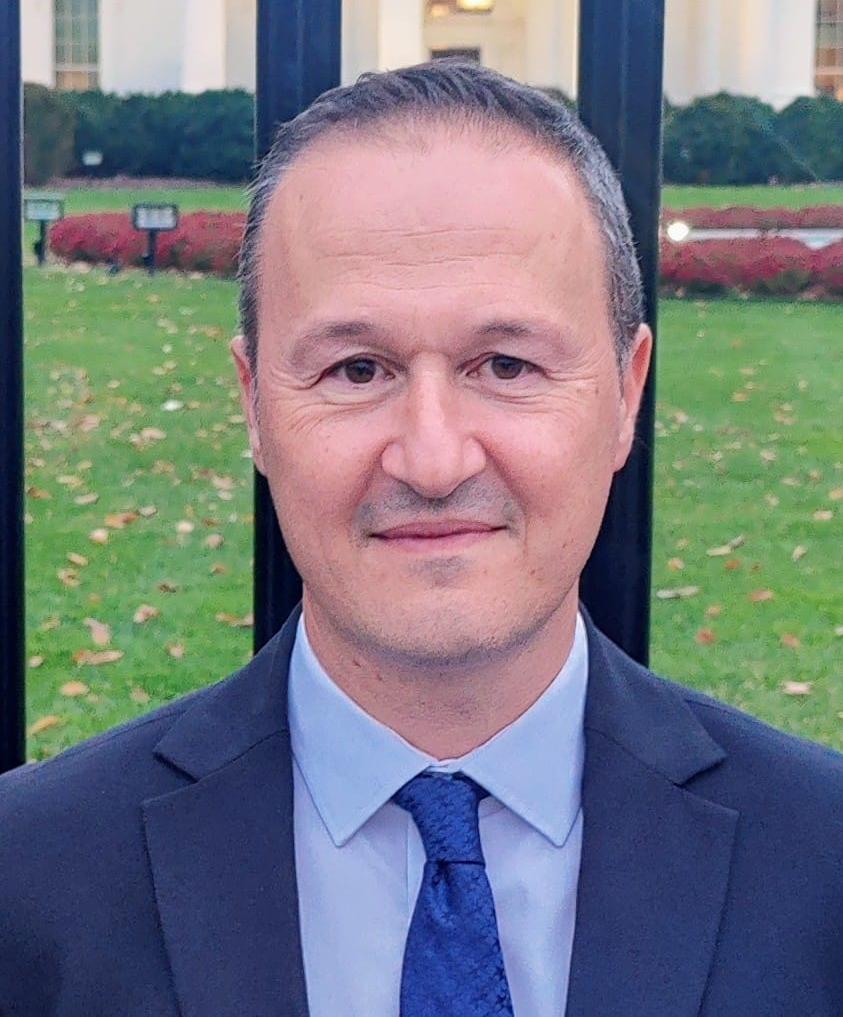
Neville Aquilina is the director general, Global Issues, International Development & Economic Affairs at the Ministry for Foreign Affairs and Tourism.