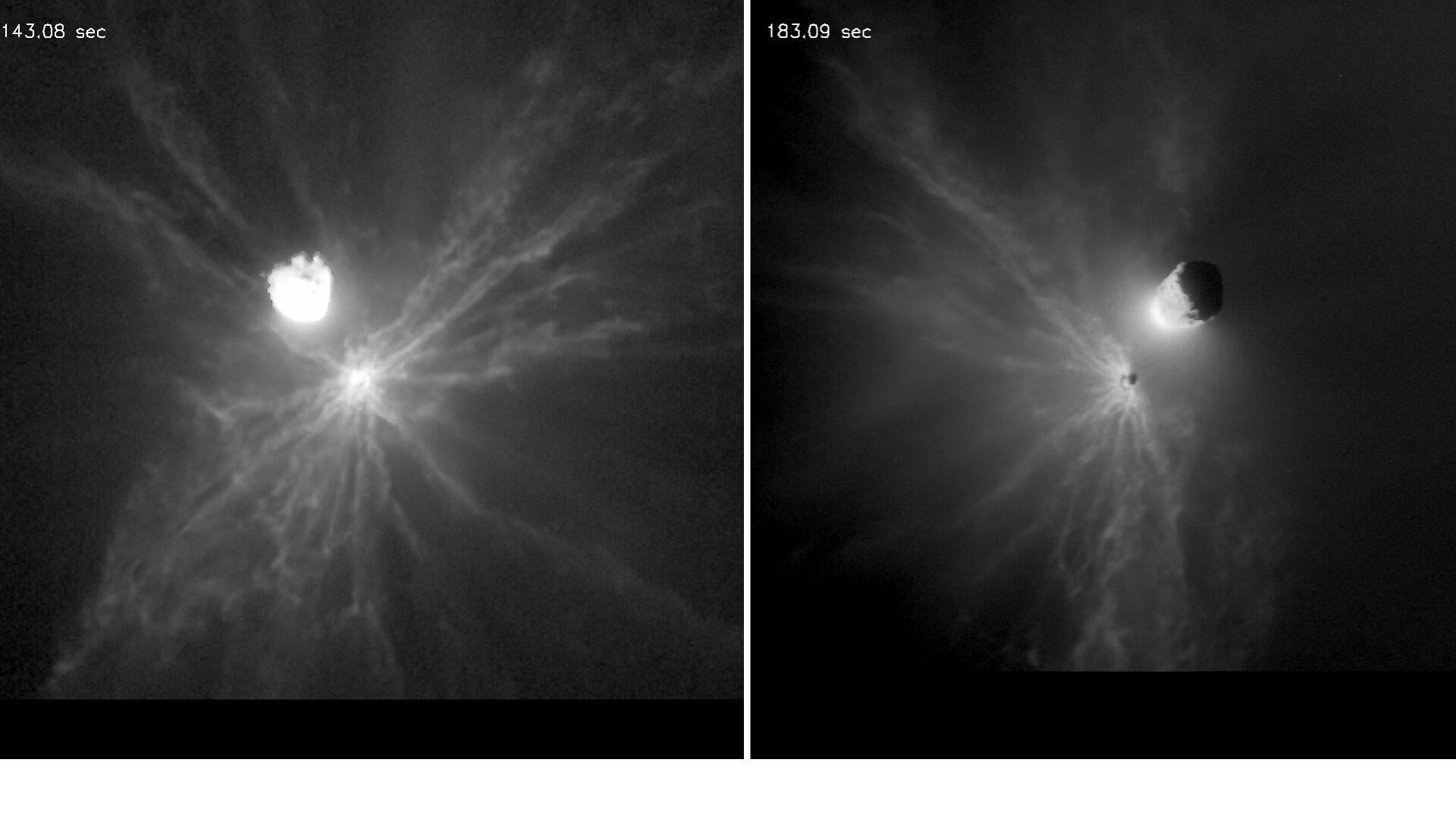
Massive boulders ejected during DART mission may complicate future asteroid deflection efforts
https://phys.org/news/2025-07-massive-boulders-ejected-dart-mission.html

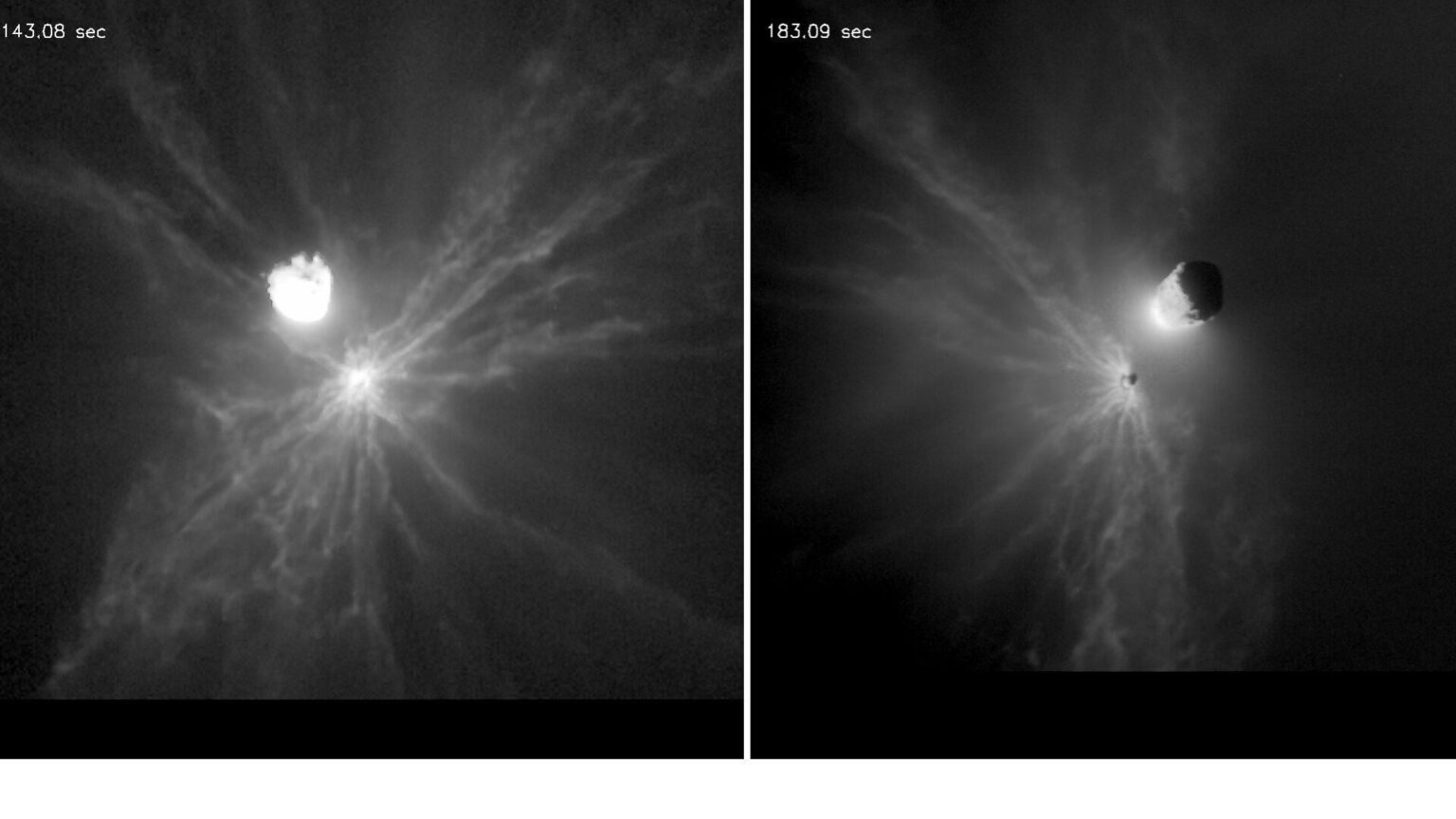
Massive boulders ejected during DART mission may complicate future asteroid deflection efforts
https://phys.org/news/2025-07-massive-boulders-ejected-dart-mission.html
7 Comments
You mean hitting an asteroid shot ejecta everywhere? Who knew?!
Well is it better or worse that you have a hundred small impactors, or one massive one?
# TLDR:
* NASA’s DART spacecraft impact on the asteroid moon Dimorphos in September 2022 achieved its orbital change goal but unexpectedly ejected a massive barrage of boulders from the surface.
* The DART kinetic impactor struck Dimorphos at high speed, transferring momentum as intended but also fragmenting surface material into numerous large rocks observed by telescopes post-impact.
* The ejected boulders have now proposed concerns over future asteroid deflection efforts using kinetic impactors by potentially creating secondary hazards or altering momentum transfer calculations.
What do you think is a potential solution to future asteroid deflection efforts?
Vera Rubin is gonna find out were living in a shooting gallery.
Gonna be real humbling to learn we cant leave the planet anyways.
If most space bodies residing between the planets are loosely conglomerated material, then most of the time that material probably will feature a powerful airburst event. Not just shockwaves from passage, but an object breaking up in any atmosphere into many pieces while at great speed will cause all sorts of crazy shockwaves and airburst-like effects.
(It’s all shockwaves in the end anyways right?)
The thing I don’t understand is why are hitting stuff fast and not just gently landing, securing to the surface, and then turning the boosters on? Wouldn’t even a relatively small amount of trust over a long period of time work for even gigantic space rocks? It may be harder to land on it but overall it just seems like a much better option than blasting it to bits and turning a bullet into buck shot…
EDIT: What about landing and just unfurling a giant solar sail? Can a big ass solar sail over millions of miles give enough of a push to alter the trajectory of a space rock?
I thought we learned this with all the rocks Marco Inaros kept throwing at Earth.
Wasn’t this phenomenon already known though? A previous mission in the 1990s used X-71 militry shuttles to break up an asteroid with a bomb rather than deflect it. I recall that as long as a majority of the asteroid is broken up enough to miss earth, then any smaller meteors produced in the explosion are irrelevant to the point of not even being considered during the mission.