
Hi Reddit!
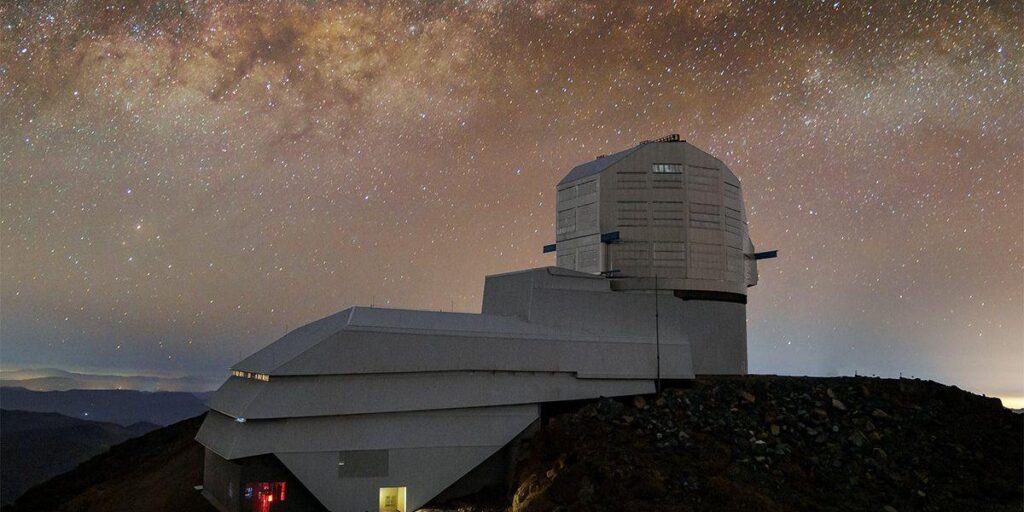
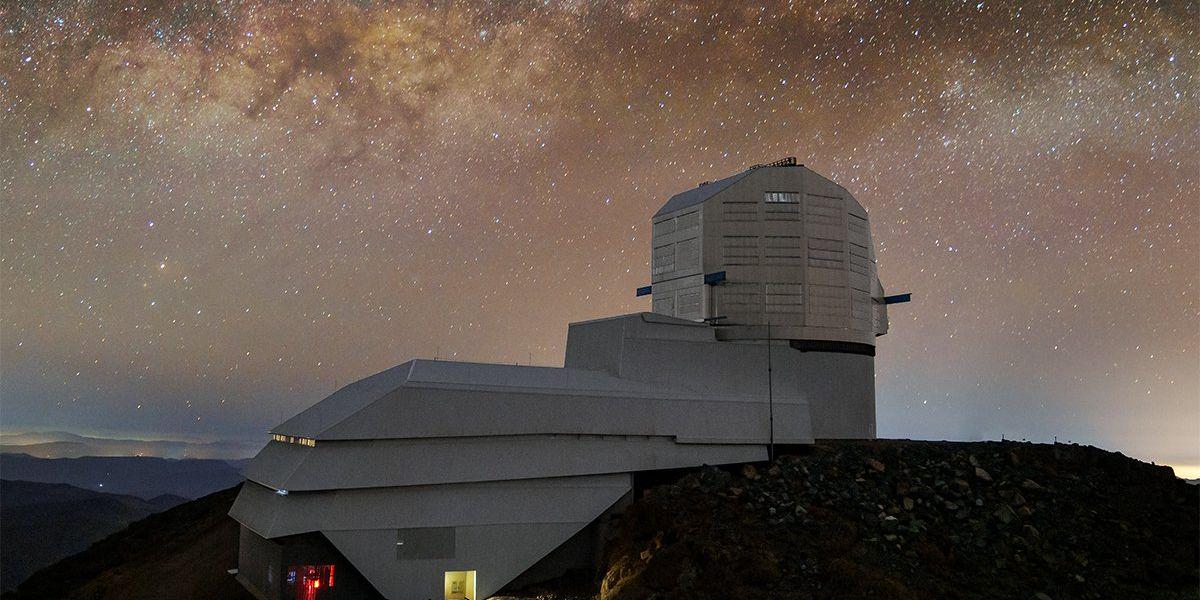
My name is Evan Ackerman, and I’m a senior editor at IEEE Spectrum. I visited the NSF-DOE Vera C. Rubin Observatory for three nights in April, just before they captured their first photon, and wrote about it for our magazine:
https://spectrum.ieee.org/vera-rubin-observatory-first-images
Rubin recently shared its first look images with the world, and I’m super excited to be here with members of the Rubin science and engineering team to answer your questions!
From the summit:
William O'Mullane – Deputy Project Manager
Ranpal Gill – Head of Rubin Communications for Construction
From the base:
Marina Pavlovic – Commissioning Scientist
From SLAC
Guillem Megias – Active Optics Scientist
From Princeton
Yusra Alsayyad – Deputy Associate Director of Data Management
Ask us about designing, building, and operating the observatory, how the 10-year Legacy Survey of Space and Time will work, all the science, what it’s like to visit, and (almost) anything else!
We will start answering the AMA at 5pm ET on July 10 2025.
Proof:
We are Engineers at the Vera Rubin Observatory, Ask Us Anything!
byu/IEEESpectrum inspace
5 Comments
What was the most interesting thing you saw with your time and what is the most unexplainable thing your team saw with time at the observatory?
I am actually interested about the data pipeline. As it’s a survey telescope it will capture the same era every few days. Do you just store the whole data from every single exposure? Which levels of data product is available for researchers and the public? I would expect something with different levels of corrections for the optics, sensor bias and even earth or it over time or even masks for satellite occlusions. Also what are the exclusivity period for data and how would one apply?
Is there efficient ways to compress data by doing deltas over time for the same patch of sky? If so will we get timelapses as I suspect requestimg full frames will be couple gigabytes of tiffs easily?
In computer graphics research there is a lot of talk about compression for textures using gaussian splats or learned networks. However this isn’t applicable for the astrometry needs and hence lossless compression.
A different question for the instrument side. As I understand it there is an array of focal plane detectors from Teledyne, some of the largest arrays ever made at something like 81x81mm. Is there a very high bin to ensure low dead pixels count and no clusters? If so, there has to be quite a lot of rejected FPAs… are they returned to the vendor, kept for other project, government surplus auctions, destroyed for dual use reasons? And how many spares exist for the planned instrument live time. It’s interesting to me as I have looked into potentially hacking some kind of digital backs for large format cameras and it’s not possible to buy large FPAs off the shelf. And cropping apart a X-ray plate detector is too dangerous due to the scintillation layer.
Being an armchair astronomy enthusiast, I love seeing the fascinating results of all your hard work.
But from a hardware and machining aspect, I’d love to hear how the telescope structure itself is designed to rotate. I’d read that it is rotating with something like an oil-film interface. Is that something like a large bearing (as in machining tolerances oil to bearing clearances are measured in thousands of an inch) and if so, would be keen to hear the tolerances and what size the rotating assembly or pedestal is, that rests on this lubricant film?
What will be the effect of Starlink and other satellites constellations on Vera Rubin images?
I know Vera Rubin is observing ~70% of the skies but how far back in time and over what distance can it observe objects?