
Friday, July 11, 2025

Spain finds itself going through one of the worst heatwaves of the year, with temperatures above 40°C in several areas of the nation. Because of the intense heat, the Spanish authorities have issued serious health warnings, recommending locals and visitors alike to take precautions promptly, mainly during the periods of 11 AM to 3 PM, when the intensity of the sun reaches a peak. For visitors planning a trip to Spain as well as visitors already there, knowing the risk that a heatwave like this poses and how to protect themselves are things of prime importance.
Record Temperatures for Southern Spain
This heatwave sweeping through southern Europe isn’t just unpleasant, it’s deadly. In regions like Andalusia, the temperature has been above 45°C, a first-time record. Heat of such magnitude isn’t common, even for the peak summer months, and has led to severe health problems.
A life was lost over the weekend heatwave in Barcelona. A street cleaner aged in her fifties sadly died following a lapse into unconsciousness due to heat exhaustion. The incident served as a rude awakening about how dangerous prolonged exposure to scorching heat could prove. AEMET, the Spanish National Meteorological Agency, issued a series of advisories, which revealed that the heatwave was likely to persist deep into the next week.
Why the Heat Is So Intense
The cause of the record heat is due to a strip of warm air which has moved up from North Africa. The air, which people refer to as a “Saharan plume,” has scorching temperatures which are difficult to tolerate, especially for inhabitants not accustomed to such extremes. Locals, accustomed to Spain’s comparatively hot summers, have pointed out the current heatwave as remarkably powerful for a summer month such as July.
It’s not just Spain that has such extreme weather; several Southern European countries are seeing the same situation. Heat warnings have been issued in Italy, France, and Portugal, with several areas seeing temperatures deep into the low 40s Celsius.
Health Advisories and Travel Recommendations for Visitors and Natives
Spanish health authorities have given clear instructions to the general public to stay safe when such record heat occurs. Although these warnings are common, the vulnerable population, i.e., the elderly, children, and the individual already affected by diseases like heart disease or respiratory issues, need to exercise extra precautions. Primarily, the suggestion is to stay inside when the heat gets intense, i.e., 11 AM to 3 PM.
Some of the main recommendations of the Spanish Ministry of Health and local health institutions are as follows:
Stay Well Hydrated: Staying hydrated by drinking plenty of fluids to avoid becoming dehydrated is crucial. Water is the first choice, though the consumption of fruit juices, teas, and even flavored waters helps to replace lost fluids. Avoid the use of alcohol, caffeine, and sodas, which could add to the risk of becoming dehydrated.
Restrict Physical Activities: Avoid trying to work outside, exercise, or take long walks when the sun is at its peak. When you must go outside, try doing it late at night, or the very first thing in the morning, when the heat is not as strong.
Dress Appropriately: Light loose clothing, which reflects the sun and allows for ventilation, is suggested. A wide-brimmed hat and shades will offer extra protection.
Protect Your Skin: Apply sunscreen regardless of the short periods you are going outside. Apply a broad-spectrum sunscreen with a high SPF to avoid sunburn, which could result in heatstroke and skin damage.
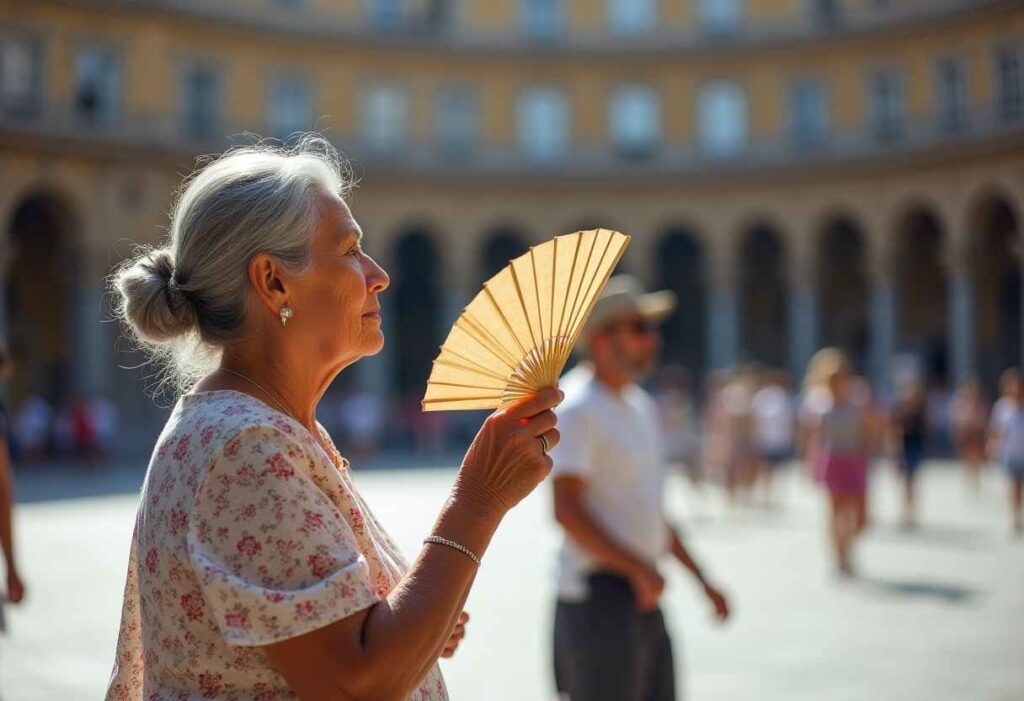
Regulate Your Body Temperature: Cool off regularly by showering or bathing with a cool shower. Usе fanѕ or air conditioners tо сооl your rooms. Dipping a cloth into a bowl of сold wаtеr аnd аррlying it tо your forehead оr your wristѕ саn аlѕо bе helpful.
Seek Shelter and Stay Under Shade: Do not stay outside directly under the sun for a long period. In case you cannot stay inside, seek shelter or air-conditioned places such as a mall, cafe, or museum.
What Visitors Should Know
Despite the pleasant weather, the heat may be life-threatening to visitors not accustomed to the climate. Travelers planning to go to Spain during the summer months must prepare and take extra precautions.
It should be noticed by the tourists that:
Reschedule Your Day: As indicated, don’t go outside when it’s hottest during the day. There are several local stores, museums, and attractions with air-conditioned facilities which you can use as a respite from the heat. You can have your city tour in the late afternoon or morning when the sun’s not as intense.
Plan Outdoor Activities Wisely: If you are visiting outdoor sites such as the parks or beaches, make sure you have sufficient stocks of water, suntan lotion, and a hat. Do wear comfortable walking shoes and avoid walking long distances while the sun is strong.
Stay Informed: Local governments are always updating heat advisories and precautions. You should stay informed about such warnings through your hotel reception or through the official channels of media. Most hotels provide cooling relief, such as pools and fan facilities, to their guests as a measure to cope with heat.
Impact on the Local Community
While visitors are typically the focal point of heat advisories, the situation for the locals does not differ. Locals in the cities of Madrid, Seville, and Malaga are turning to new ways to endure the oppressive heat. Some are refreshing themselves by taking advantage of fountains and shaded courtyards, while others retreat to air-conditioned zones.
This heatwave was extremely disruptive, with schools closing their doors early and public services altering their opening times. Hospital admissions have shot up dramatically, notably among the elderly. Health authorities are urging people, but the vulnerable in particular, to take the greatest care when the weather is of this nature.
Global Effects of Rising Temperatures It’s merely the latest installment in a wider trend of extreme weather events globally. Rising temperatures, agitated by global warming, are making heatwaves stronger and more frequent. Spain, like much of the globe, is planning for a future when such extremes could become the new norm.
Conclusion:
A Time for Caution and Preparation As the temperature in Spain reaches life-threatening levels, the importance of following safe precautions cannot be overstated. Whether you are a tourist or a local, health and wellness need to take center stage when a heatwave strikes. By drinking ample fluids, avoiding going outside when the heat reaches a peak, and taking shelter when necessary, you are safely weathering a heatwave. By following these precautions, you are still able to enjoy the rich culture and beautiful landscapes of Spain without risking your health.
Tags: 2025 heatwave, andalusia, balearic islands, Barcelona, canary islands, Costa Brava, Madrid, Malaga, Seville, spain, Spain weather, Summer 2025, summer travel, Valencia
