
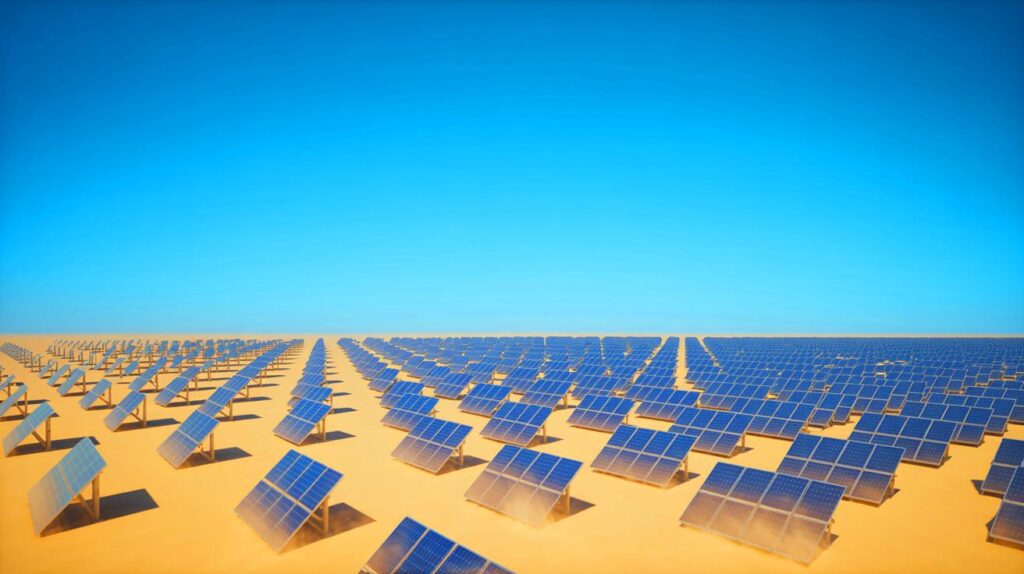
- 🌍 Saharan dust storms are significantly impacting solar energy production by reducing sunlight reaching solar panels.
- 🔧 Dust deposition on panels leads to decreased efficiency and increased maintenance costs due to erosion and wear.
- 🔍 Researchers emphasize the need for advanced forecasting techniques that integrate weather and mineralogical data.
- 🌞 Global collaboration and innovation in dust mitigation technologies are crucial for sustaining solar energy growth.
The rise of photovoltaic solar energy has been meteoric, with global production capacity tripling between 2018 and 2023. As countries strive to combat climate change and enhance energy security, solar power is set to become the leading renewable energy source by 2030. Yet, an unexpected adversary is threatening the efficiency of this clean energy revolution: Saharan dust. These fine particles from the vast African desert are not only reducing solar energy output but also making it less predictable. This underscores the urgent need for enhanced forecasting methods to mitigate their impact.
Innumerable Grains of Sand in the Works
The influx of Saharan dust into Europe is creating significant challenges for solar energy production. Each year, millions of tons of this dust reach European skies, affecting solar irradiance by scattering and absorbing sunlight. This phenomenon diminishes the amount of sunlight reaching solar panels, thereby reducing electricity generation. Moreover, the unpredictability of these dust storms complicates energy forecasting. According to György Varga of the Research Centre for Astronomy and Earth Sciences, integrating both meteorological and mineralogical factors into forecasting models is crucial. Without these advanced methods, the risk of underperformance and grid instability will grow alongside the increasing reliance on solar power.
These challenges necessitate the development of dynamic forecasting techniques that account for the complex interplay between weather patterns and dust deposition. As solar energy continues to expand its share in the energy mix, understanding and mitigating the impact of Saharan dust on solar output becomes imperative for maintaining grid stability and optimizing energy production.
Atmospheric and Physical Effects
Beyond atmospheric interference, Saharan dust also poses physical threats to solar infrastructure. When dust settles on solar panels, it not only reduces efficiency but can also lead to long-term erosion. This erosion can damage the panels, resulting in decreased efficiency and increased maintenance costs.
A table illustrates the impact:
Effect
As the dust accumulates over time, it acts abrasively, which can shorten the lifespan of solar panels. Thus, investing in anti-dust technology and regular maintenance regimes is essential to safeguard against these detrimental effects.
Advancements in Forecasting Techniques
Given the growing impact of Saharan dust, researchers are developing innovative forecasting techniques to better predict dust storms and their effects on solar production. These techniques involve integrating satellite data, ground-based observations, and advanced computer modeling to create comprehensive predictive models.
By understanding the patterns and intensity of dust storms, energy providers can adapt their strategies to minimize disruptions. This includes adjusting energy grids and implementing proactive maintenance to ensure consistent energy supply. These advancements not only improve the reliability of solar power but also enhance its economic viability by reducing unexpected costs and downtime.
Global Implications and Future Strategies
The challenges posed by Saharan dust are not limited to Europe; they have global implications for solar energy production. As solar power becomes a cornerstone of energy strategies worldwide, understanding regional environmental factors is crucial for optimizing output. This requires international collaboration and knowledge-sharing to develop solutions that can be adapted to various geographical contexts.
Looking ahead, investing in research and development of dust mitigation technologies, such as self-cleaning panels or protective coatings, will be pivotal. These innovations will help maintain high efficiency levels and extend the lifespan of solar installations, ensuring the continued growth of solar energy as a reliable renewable resource.
As the world races towards a sustainable energy future, the question remains: How can we best harness the power of the sun while overcoming the challenges posed by nature itself?
This article is based on verified sources and supported by editorial technologies.
Did you like it? 4.5/5 (28)