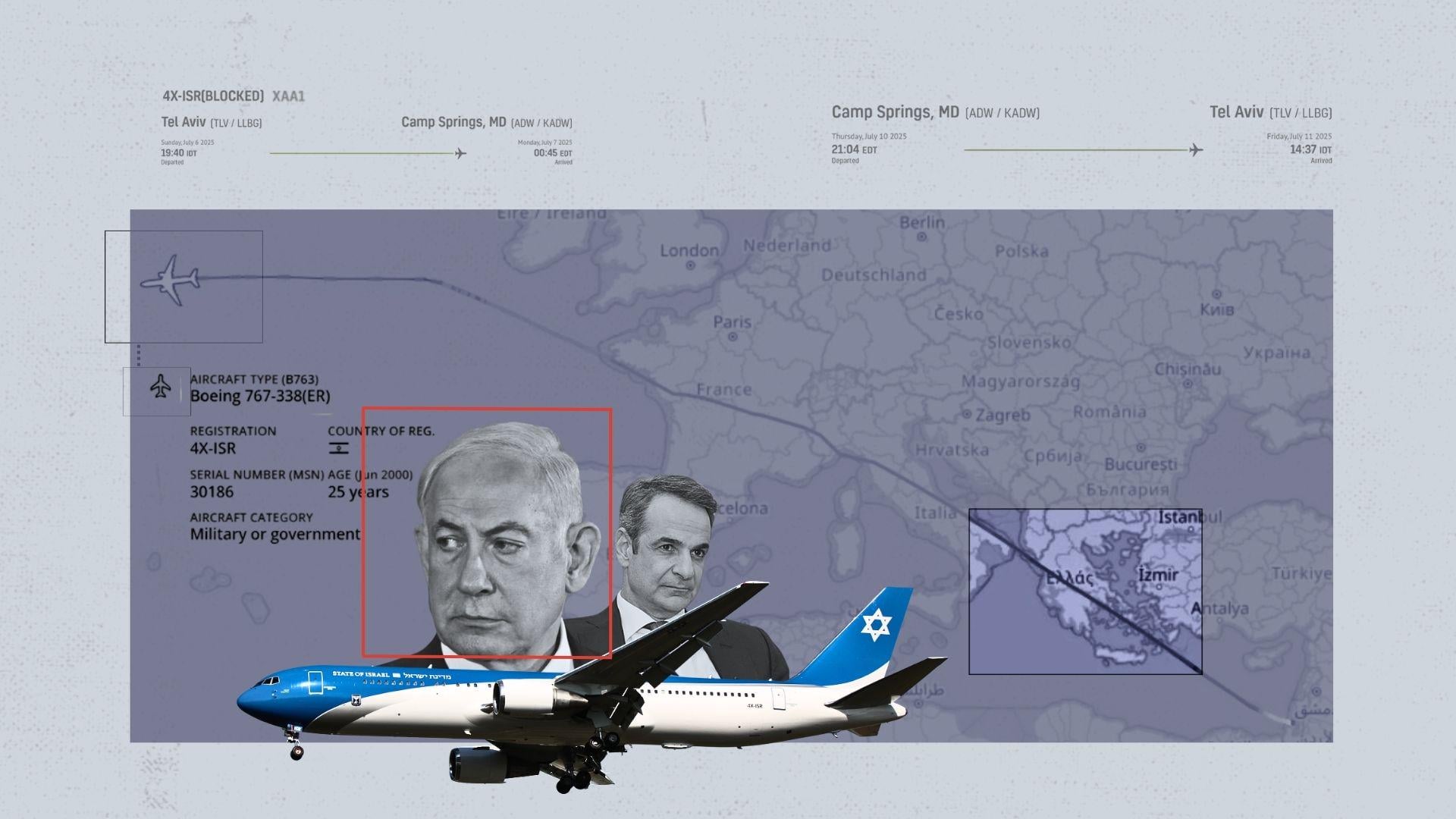
Netanyahu passed (two) undisturbed from Greece despite the arrest warrant
Ο Νετανιάχου πέρασε (δις) ανενόχλητος από την Ελλάδα παρά το ένταλμα σύλληψης
Posted by fonred

Netanyahu passed (two) undisturbed from Greece despite the arrest warrant
Ο Νετανιάχου πέρασε (δις) ανενόχλητος από την Ελλάδα παρά το ένταλμα σύλληψης
Posted by fonred
9 Comments
θεέ μου, δώσε μου δύναμη να αντέξω αυτή τη βλακεία
και διακοπές να έρθει να κάνει στην Ελλάδα… κανείς δεν θα τον ακουμπήσει.
Και την Ιταλία και τη Γαλλία. Διότι η Ευρώπη σέβεται πολύ θεσμούς όπως το Διεθνές Δικαστήριο Ανθρωπίνων Δικαιωμάτων.
Αυτό είναι μια γκρίζα ζώνη νομικά, είχα κάνει τη συζήτηση με ένα φίλο.
Θεωρητικά η Ελλάδα θα μπορούσε να ζητήσει προσγείωση και σύλληψη του Νετανιάχου. Ακόμα πιο θεωρητικά, είναι υποχρεωμένη να το κάνει. Αλλά επειδή δεν προσγειώθηκε και απλά έκανε υπερπτήση, στην ουσία δεν είναι ακριβώς υπεύθυνη η χώρα.
Η κυβέρνηση πάντως κράτησε αποστάσεις
[https://www.naftemporiki.gr/politics/1838431/p-marinakis-i-thesi-tis-kyvernisis-gia-to-diethnes-entalma-syllipsis-kata-toy-netaniachoy/](https://www.naftemporiki.gr/politics/1838431/p-marinakis-i-thesi-tis-kyvernisis-gia-to-diethnes-entalma-syllipsis-kata-toy-netaniachoy/)
Πρακτικά, για να τον συλλάβουμε, θα έπρεπε να είχαμε ανεβάσει μαχητικά αεροσκάφη και να απειλήσουμε με κατάρριψη του αεροπλάνου (μαζί με όλους τους επιβαίνoντες), πράγμα αδύνατο, όπως καταλαβαίνει κανείς. Γιατί θα έπρεπε να τον αναγκάσουμε να προσγειωθεί για τον συλλάβουμε.
Καλό ερώτημα πάντως θα ήταν, τι θα γινόταν αν το αεροπλάνο του είχε π.χ. μια βλάβη…
Κάποτε πετούσα από Πολωνία για Ελλάδα και λόγω προβλήματος στο αεροδρόμιο Θεσσαλονίκης, προσγειωθήκαμε στη Σόφια της Βουλγαρίας. Μετά από ανεφοδιασμό, συνεχίσαμε για Θεσσαλονίκη, περίπου 1 ώρα μετά. Μου είχε κάνει εντύπωση ότι οι αεροσυνοδοί έβγαλαν ανακοίνωση μόλις φτάσαμε στη Σόφια, ότι αν κάποιος επιβάτης έχει ένταλμα σύλληψης που εκκρεμεί στη Βουλγαρία, να μην ανησυχεί, γιατί δε χρειάστηκε να δώσουν τα ονόματα των επιβατών στις βουλγαρικές αρχές.
Είναι γνωστό πλέον πως τα εντάλματα σήλληψης του διεθνούς ποινικού δικαστηρίου αποτελούν κωλόχαρτο για τους ηγέτες.
Ναι, ισχυουν ολα αυτα που λεει ο ΟΗΕ. Αλλα για να γινει η συλληψη, πρεπει να σηκωθουν αεροσκαφη της ΠΑ, να διαταξουν προσγειωση και να απειλησουν με καταρριψη σε αντιθετη περιπτωση. Δηλαδη μας λενε ( γιατι αφορα και τη Γαλλια και την Ιταλια αυτο) με δυο λογια οτι επρεπε να προκαλεσουμε εντονο διπλωματικο επεισοδιο επειδη κατι καρεκλατοι χιλιαδες χιλιομετρα μακρυα θυμηθηκαν να το παιξουν κηνσορες δημοκρατιας. Δυο λαλουν και τρεις χορευουν
Ο νετανιάχου και όλοι οι αξιωματικοί των σιωναζί πρέπει να συλληφθούν.
Ας αποφασίσει το ΔΔ (ICJ), σε ποιο από τα δύο δίνει μεγαλύτερη νομική ισχύ:
1. Στο ένταλμα σύλληψης που έχει εκδώσει με πιθανολογούμενη ύπαρξη εγκλήματος (και όχι πιθανολογούμενη ενοχή);
2. Ή στην αρχή της Διπλωματικής Ασυλίας που επιβεβαιώνει με την δική του νομοθεσία;
[https://www.ilsa.org/Jessup/Jessup08/basicmats/icjcongo.pdf](https://www.ilsa.org/Jessup/Jessup08/basicmats/icjcongo.pdf)
>The Court would observe at the outset that in international law it is firmly established that, as also diplomatic and consular agents, certain *21 holders of high-ranking office in a State, such as the Head of State, ***Head of Government*** and Minister for Foreign Affairs, ***enjoy immunities from jurisdiction in other States, both civil and criminal***. For the purposes of the present case, it is only the immunity from criminal jurisdiction and the inviolability of an incumbent Minister for Foreign Affairs that fall for the Court to consider.
Και
>The Congo and Belgium further cite the New York Convention on Special Missions of 8 December 1969, to which they are not, however, parties. They recall that under Article 21, paragraph 2, of that Convention: ***”The Head of the Government***, the Minister for Foreign Affairs and other persons of high rank, ***when they take part in a special mission of the sending State, shall enjoy in the receiving State or in a third State, in addition to what is granted by the present Convention, the facilities, privileges and immunities accorded by international law.”*** These conventions provide useful guidance on certain aspects of the question of immunities. They do not, however, contain any provision specifically defining the immunities enjoyed by Ministers for Foreign Affairs. It is consequently on the basis of customary international law that the Court must decide the questions relating to the immunities of such Ministers raised in the present case.
Και
>The Court further observes that a Minister for Foreign Affairs, responsible for the conduct of his or her State’s relations with all other States, occupies a position such that, like the Head of State or the ***Head of Government***, ***he or she is recognized under international law as representative of the State solely by virtue of his or her office***. ***He or she does not have to present letters of credence: to the contrary, it is generally the Minister who determines the authority to be conferred upon diplomatic agents and countersigns their letters of credence***. Finally, it is to the Minister for Foreign Affairs that chargés d’affaires are accredited.
Και
>80 . Under traditional customary law the Head of State was seen as personifying the sovereign State. ***The immunity to which he was entitled was therefore predicated on status, just like the State he or she symbolized***. Whereas State practice in this regard is extremely scarce, ***the immunities to which other high State officials (like Heads of Government*** and Ministers for Foreign Affairs) ***are entitled have generally been considered in the literature as merely functional.***
Και
>82 . The Institut de droit international took a similar position in 2001 with regard to Foreign Ministers. Its resolution on the Immunity of Heads of State, based on a thorough report on all relevant State practice, ***states expressly that these “shall enjoy, in criminal matters, immunity from jurisdiction before the courts of a foreign State for any crime he or she may have committed, regardless of its gravity****”*. But the Institut, which in this resolution did ***assimilate the position of Head of Government to that of Head of State***, carefully avoided doing the same with regard to the Foreign Minister.
Και
>More recently, the Institut de droit international, at its 2001 Vancouver session, addressed ***the question of the immunity of Heads of State and Heads of Government***. ***The draft resolution explicitly assimilated Heads of Government and Foreign Ministers with Heads of State in Article 14***, entitled “Le Chef de gouvernement et le ministre des Affaires étrangeres”. tHis draft aRticle does not appear in the final version of the Institut de droit international resolution. ***The final resolution only mentions Heads of Government***, not Foreign Ministers. The least one can conclude from this difference between the draft resolution and the final text is that the distinguished members of the Institut considered but did not decide to place Foreign Ministers on the same footing as Heads of State.
Μέχρι το ΔΔ να λύσει μόνο του αυτό το δικό του δίλημμα δεν είναι υποχρέωση της Ελλάδας να αποφασίσει για εκείνο.
Και απο την μισή Ευρώπη αλλά αυτό δεν το θεωρείτε ειδηση