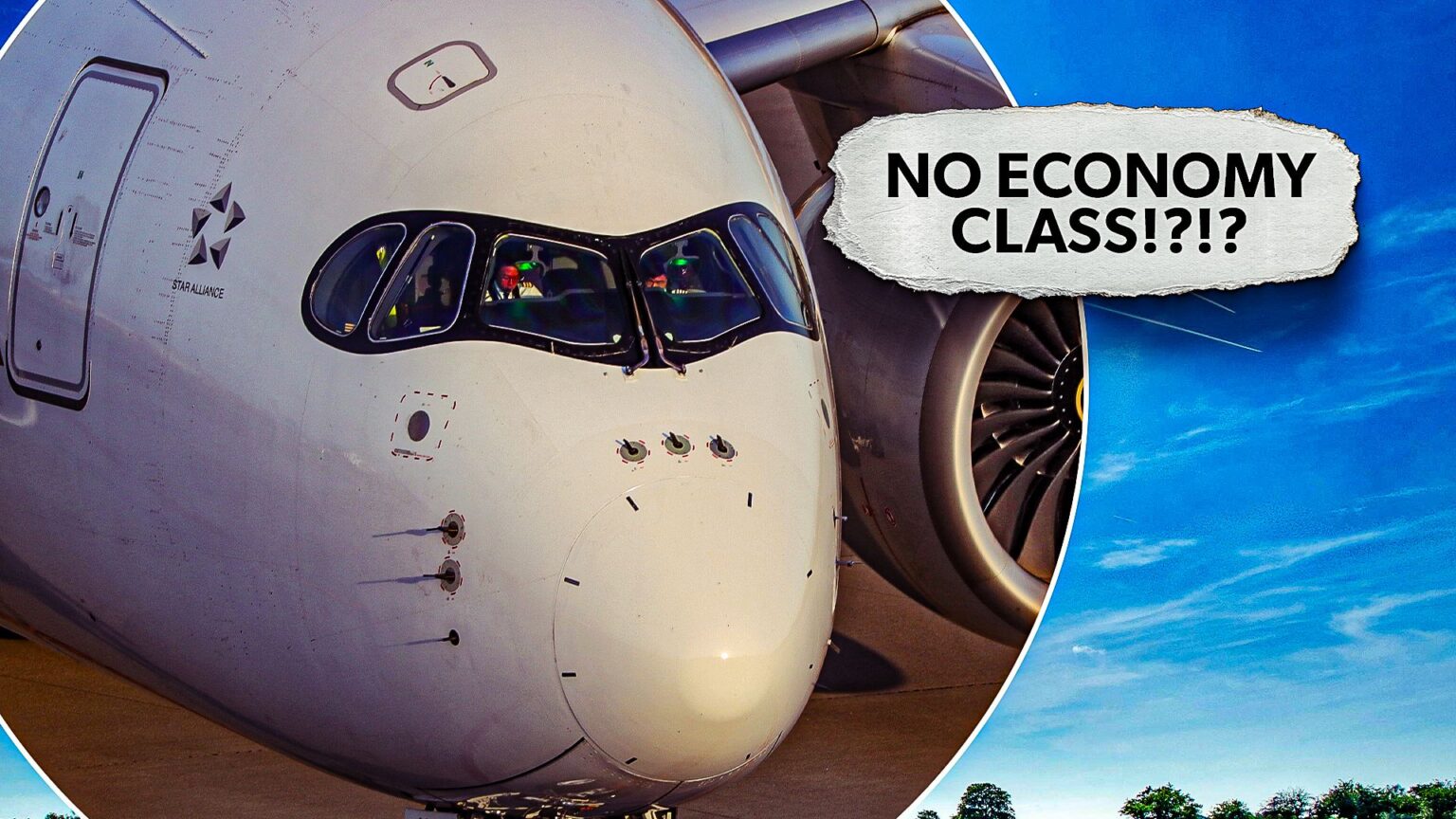
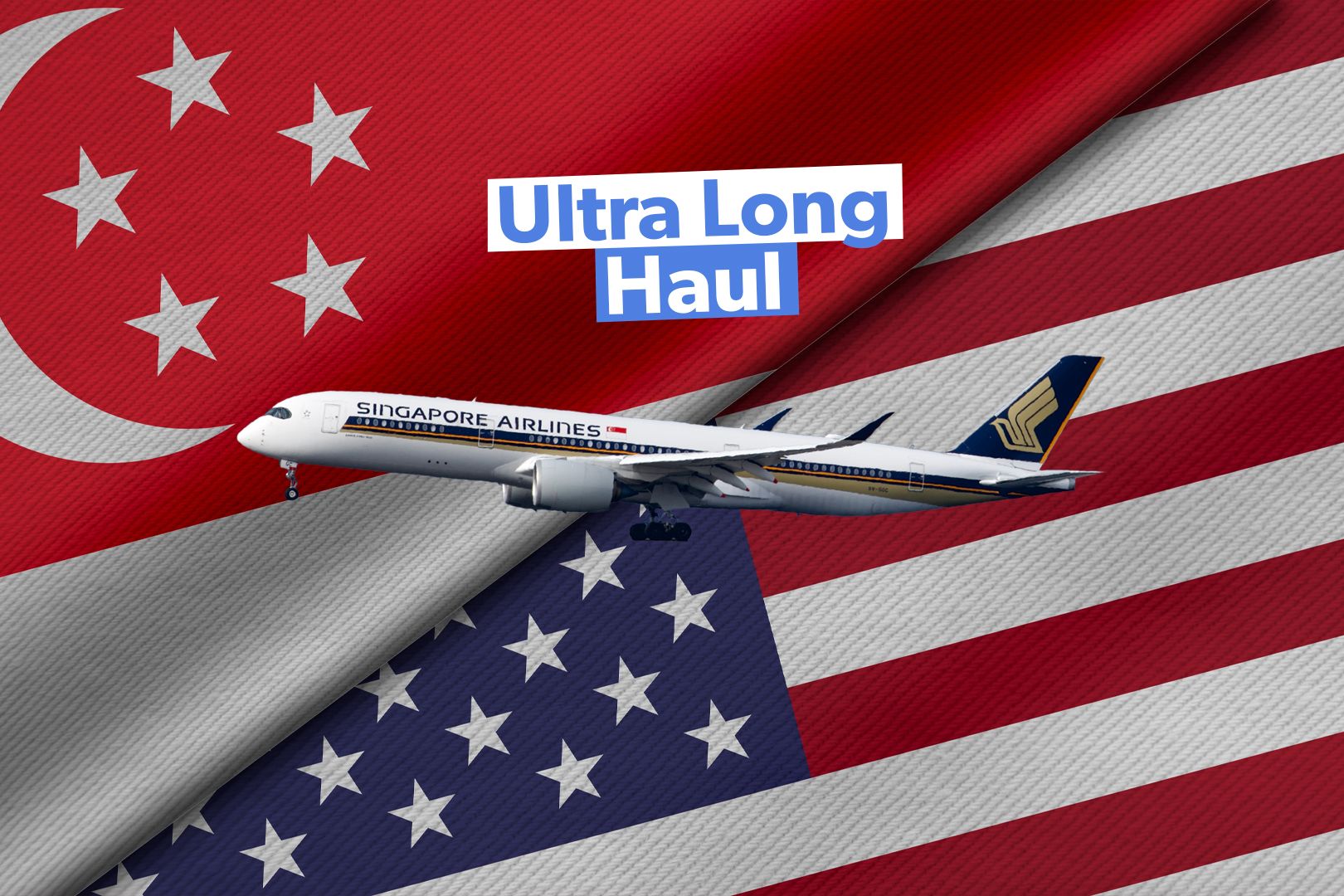
Singapore Airlines operates the world’s two longest nonstop commercial flights between Singapore and New York. These are flown by special-built ultra-long-range A350-900ULR aircraft required to fly the distance. The route is intended for higher-paying business customers and other customers willing to pay a premium to save a few hours flying between the two destinations. As such, these aircraft are unusual for being configured without economy class seating.
Focusing on a smaller business market is the formula that works for Singapore, and even supersonic aircraft like Concorde and Boom’s Overture. But that formula doesn’t work for everyone. One example is Qantas’ upcoming ultra-long-haul flights to New York and London. Here is what to know about Singapore’s low-density Airbus A350-900ULRs and why they don’t have economy class seating.
Singapore Airlines’ Unique A350-900ULRs
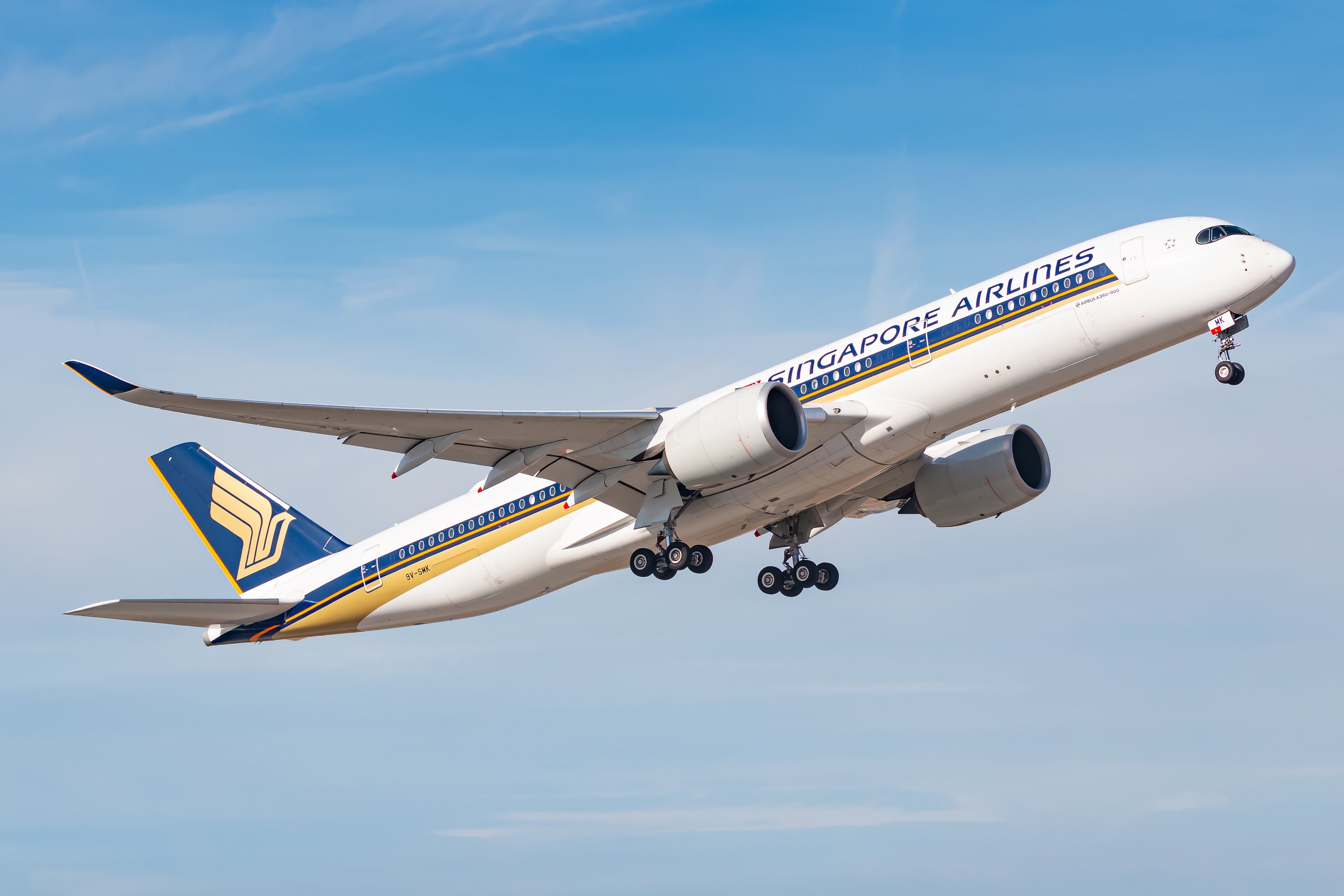
Photo: Lukas Wunderlich | Shutterstock
Singapore Airlines is currently the only airline to operate the A350-900ULR (Ultra Long Range) version of the A350-900 aircraft and has seven examples in service. The long-range A350-900s being acquired by Emirates are not the same as the ones flown by Singapore. They will have an increased crew rest area and fewer passenger seats. Singapore’s -900ULRs can fly over 20 hours nonstop. Singapore tasks these ultra-long-haul aircraft with the world’s twin longest-haul flights to New York-JFK and Newark Liberty airports.
The standard A350-900 comes with a range of up to 8,500 nautical miles, while the ULR extends this to an impressive 9,700 nautical miles. This makes the -900ULR the longest-range commercial aircraft in service today. Its impressive range was achieved by integrating a modified fuel system into the aircraft, increasing the aircraft’s fuel capacity by 24,000 liters. This was achieved without the need for additional fuel tanks.
The A350-900 is the smaller, but more popular variant compared with the stretched A350-1000. It has a maximum passenger capacity of 440 passengers and carries 332-352 passengers in a typical three-class seating configuration. Mainline carriers often configure their aircraft to have premium seating heavily. For example, British Airways’ widebody aircraft typically have low seating densities. British Airways has Boeing 787-9 Dreamliners configured with just 256 seats; meanwhile, ANA has high-density 787-10s used for domestic routes with 429 seats.
Lack Of Economy Seats
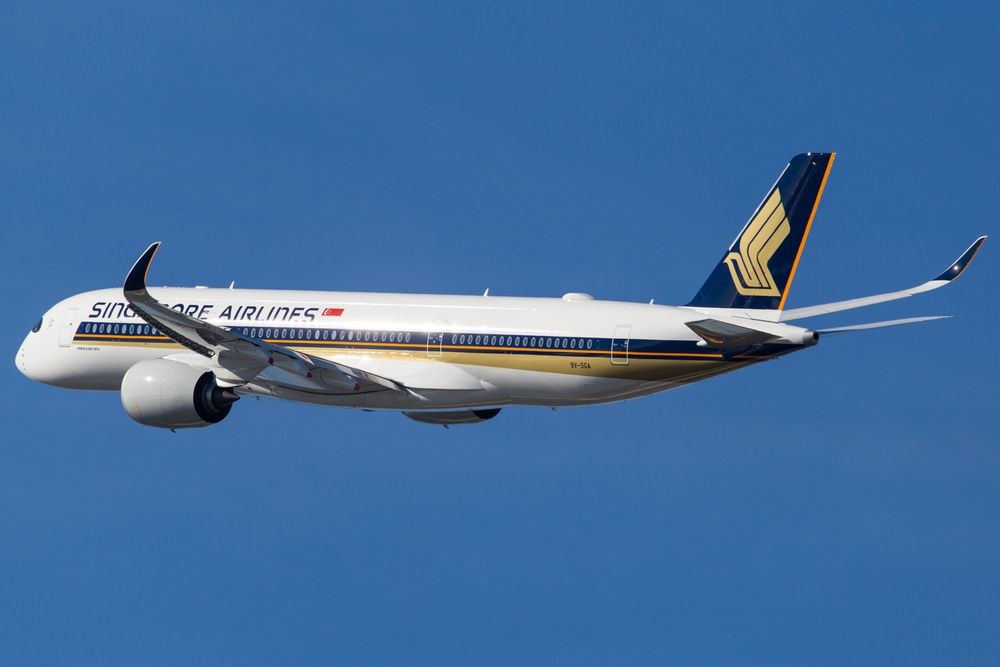
Photo: Wenjie Zheng l Shutterstock
Singapore Airlines is currently the largest operator of the Airbus A350-900 variant with a total of 65 examples in service, including the seven ULRs. These come in three different seating configurations. One configuration has 40 business class seats and 263 economy seats for a total of 303 seats. Another configuration has 42 business class seats, 24 premium economy seats, and 187 economy class seats, giving it a total of 253 seats.
However, the seven A350-900ULRs have 67 business class seats and 94 premium economy class seats, giving the aircraft a total of just 161 seats. This is just 36% of the aircraft’s maximum seating capacity and 46-48% of its typical three-class seating capacity. The reason for the high-end, low-seating capacity is somewhat similar to that of Concorde. These ULR flights are tapping into the high-paying market of business and other wealthier travelers who are willing to pay a premium to get to their destination faster.
Singapore Airlines’ A350-900/ULR seating configurations:
Highest density variant:
Medium density variant:
Lowest density variant (-ULR)
Economy seats:
263
140
Premium economy seats:
24
94
Business class seats:
40
42
67
First-class seas:
Total seats:
263
253
161
The market for these flights is focused on a relatively small but high-paying group. This is the sort of group Overture hopes to tap with its upcoming supersonic Boom jet, which will only seat 64 to 80 passengers. Passengers willing to spend more time and take a cheaper connecting flight have other options. They have options like flying Cathay Pacific via Hong Kong, Philippine Airlines via Manila, United Airlines via San Francisco, and Korean Air via Seoul. Singapore Airlines offers multiple one-stop options to New York.
Related
Singapore Airlines’ Ultra-Long-Haul New York Flights: 5 Fascinating Facts
The Asian carrier is known for operating the longest scheduled passenger flights in the world.
The World’s Longest Scheduled Flights
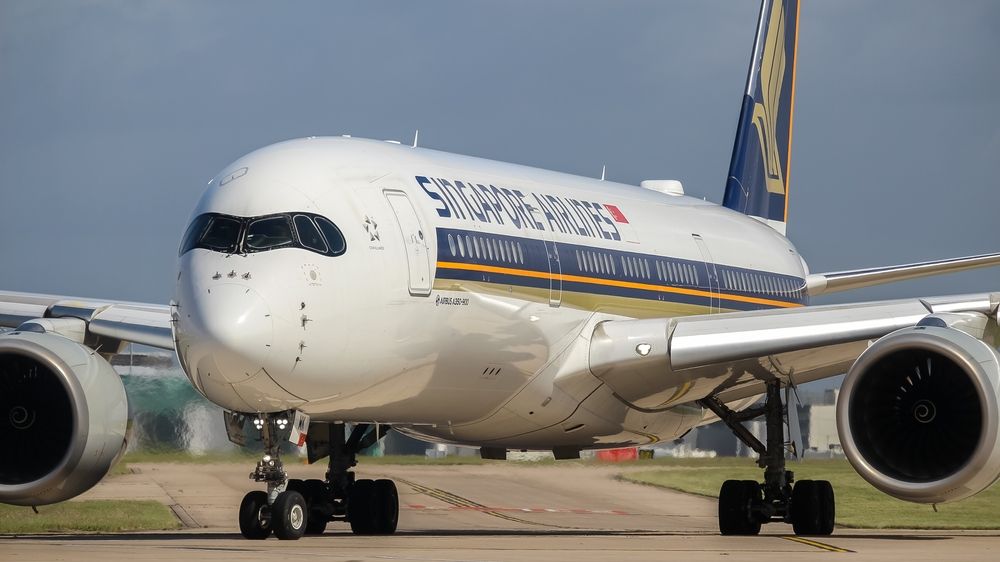
Photo: Bradley Caslin l Shutterstock
Singapore tasks its A350-900ULRs with serving the Singapore to New York-JFK and Newark Liberty route. The travel time of the route is up to 18 hours and 45 minutes, although this varies by the direction of travel. The distance to both airports is approximately 9,000 nautical miles or around 16,700 kilometers.
Singapore Flight SQ 23 flies to New York-JFK, while Singapore Flight SQ 21 flies to Newark Liberty. The scheduled duration of these flights is 18 hours and 45–50 minutes. According to Flightradar24, the SIN-JFK segment averages 18 hours, while the JFK-SIN leg takes about 17 hours and 45 minutes. Looking at one-way flights for August 1, Singapore’s tickets from Singapore to Newark Liberty (EWR) start from $2,531. Singapore offers one-stop flights from Singapore to Newark via Los Angeles starting from $2,100. The second flight segment is operated by Alaska Airlines.
Being close to the opposite side of the world, Singapore also operates one-stop flights traveling west. These flights stop over in Germany’s Frankfurt. Both flights are operated by Singapore Airlines using Boeing 777-300ER aircraft. This makes New York unusual for being a destination served by an airline that flies both east and west around the world to reach it.
Singapore Airlines’ Business & Premium Seating
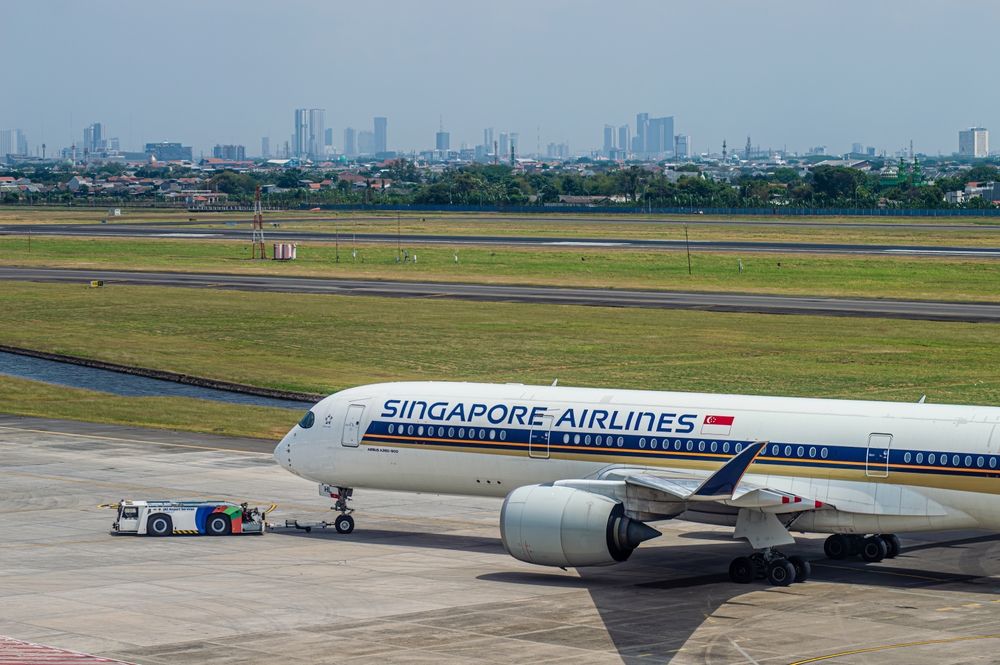
Photo: Anzz Media l Shutterstock
Singapore’s long-range business class seating is available on its Airbus A350s and its Boeing 777s. They come with seats that transform into fully flat beds. Passengers are also able to reserve their main course up to 24 hours before flying. In-flight entertainment is offered by the airline’s KrisWorld system, which offers a selection of 1,800 items from movies to games. Passengers enjoy an 18-inch HD touchscreen and are provided with noise-canceling headphones.
Premium economy passengers enjoy a selection of meals served on contemporary porcelain serviceware with Champagne and wines exclusive to the class. The Safran recliner seats come with a row pitch of 38 inches, a seat width of 19 inches, and a seat recline of eight inches. Like business class, entertainment is provided via the KrisWorld system, and the touchscreens are 13.3 inches.
It is unclear why Singapore Airlines doesn’t offer first-class seating in these aircraft. None of Singapore’s A350s offer first class. The only aircraft with first-class suites are its fleet of 12 Airbus A380 Superjumbos and its fleet of 26 Boeing 777-300ERs. The A380s offer six first-class seats while the 777s come with four first-class suites.
Related
Singapore Airlines’ 8 Airbus A380 Routes: Ranked
Which SIA A380 routes will see the most flights this year?
Qantas’ Upcoming A350-1000ULR
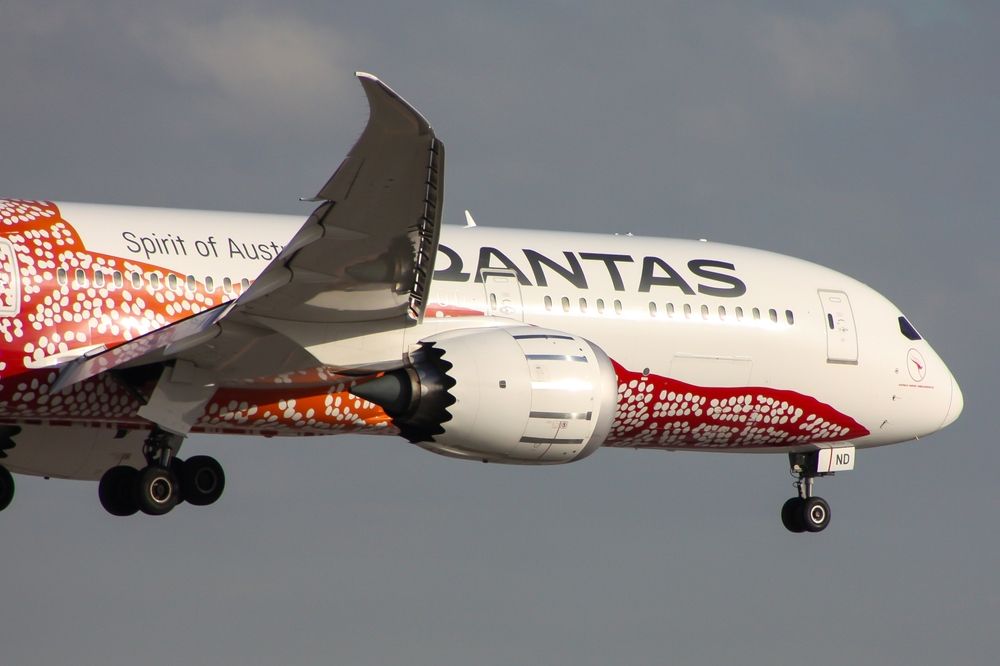
Photo: Austin Deppe l Shutterstock
As part of Project Sunrise, Australia’s Qantas is working to realize its dream of having nonstop flights from Sydney to London-Heathrow and New York-JFK. To make this a reality, Airbus is creating a special longer-ranged version of the A350-1000 called the A350-1000ULR. The A350-1000 comes with a maximum seating capacity of 480 passengers and accommodates 375 to 400 passengers in a standard three-class configuration.
Whereas Singapore’s ultra-long-haul A350-1000s do not have economy seating, the same will not be true of Qantas’ -1000ULR. Qantas says these will be configured with seating for 238 passengers, made up of six first-class seats, 52 business-class suites, 40 premium economy seats, and 140 economy seats. So, while these will be low-density, most of the seats will still be economy class.
Qantas upcoming A350-1000ULR configuration:
First class:
6 seats
Business class:
52 seats
Premium economy class:
40 seats
Economy class:
140 seats
Total seating:
238 seats
Economy class seats will offer 33″ in seat pitch and come with a 13.3″ entertainment touchscreen. Qantas is scheduled to receive the first of these aircraft in 2026, and they will shave around four hours off the travel time based on current one-stop flights. Qantas currently serves the London route with A380s that need to refuel in Singapore, and the New York route with 787-9s that refuel in Auckland, New Zealand.
A Business Aircraft For Business Passengers
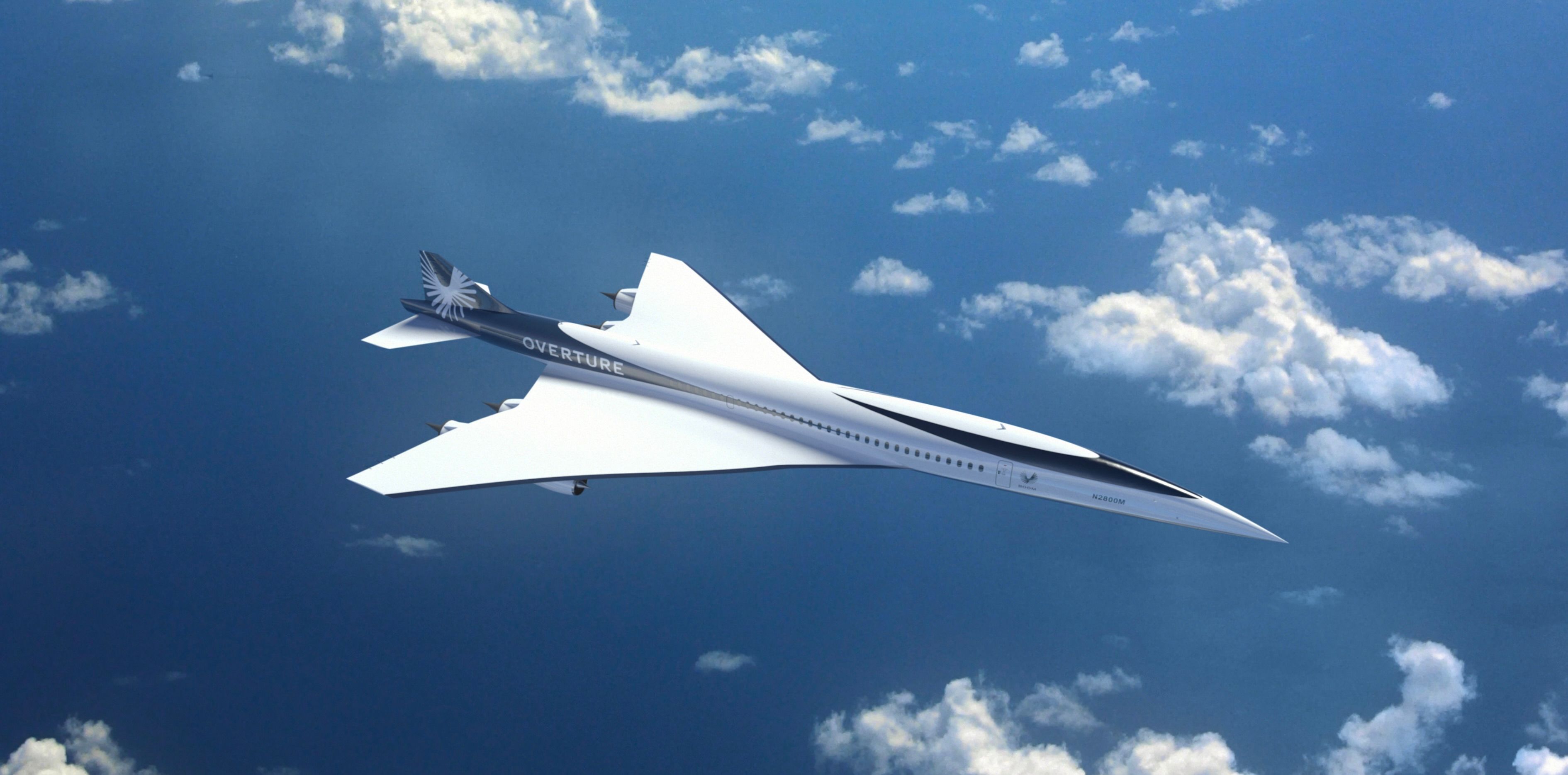
Photo: Boom Supersonic
In short, Singapore Airlines’ A350-900ULRs are set up for the Singapore to New York business market they cater to. For now, these remain the longest commercial flights in the world. Notably, A350s previously provided the world’s next-longest commercial flight from Doha to Auckland. However, Qatar Airways now serves that route with its Boeing 777-200LRs. Singapore Airlines’ A350-900ULRs are soon to lose their status as the world’s longest-ranging commercial aircraft.
In 2026, they are scheduled to be superseded by the longer-ranged A350-1000ULRs being built for Qantas. These will cater to a broader market and will come with four classes instead of Singapore’s two classes. The flights, SQ 23 and SQ 21, will also cease to be the longest nonstop flights in the world. The distance from Sydney to London is around 9,200 nautical miles, making it longer than the 9,000 nautical miles from Singapore to New York. Meanwhile, the flight distance from Sydney to New York is a little shorter at around 8,650 nautical miles.
The upcoming Boom Overture is set to fly at Mach 1.7 and is expected to connect leading business destinations like London and New York. The aircraft already has orders and pre-orders from United Airlines, American Airlines, and Japan Airlines. However, it will not be able to compete with Singapore’s A350-900ULRs as it has a range of 4,250 nautical miles. Another milestone for Boom’s supersonic jets was passed in June as the Trump Administration lifted the ban on supersonic jets flying overland in the United States.