
Monday, July 14, 2025

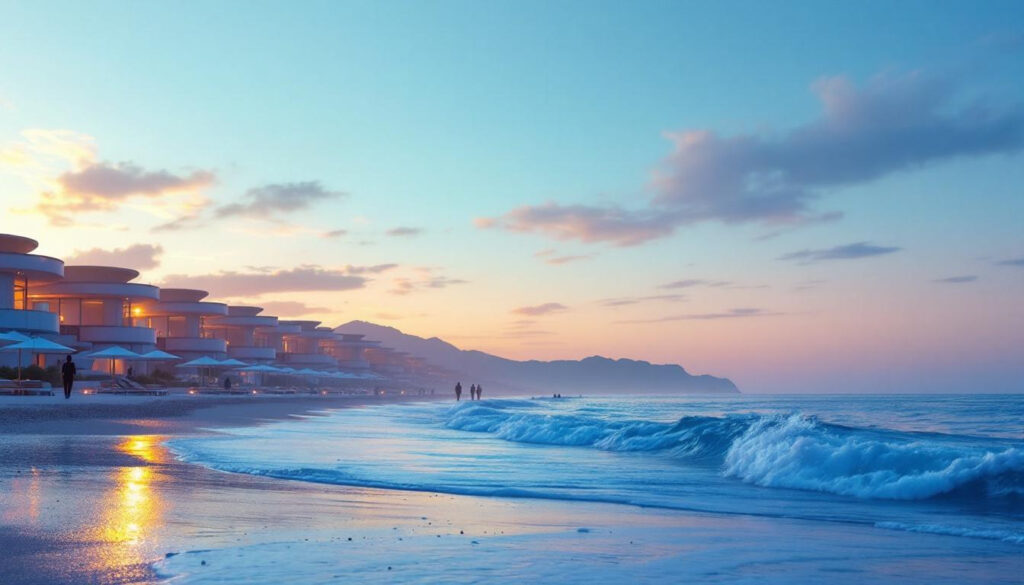
North Korea, traditionally isolated and secretive, has surprised the world by unveiling a lavish new beach resort along the scenic coastline of Wonsan. Stretching for four kilometres along pristine sands, this ambitious development is an unexpected departure from the nation’s reputation, typically associated with military parades and geopolitical tensions rather than leisure travel.
Named the Wonsan Kalma Coastal Tourist Zone, the luxurious complex features hotels, shopping centres, restaurants, and even a state-of-the-art water park. According to state-run media agency KCNA, the resort is designed to accommodate up to 20,000 guests at once—a bold claim that reflects North Korea’s grand ambitions to boost domestic and international tourism.
Wonsan’s Unique Historical and Cultural Significance
The coastal city of Wonsan holds particular significance for North Korea’s leadership, notably leader Kim Jong Un himself. It is widely believed that Kim spent part of his childhood here, giving the region personal resonance for the regime. Furthermore, Wonsan has historically been a retreat for the nation’s elite, boasting private villas and luxury estates along the picturesque beaches.
In a striking transformation, what was once a missile-testing site has now been rebranded as a tourism hub. This change symbolises a new direction for North Korea, demonstrating an attempt to pivot away from isolation towards controlled engagement with the outside world—albeit on tightly managed terms.
Grand Opening Ceremony with Kim Jong Un
To underscore the importance of the project, the resort’s opening ceremony featured the attendance of Kim Jong Un, accompanied by his wife, Ri Sol Ju, and their daughter, Kim Ju Ae. Their presence emphasised the regime’s deep personal investment in the initiative, signalling its strategic priority for the nation.
During the opening event, Kim referred to the new resort as the beginning of a “new era” for North Korean tourism. His public endorsement indicates that the project isn’t merely about leisure; it’s a calculated economic and political move, reflecting North Korea’s urgent need for foreign currency and international attention amid heavy global sanctions.
Economic Motivations Behind North Korea’s Tourism Drive
North Korea’s venture into luxury tourism might appear paradoxical given its ongoing struggles with poverty and economic hardship. However, it’s precisely these economic challenges that are driving this unusual move. International sanctions have severely limited North Korea’s economic options, with tourism emerging as a rare avenue for attracting foreign capital, particularly from allies such as Russia and China.
Prior to the pandemic, tourism from these countries provided essential revenue, though exact figures remain undisclosed. With this new resort, North Korea aims to revitalise its tourism sector, hoping to generate substantial foreign currency that is otherwise difficult to obtain due to strict sanctions.
Impact of the Covid-19 Pandemic on North Korean Tourism
Like many nations globally, North Korea closed its borders during the Covid-19 pandemic, severely impacting its already limited tourism sector. It remained closed until 2023, when restrictions briefly eased, allowing a handful of tourists from countries such as the UK, Germany, France, and Australia to enter via China. This policy was short-lived, however, with borders closing again shortly thereafter.
Currently, the Wonsan resort appears targeted primarily at domestic tourists and potentially visitors from Russia, one of North Korea’s key allies. It remains unclear when—or even if—the country will open its doors to broader international tourism markets in a sustained way.
Appeal to International Travellers: Challenges and Curiosity
Despite the significant investment and promotional efforts, North Korea remains an unconventional choice for international travellers. Tourists venturing into the country typically visit the capital, Pyongyang, or sites such as the Demilitarised Zone (DMZ), attracted by the surreal experience of visiting one of the world’s most secretive nations.
The Wonsan resort is North Korea’s attempt to diversify its tourism offerings beyond political and historical sites, aiming to create an environment more akin to popular Asian beach destinations like those found in neighbouring South Korea or Southeast Asia. Yet, significant barriers remain, including international concerns over security, human rights, and the tightly controlled nature of North Korean tourism, which allows visitors very limited freedom of movement.
Surveillance and Control: A Concern for Visitors
One significant issue for potential international visitors remains the degree of surveillance inherent in North Korean tourism. Foreign travellers are usually accompanied by state-appointed guides, limiting interactions with local people and controlling movements closely. At the luxurious new Wonsan resort, guests can expect to experience heightened monitoring, even as they enjoy amenities comparable to international standards.
While this controlled environment might deter some tourists, others may find it intriguingly novel—offering an insight into a regime largely closed off from the outside world. Thus, the resort not only represents North Korea’s economic aspirations but also serves as a carefully curated window into the regime’s idealised version of itself.
Future Potential and International Reactions
It is uncertain how global travellers and the broader tourism industry will respond to North Korea’s bold move. Historically, the country has struggled to attract consistent international visitor numbers, limited to niche markets primarily drawn by curiosity or ideological interest.
International tourism agencies remain cautious about promoting North Korea due to the political complexities involved. Yet, some adventurous or politically curious travellers might view Wonsan as a once-in-a-lifetime destination—a chance to witness first-hand how the regime wishes to portray itself.
Should the resort achieve even modest success among domestic and allied-country tourists, North Korea may consider expanding its controlled tourism model further, potentially leading to additional coastal developments or even ski resorts, as hinted in previous years.
Geopolitical Implications of North Korea’s Tourism Push
Beyond economic considerations, the launch of the Wonsan resort carries symbolic geopolitical implications. At a time when North Korea continues to face intense international scrutiny over its nuclear ambitions and human rights record, the resort represents a rare attempt at soft diplomacy—offering a more inviting face to the world.
However, international analysts remain sceptical. Many see this tourism initiative as a way to circumvent sanctions and generate essential revenue discreetly. While tourism itself is not strictly prohibited, revenue generated through tourism could indirectly support North Korea’s military programs or other sanctioned activities—a point of ongoing international concern.
Conclusion: A Fascinating Yet Uncertain Future
The opening of the Wonsan Kalma Coastal Tourist Zone marks a significant step in North Korea’s complex relationship with tourism. While the regime clearly hopes to present an appealing image to the outside world, success in attracting meaningful numbers of international tourists remains highly uncertain.
This beachfront development showcases North Korea’s determination to break from its traditional isolation in a controlled and calculated manner. Whether the luxurious amenities and pristine beaches of Wonsan will be enough to lure adventurous travellers from around the globe remains an open question, but the project undoubtedly represents an intriguing new chapter for tourism in one of the world’s most mysterious countries.
