
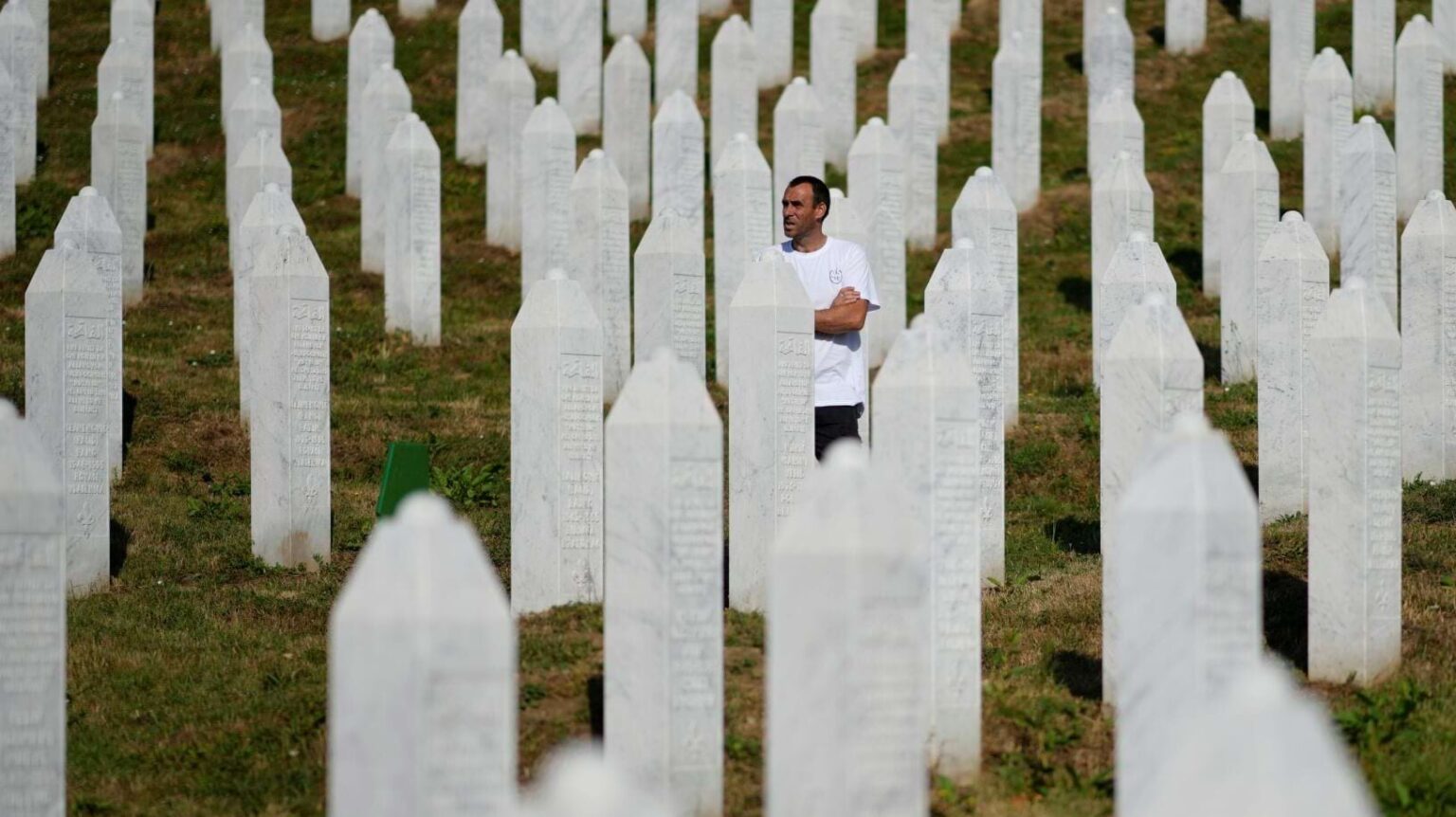
Thirty years ago last week, Bosnian Serb forces led by Gen. Ratko Mladic overran the United Nations-sponsored “safe area” of Srebrenica, a Bosniak Muslim village in the former Yugoslavia. Mladic’s forces loaded the women and smaller children onto buses for deportation and rounded up the men and older boys for execution. In an act that would later be recognized as a genocide, nearly 8,000 male civilians were then killed over the course of several days, marking the worst massacre in Europe since World War II.
The horrific events of 30 years ago were commemorated in gatherings across Bosnia-Herzegovina last week, in an effort to keep alive the many lessons of the Bosnian War: the perils of murderous ethno-nationalism, the failures of non-intervention and the lasting social implications of the massacre, both for survivors and society at large.
Yet looking at the rest of the global headlines these days, one may understandably wonder whether the world has learned anything from the memory of Srebrenica. The death toll of the massacre—and even the overall death toll from the Bosnian War, estimated at a minimum of 96,895 by the Research and Documentation Centre in Sarajevo—pales in comparison to other recent internationalized civil wars that have mobilized even less engagement from the international community.