
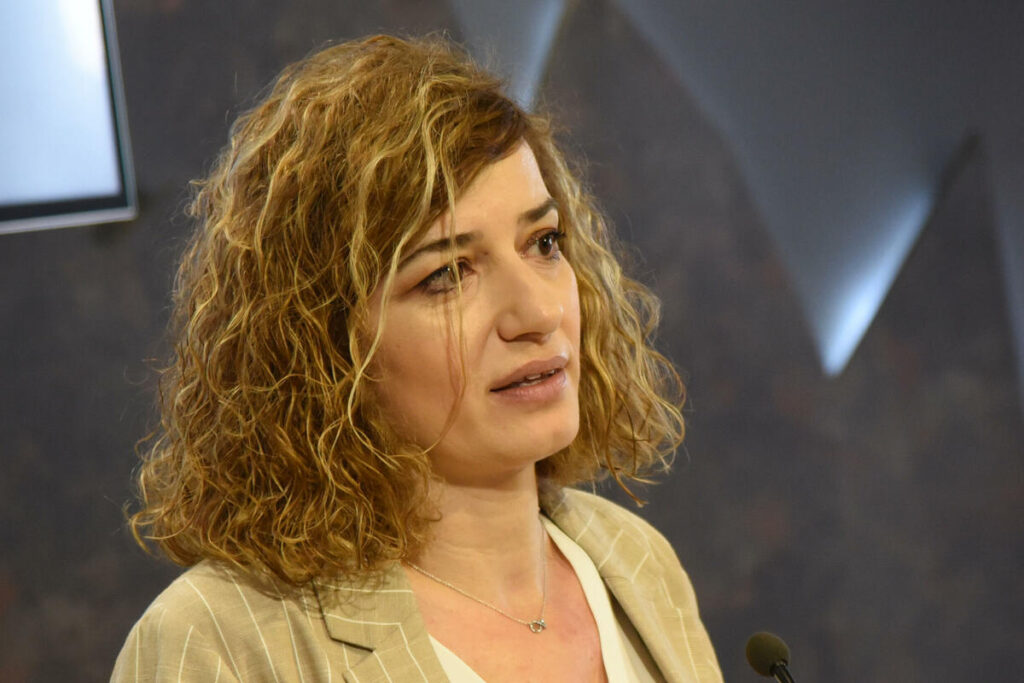
The European Union (EU) should issue a political declaration by the end of this year committing to concluding an accession treaty with Montenegro, former Minister of European Affairs Jovana Marović said, stating that this would be a strong signal that integration is a concrete goal.
Marović, commenting on Montenegro’s results achieved this year on its European path, said that another step towards the Union has been taken.
“Despite the fact that better results were expected during the first half of the year, and taking into account the roadmap for closing chapters, announcements, as well as the goal of joining the EU in 2028, another step towards the EU has been taken and we must be partially satisfied,” Marović told the MINA agency.
She stated that the temporary closure of Chapter 5, which relates to public procurement, as well as the more successful implementation of the Reform Agenda within the Growth Plan than anyone in the region, still makes Montenegro the most serious candidate for EU membership.
“However, being better than other candidates for membership has never been a guarantee that we will actually reach our goal,” said Marović.
According to her, it is concerning that the state is lagging behind the plan for this year.
“Especially since the dynamics of closing the chapter were very ambitious at the start, so we have no room for error and slowdown. The non-paper on the rule of law, which we received in May from the European Commission (EC), and its harsh tone mean that the season of “patting on the back” is over,” said Marović.
She believes that it is good that there is progress in resolving open issues with Croatia, especially since it is a sign that part of the government understands their importance for the further course of negotiations for EU membership.
“All of this means that, although there is a certain will on both sides to accelerate the process, institutional capacities and reform performance are not yet at a level that would justify entering the final phase of negotiations,” Marović assessed.
Speaking about the idea of signing pre-accession negotiations, she said that this idea is increasingly present in the Union.
“Such an agreement would formalize the elements of membership and at the same time create political pressure to fulfill all conditions for full membership,” Marović stated.
She said that she advocates signing an accession treaty with Montenegro and joining the EU by 2029.
“The EU should issue a political declaration by the end of this year committing to concluding an accession treaty, along with a short and public reform “checklist”, believes Marović.
This, she added, would be a strong signal to citizens in the EU and the Western Balkans that integration is no longer just an endless process without an end, but a concrete goal.
According to Marović, Montenegro would have to meet four key conditions, including a two-year series of final verdicts for high-level corruption and transparent and meritocratic selection of judges.
These key conditions, she stated, relate to the implementation of legislation on media freedom and elections and to full compliance with the EU’s common foreign and security policy and visa policy.
“The fulfillment of these criteria would be confirmed by an independent mixed mission of experts, not political assessments. In short, it is time to create a clear, bilaterally binding framework that implies both Montenegro’s responsibility and the credibility of the EU,” Marović pointed out.
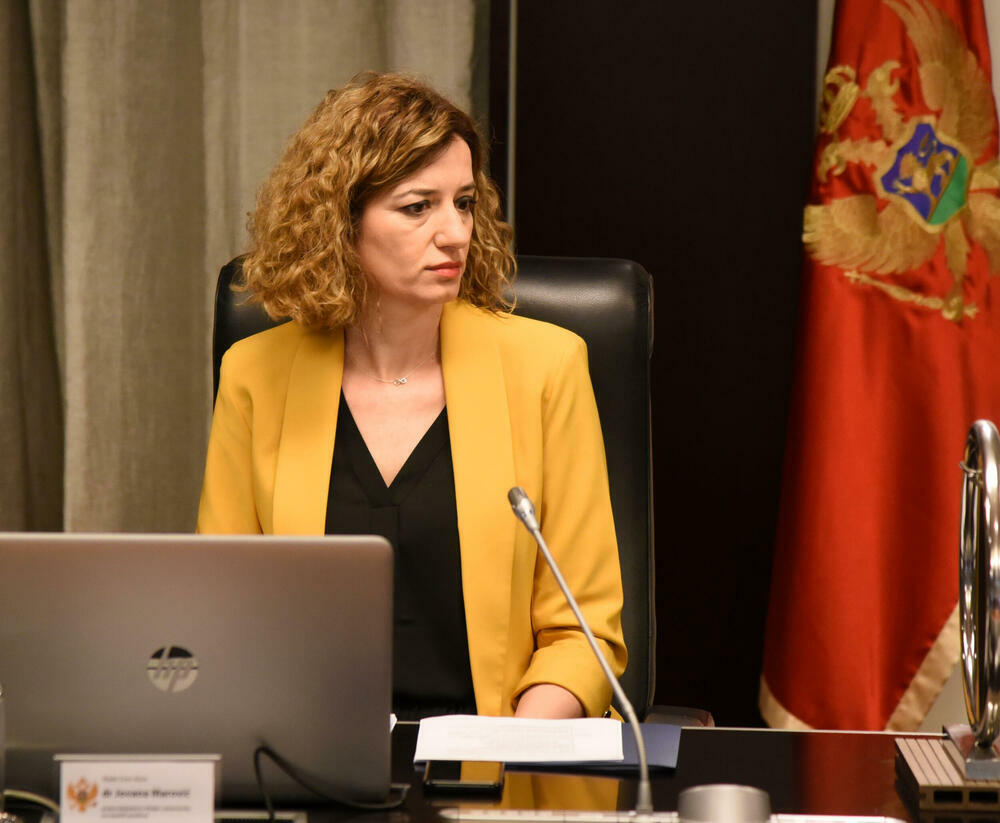
photo: Luka Zeković
As she said, although the EU is partly open, it is Montenegro’s responsibility to “shape” such a proposal and capitalize on it politically.
Marović believes that the authorities must have a plan B and C if the state does not close all chapters by the end of next year.
She said Montenegro must join the EU during the mandate of this EC. “Because after that, our situation will become more complicated and make membership uncertain and our future path unpredictable.”
According to Marović, Plan B means reacting and preparing the ground for the “what if 2028 doesn’t happen” scenario.
“And instead of persistently repeating bombastic statements about the number of intergovernmental conferences by the end of the year and certain membership, we should explain that we have a backup option and that 2029 is also desirable for us and that nothing is fundamentally changing,” Marović stated.
She said that “28 to 28” is a catchy and catchy motto, but it initially implied that the state was counting on a political decision and was being overlooked.
“With carefully negotiated deadlines, I think the best scenario is for us to enter the EU with strong institutions and an independent judiciary, and we can complete everything else once we enter the EU,” Marović said.
Speaking about Plan C, Marović said that it would be a backup scenario in case the member states decide that enlargement can wait and that internal reform of the Union is again more important to them.
She added that Plan C implies a more intense focus on internal consolidation without waiting for impulses from Brussels.
“In that case, reforms would not be exclusively an ‘EU task’, but a state policy based on the interests of citizens, and the EU conditionality framework should have already led us to that and served as a bridge to our awareness that we are implementing all these reforms for our own sake,” said Marović.
She believes that the country, with real political and economic consolidation, could wait peacefully for the EU to be ready.
“And it, more specifically its member states, would become “more ready” all the sooner if our progress were visible to the naked eye. The essence of both plans is: EU integration must remain a reform compass, even when the political calendar or EU fluctuations are not in our favor,” said Marović.
Speaking about accelerating the EU path, she said that this is only possible with true political responsibility and institutional stability.
Marović said that it is necessary to unblock the judiciary and ensure that key positions are filled transparently and based on competencies, not party agreements.
“A clearer reform calendar with deadlines and responsibilities must be defined. The internal political climate is currently ambivalent,” Marović stated.
She added that, on the one hand, the ruling majority formally supports EU integration, and on the other hand, that majority also includes actors who openly support alternatives to European integration, or covertly work to slow down reforms.
“In such a context, political will is more declarative, and much less a concrete reform mechanism,” believes Marović.
Asked whether she believes that EU enthusiasm will decline if the country does not become a member of the Union by 2028, Marović said that she does not expect a significant drop in support.
“Since we have been in the process for 13 years and the support of citizens has always been high, I do not expect it to drop significantly even if we do not enter the EU in 2028, but I expect support for those who promise this every day to drop,” said Marović.
She said the logic was clear.
“As long as you don’t live well in your country and the way you would like, your goal is something else and better,” Marović said.
She said that we should constantly work on promoting EU values and that this is everyone’s obligation.
“Therefore, a new dynamic is urgently needed: the reform result must be visible in people’s lives, through better institutions, an efficient judiciary, modern administration and real economic benefits,” concluded Marović.

News