
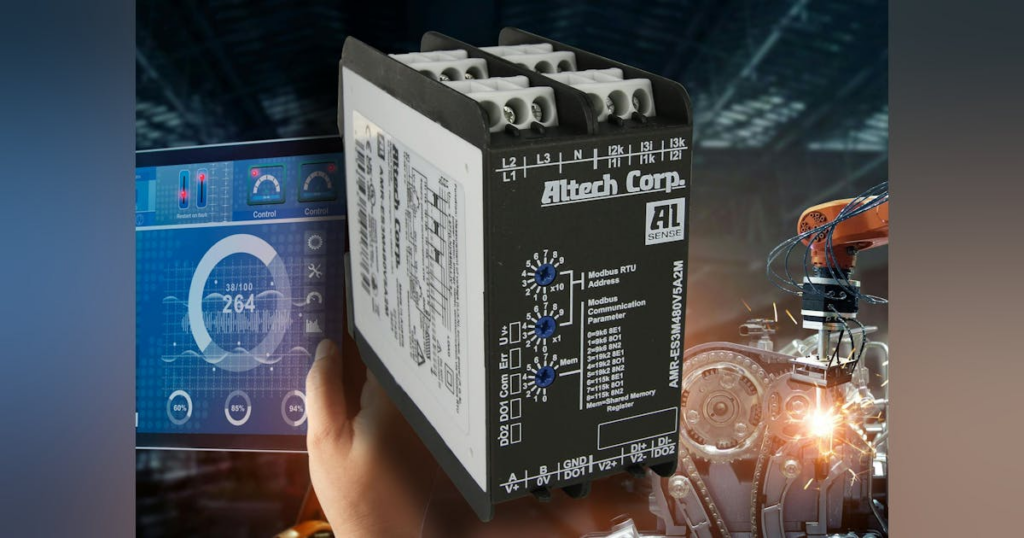
In addition to their sustainability benefits, energy monitoring systems provide performance advantages thanks to their ability to enhance operational efficiency. With comprehensive measurement capabilities for voltage, current, active and reactive power, and power factor, these systems allow WWTPs to:
- Improve their power quality
- Optimize reactive power
- Correct power factor
The result — WWTPs will run more efficiently at lower costs. Let’s take a closer look at these three examples.
Improving power quality
Energy monitoring provides an important foundation for detecting and mitigating power quality issues that affect wastewater equipment performance. This data allows facility managers to detect voltage sags, swells, harmonics and other problematic events, which, if left unchecked, can affect equipment performance.
For example, by tracking and analyzing various electrical parameters like voltage and current, the Alsense system helps WWTP managers identify inefficiencies and anomalies such as harmonics and transient events. If left unchecked, harmonics can cause equipment overheating, nuisance tripping and premature component failure, while transient events — which often go unnoticed — can impact equipment lifespan and reliability.
The Alsense system’s real-time monitoring capabilities provide visibility into the correlation between these events and machine performance issues, empowering operators to identify problematic equipment and take strategic steps to avoid more damaging consequences.
Optimizing reactive power
A second example involves reactive power, which plays an important role in maintaining voltage stability in electrical systems. The Alsense monitor’s ability to measure reactive power is essential for ensuring proper voltage levels throughout a wastewater facility.
Reactive power requires careful optimization: having too little can cause voltage drops, leading to equipment malfunctions or failures, while excessive reactive power can create overvoltage conditions that damage equipment. By monitoring and optimizing reactive power levels, the Alsense system helps WWTP managers maintain ideal voltage conditions, ensuring reliable equipment performance and preventing production disruptions.
Reactive power management can also extend the lifespan of wastewater treatment equipment by preventing overheating and reducing wear and tear. Excessive reactive power can lead to higher currents and overheating, damaging transformers and motors. By ensuring that equipment operates within optimal parameters, reactive power monitoring helps decrease maintenance costs and prolong service life. The resulting reduction in replacement and repair costs represents a significant long-term financial benefit for municipal and industrial wastewater operations.
Power factor correction and cost benefits
By helping plant managers optimize energy consumption and reduce waste, energy monitoring systems unlock significant cost benefits while extending equipment lifespan. A low power factor, which is common with inductive loads such as motors and transformers, significantly impacts both operational expenses and equipment reliability.
For WWTP managers, a poor power factor creates multiple challenges such as higher electricity bills and greater equipment strain. When power factor is low, motors and transformers generate excessive reactive power, burdening the power supply system. This, in turn, leads to voltage fluctuations and harmonic distortions that accelerate equipment wear and tear, causing premature component failure and increasing maintenance costs.
By measuring power factor, the Alsense system allows WWTP managers to identify problem areas across three-phase systems. By detecting which equipment or processes contribute to power factor issues, facility managers can implement targeted correction measures, thus reducing electricity costs, enhancing power supply stability and extending equipment life.
Conclusion
In today’s regulatory and economic environment, wastewater treatment facilities can no longer afford to treat energy as a fixed cost. Energy monitoring systems represent a transformative solution for facilities seeking to optimize energy performance while maintaining reliable, compliant operation.
By providing comprehensive visibility into energy consumption patterns and power quality issues, these systems enable proactive energy management in a way that delivers significant operational, financial and environmental benefits — all of which is essential for protecting public health and environmental quality.