
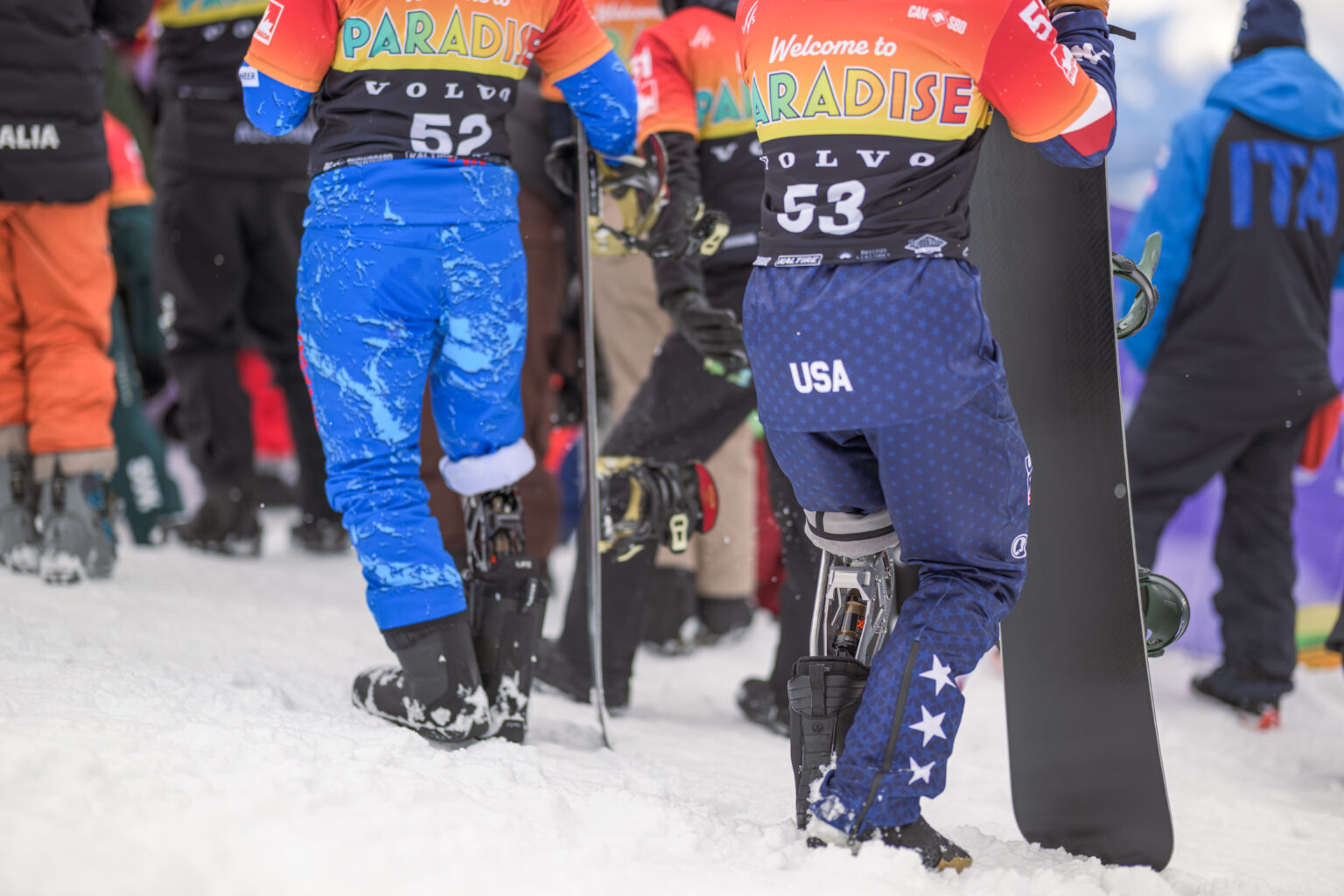
While many of these steps are applicable to all FIS disciplines, being sorted in sport classes and achieving the MIC for each are sport specific.
Alpine Skiing, Snowboard, and Cross-Country have all evolved over the years and continue to do so as Para participation on the snow grows.
Below, FIS depicts the origins of each sport.
History of Para Alpine Skiing
Para Alpine Skiing has been on an upward trajectory since 1948, when the first official course was offered to participants. Its development can be dated back to the Second World War, with injured ex-servicemen seeking a return to the sport. The first official documented event occurred in the same year, where 17 athletes took part in Austria.
It wouldn’t be until the 1960s that the first classification systems for it were developed, built upon from those early revisions in Scandinavia. Like many sports, what began as a system to assess amputees only has evolved into a far more functional system that allows for impairments of all kinds, including sit skiers.
By 1976, the sport featured in the first-ever Paralympic Winter Games, held in Sweden, with two events contested: Slalom and Giant Slalom, contested by standing and visually impaired skiers. Sit-skiing was introduced eight years later as a demonstration discipline at Innsbruck 1984, before becoming a medal event at Nagano 1998.
As of now, there are five events under the Para Alpine umbrella: Downhill, Slalom, Giant Slalom, Super-G, Alpine Combined, and Parallel Team Events. Within these, athletes are categorized as one of the following: Sitting, Standing, and Visually Impaired skiers. Each category has their own sporting classes, which we will delve into in Part 3, that determines which factor will be applied to an athlete’s race time; this is applicable for both Alpine and Cross-Country.