
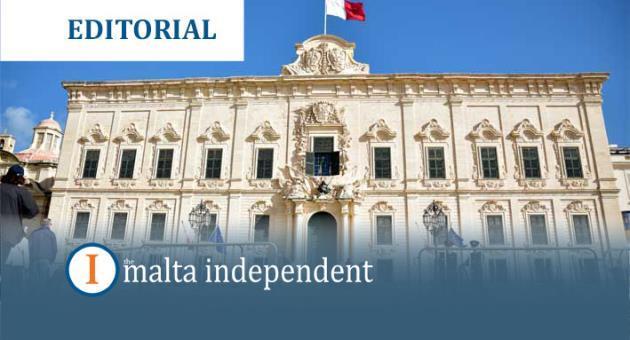

Despite the upbeat rhetoric of progress echoing from Castille, the European Commission’s latest Rule of Law Report presents a starkly different image of governance in Malta. The country continues to suffer from the government’s profound lack of political will to implement the institutional reforms necessary to restore public trust and uphold democratic standards. The government may bask in a feel-good factor it helped engineer through economic performance and targeted messaging, but beneath the surface, the machinery of good governance is rusting away.
The report’s conclusions do not align with the government’s insistence that Malta is on the right path. Instead, they depict an administration that remains too slow, too reluctant, and seemingly too comfortable to tackle systemic issues that have plagued it for years. The message is clear: Malta is falling behind in implementing key reforms that are central to a well-functioning democracy.
One glaring example is the long-overdue reform of the asset and interests declaration system for Members of Parliament and government ministers. Declarations for 2024 were filed in March 2025. More troubling is that these declarations remain unpublished, like those of the previous year. The government claims reform is underway, but the lack of transparency reinforces the perception of unwillingness rather than resolve. The delay itself, coupled with a failure to make declarations public, suggests that political accountability remains a low priority for Prime Minister Robert Abela.
It is not just the delay in declarations that is worrying, but the broader inaction on improving the integrity framework for high-level officials. Recommendations from both domestic bodies, such as the Commissioner for Standards in Public Life, and international ones have largely gone unheeded. Despite identifying the need for stronger codes of ethics, lobbying rules, and enhanced standards for persons of trust, the government’s actions remain superficial at best. When two ministers were warned by the Parliamentary Standards Committee for abuse of power, it was an opportunity for genuine reform. Instead, the response was cosmetic, marked by weak sanctions and no structural overhaul.
A culture of impunity continues to permeate the political landscape. While the report acknowledges some steps in boosting the capacity of investigative bodies, including the Attorney General’s office and the Financial Crimes Investigation Department, these moves have yet to yield meaningful results. The number of final judgments in corruption cases remains dismally low. The rule of law cannot flourish where impunity thrives, and Malta has yet to demonstrate that justice for high-level corruption is more than a theoretical commitment.
Further, key recommendations stemming from the public inquiry into the assassination of journalist Daphne Caruana Galizia continue to be ignored. That so much remains to be done – years after the inquiry’s conclusion – is a damning indictment of the government’s sluggish pace and apparent lack of urgency. Measures regarding lobbying and conflict of interest rules remain unaddressed, and the need for a robust track record of convictions in high-level corruption cases is as urgent as ever.
The media landscape presents an equally grim picture. The government continues to insist that constitutional guarantees are sufficient to safeguard public broadcasting independence, despite consistent warnings from international watchdogs. The Media Pluralism Monitor again identified this area as a high-risk zone, citing “political appointments”, “opaque finances”, and proven bias in coverage.
Meanwhile, legislation intended to protect journalists from Strategic Lawsuits Against Public Participation (SLAPPs) has been piecemeal and inadequate. By limiting protections to cross-border cases, the government left domestic journalists vulnerable to legal harassment. Despite civil society and journalist bodies urging for stronger protections, meaningful legislation remains absent. Even as preparations to align local laws with the European Media Freedom Act are under way, the delay in tabling a White Paper underscores how media freedom is often treated as an afterthought, not a priority.
The failure to strengthen access to public information is yet another missed opportunity. Despite limited progress, government decisions to reject Freedom of Information requests and calls for a return to criminal libel indicate a persistent hostility towards transparency.
Taken together, these issues paint a picture of a government unwilling to embrace the standards of good governance. The supposed “progress” hailed by officials flies in the face of the Commission’s findings. Malta remains mired in the same structural deficiencies it has struggled with for years, with little evidence of meaningful change. The refusal to move swiftly and decisively in implementing long-overdue reforms suggests not oversight, but deliberate hesitation.
Good governance is not measured by how often a government praises itself, but by the strength of its institutions and the trust of its people. In Malta, both are eroding. The feel-good factor may win votes, but it cannot disguise the reality laid bare by the Rule of Law Report. Until the government embraces reform with the seriousness it demands, Malta’s democratic foundation will remain fragile – and the shadows of impunity, corruption, and lack of protection for the media will continue to loom large.