
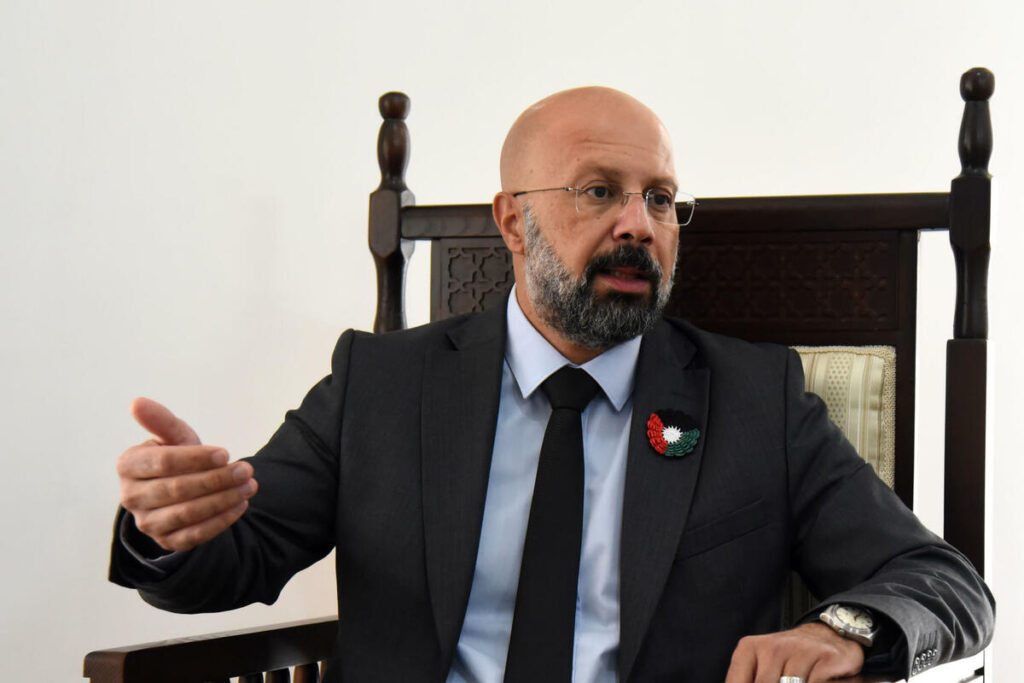
Montenegro’s position since the beginning of Israel’s ongoing war against the Palestinian people has been correct and clear – calls for respect for international law and an immediate ceasefire were made in the first days of Israeli aggression, said the Palestinian Ambassador to Montenegro. Rabii Alhantouli, commenting on the position of Montenegrin institutions towards the events in Gaza and the West Bank.
In an interview with “Vijesti”, Alhantouli said that “Israeli crimes require urgent and concrete action by all states, including Montenegro.”
In late October 2023, Montenegro supported a resolution at the United Nations (UN) calling for an immediate and permanent ceasefire in Gaza. The resolution was adopted by 120 countries – 45 abstained, including Serbia and North Macedonia, while 14 members voted against, including Israel, the United States of America (USA), and Croatia. Of the other Balkan countries, Bosnia and Herzegovina (BiH) and Slovenia voted in favor of the resolution.
Responding to the question of who in Montenegro provides the most support, Alhantouli emphasized that citizens are the leaders in this, but also that he expected greater assistance from officials, as well as politicians.
He stressed that the realization of a “two-state” solution based on UN resolutions is the only way to achieve a just and lasting peace in the Middle East.
How do you assess the position of Montenegro and its institutions towards the current events in Gaza and the West Bank? Do you think that enough is being said about the events in Gaza and the West Bank in Montenegro, or rather on the Montenegrin political scene?
The official position of Montenegro has been correct and clear since the beginning of the ongoing Israeli genocidal war against the Palestinian people. Calls for respect for international law, for an immediate ceasefire and for the provision of international aid to Gaza were made in the first days of the Israeli aggression. After 21 months of the ongoing genocide by Israel, where they have killed at least 58.000 Palestinians, including 18.000 children, no words or statements are enough.
Israeli crimes require urgent and concrete action by all states, including Montenegro, to: end genocide, ethnic cleansing, apartheid, end this Israeli illegal, colonial occupation which is the sole cause of all disasters in Palestine and the Middle East. And as the United Nations Special Rapporteur has emphasized Francesca Albanese In its call for accountability and an end to complicity in the publication of its latest report, “From the Economy of Occupation to the Economy of Genocide,” all countries “have an obligation not to aid, not to support, not to trade with Israel, not to send weapons, not to buy weapons, not to provide military technology, not to buy military technology.”
Who in Montenegro provides you with the most support and from whom did you expect more?
Montenegrin citizens are the ones who provide the greatest support, they are united in supporting the Palestinian people and condemning Israeli war crimes. I expect more from politicians and officials.
How, in your opinion, can Montenegro contribute to improving the situation in Gaza and the West Bank? Do you think Montenegro is pursuing a balanced policy?
It can do this by consolidating its existing principled position, supporting the two-state solution and demanding an end to Israel’s military occupation of Palestine. And this can be done by taking clear steps in relations with Israel at the bilateral level and by engaging more in initiatives at the multilateral level, including international legal processes, such as cases before the International Court of Justice and the International Criminal Court.
In your opinion, how realistic is it today to talk about a “two-state” solution? Is that still possible after this war?
The realization of a two-state solution based on United Nations resolutions is the only possible way to achieve a just and lasting peace in the Middle East. Our right to self-determination is an inalienable right that we will never give up. Since 1988, we have accepted an international compromise that our independent state will be on just 22 percent of the historic land of Palestine, and this was our greatest sacrifice for the sake of peace. Now, after the whole world has seen how genocidal the Israeli government is, it is up to the international community to take practical measures to impose a two-state solution.
How do you view the role of Arab countries? Do you feel political support for the Palestinian people or is most of the solidarity limited to symbolic statements and gestures? How do you comment on the unwillingness of Arab countries to accept refugees from Gaza?
Arab countries have a long-standing principled position supporting the right of the Palestinian people to self-determination and an independent state with East Jerusalem as its capital. Therefore, Arab countries accepted the compromise presented by Western countries, which promoted a two-state solution, and even more than that, they presented the Arab peace initiative in 2002, which Israel rejected. But, like most of the international community, Arab countries have seen their hands tied and their ability to act limited. This does not mean that we do not ask and expect them to do more to stop the ongoing Israeli genocide and military occupation.
When it comes to accepting refugees from Gaza, Arab countries are caught between two poles. On the one hand, they want to save Palestinian civilians, but they also know that doing so will enable Israel’s plan to ethnically cleanse Palestine of Palestinians, allowing for the colonization of all of Palestine, which is considered a betrayal of the Palestinian people. And let’s not forget that more than six million Palestinians still live as refugees, mostly in neighboring Arab countries, since 1948, when Israel was invented on Palestinian land and forced them to leave their homes, to which they have never been allowed to return, despite UN resolutions and international law, which affirm their right of return.
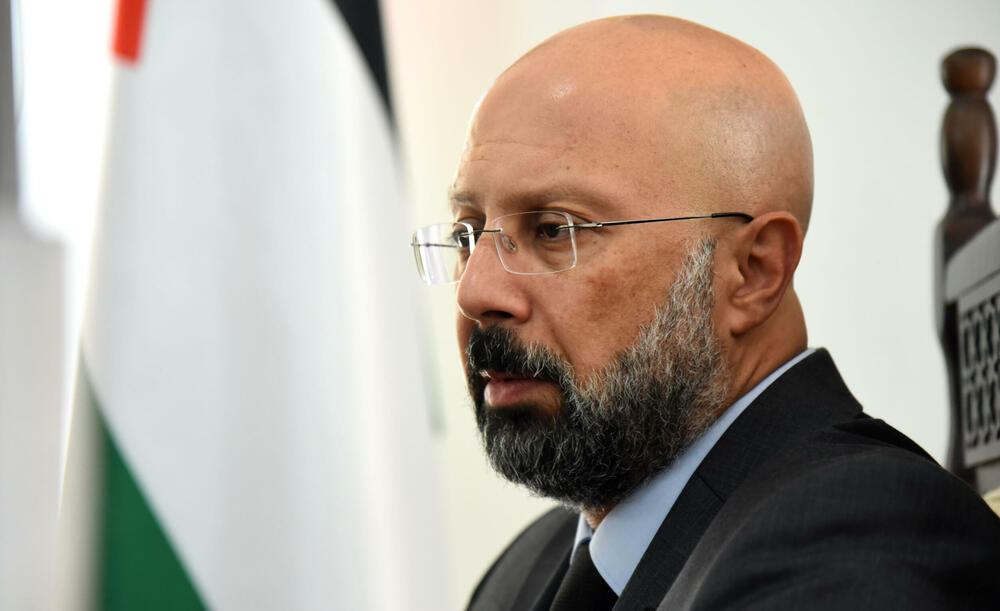
Rabbi Alhantuliphoto: Luka Zeković
The Palestinian political movement is deeply divided. Do you think the conflict between Fatah and Hamas weakens the legitimacy of Palestinian international representation?
The internal Palestinian situation witnessed a deep division regarding the way to deal with the Israeli military occupation. The official Palestinian position, the PLO and Fatah, was clear, stating that we must use political, diplomatic, legal and non-violent means to end the Israeli occupation with the support of the international community that agrees that this is the way forward. Since the assassination of the Israeli Prime Minister Jicak Rabin, who reached a peace agreement with Jaserom Arafat In 1993, called the Oslo Accords by the Israelis, successive Israeli governments did everything they could to sabotage the peace process by failing to honor their commitments under the agreement. Unfortunately, Israel succeeded in killing the hope for peace by sending a clear message to the Palestinian people that peaceful paths would not restore freedom, independence, and dignity. Hamas exploited this internally to rally more supporters for its program among the Palestinians.
This has created a serious internal faction that needs to be healed and perhaps now our people are more convinced that the official (PLO-Fatah) Palestinian strategy for ending the Israeli military occupation may not bring immediate results, but it is the most responsible and effective in the long term and we have no doubt that we will achieve the legitimate aspirations of our people.
Despite everything, this situation cannot affect the legitimacy of the international Palestinian representation as established in internal national laws and international resolutions stating that the Palestine Liberation Organization is the sole legitimate representative of the Palestinian people. In addition, 147 countries have recognized the State of Palestine and its government and have developed bilateral relations governed by international treaties and agreements.

News