
Clearing Gaza rubble could yield 90,000 tonnes of planet-heating emissions | Processing debris from Israel’s destruction of homes, schools and hospitals could take four decades
https://www.theguardian.com/world/2025/jul/22/gaza-rubble-environment-emissions-impact
1 Comment
From the article: Millions of tonnes of rubble left by Israel’s bombardment of Gaza could generate more than 90,000 tonnes of greenhouse gas emissions – and take as long as four decades to remove and process, a study has found.
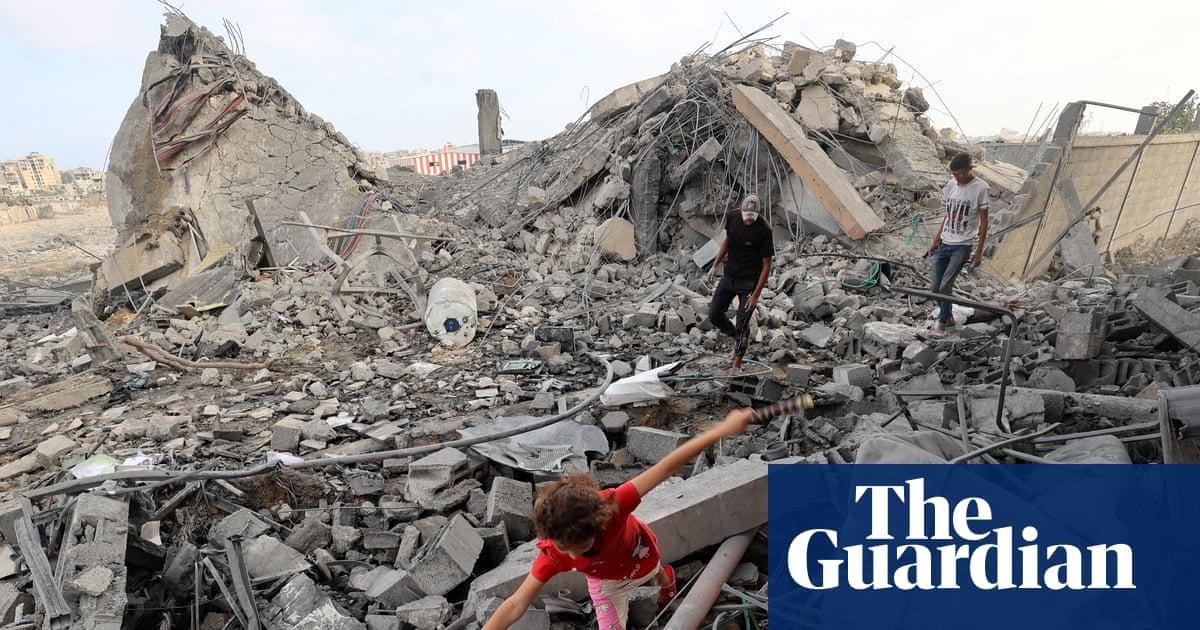
Israel’s destruction of Palestinian homes, schools and hospitals in Gaza generated at least 39m tonnes of concrete debris between October 2023 and December 2024, which will require at least 2.1m dump trucks driving 18m miles (29.5m km) to transport to disposal sites, researchers said.
Just clearing the rubble is on par with driving 737 times the Earth’s circumference, and would generate almost 66,000 tons of carbon dioxide equivalent (CO2e), according to researchers at the universities of Edinburgh and Oxford, who used evolving open-source tools in remote sensing to detect and analyse conflict-related emissions.
The study, [published](https://iopscience.iop.org/article/10.1088/2634-4505/adeadc%20) in the journal Environmental Research: Infrastructure and Sustainability, is part of a growing movement to account for the climate and environmental costs of war and occupation, including the long-term damage to land, food and water sources, as well as post-conflict cleanup and reconstruction.
It is the most detailed examination so far of the carbon and logistical toll of dealing with debris – which in Gaza conceals thousands of unidentified human remains, toxins such as asbestos and unexploded ordnance.
Researchers looked at two scenarios to calculate the speed and climate impact of processing the uncontaminated debris – which could then be used to help reconstruct the razed Palestinian territory.
Assuming 80% of the debris is viable for crushing, a fleet of 50 industrial jaw crushers, which appear never to have been permitted in Gaza, would take just over six months and generate about 2,976 tonnes of CO2e, the study found.
But it would take a fleet of 50 smaller crushers, the type primarily used in Gaza, more than 37 years to process the rubble, generating about 25,149 tonnes of CO2e. In this scenario, the CO2 generated by moving and crushing the debris from Gaza’s destroyed buildings would be on a par with charging 7.3bn mobile phones.