
 Ritratt: Miguela Xuereb
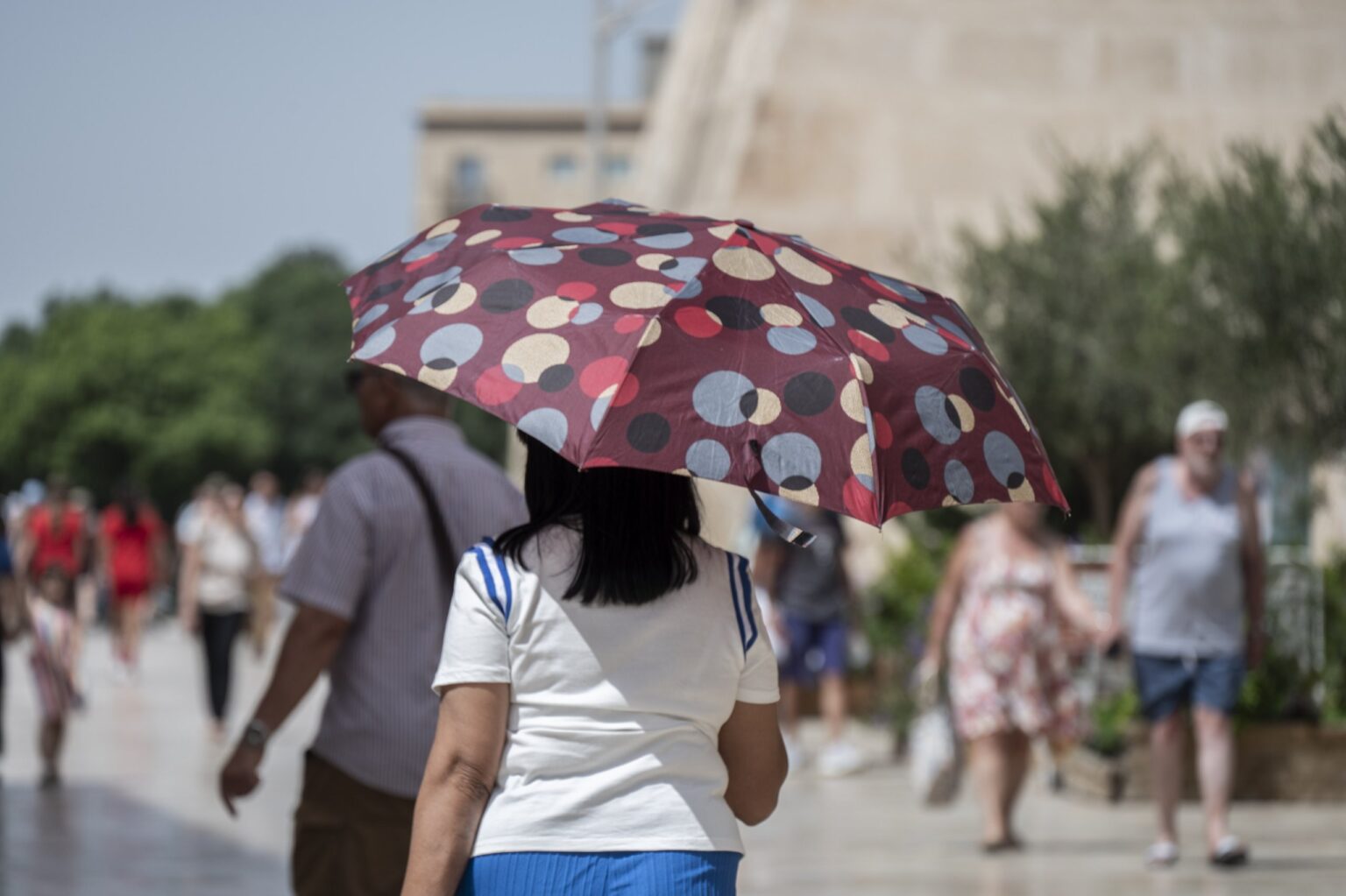
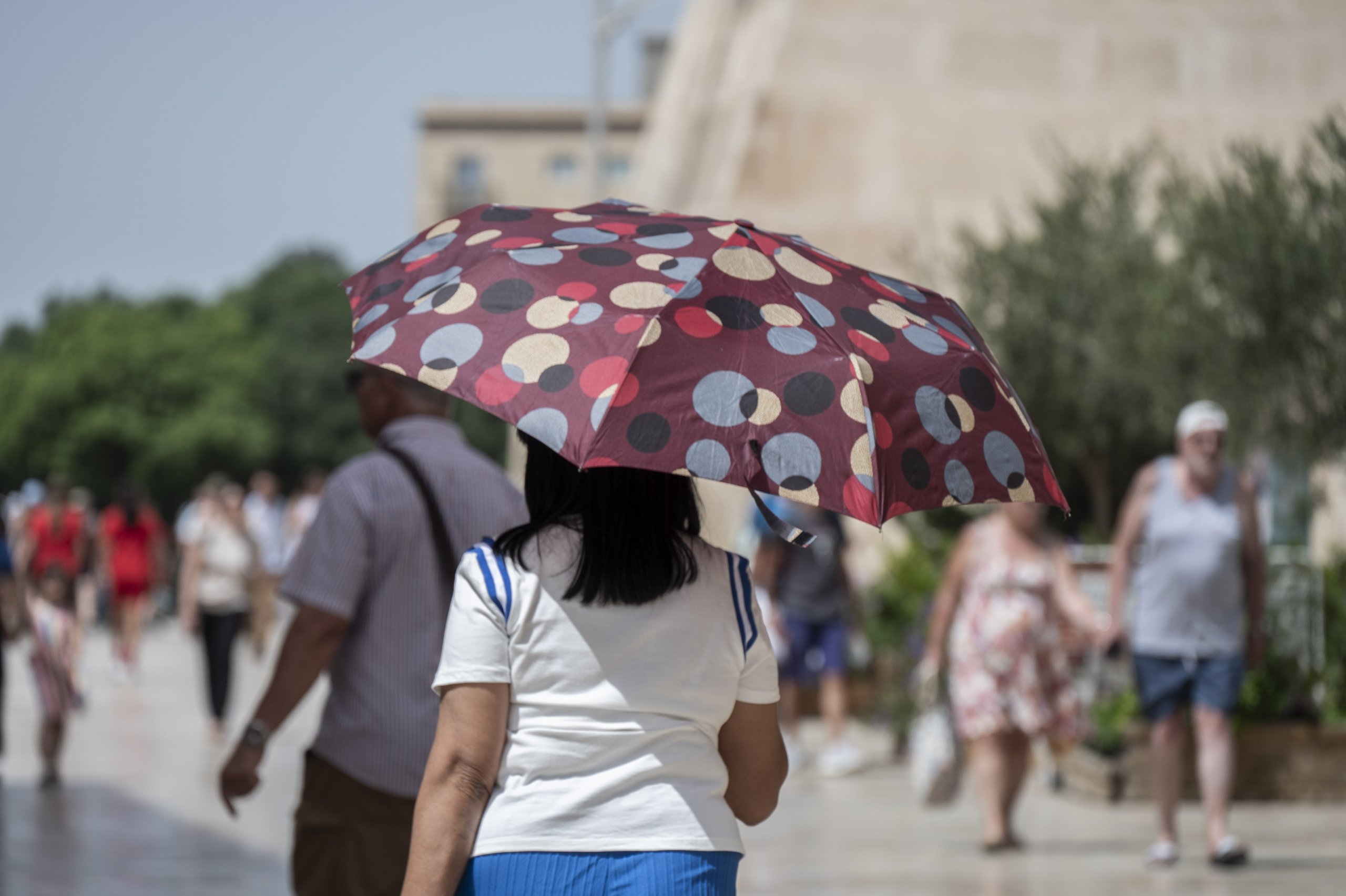
The health ministry today unveiled a comprehensive plan to tackle periods of extreme heat as Malta braces for a punishing heatwave that will see real-feel temperatures reach desert-like levels throughout the week.
The ministry, working in collaboration with the Meteorological Office, has activated an early warning system that will send alert messages to all mobile phone users across Malta and Gozo, providing practical advice on coping with the extreme conditions.
Today’s maximum temperature is expected to reach 35°C, with a real-feel temperature of 39°C. However, conditions are set to deteriorate significantly from Tuesday, when the mercury will climb to 40°C with a real-feel temperature of 42°C.
Wednesday will see air temperatures reach 36°C, feeling like 41°C, whilst Thursday and Friday will both experience highs of 38°C with real-feel temperatures of 41°C and 42°C respectively.
The UV index is forecast to reach an extreme level of 11 on Wednesday, posing additional health risks to anyone exposed to direct sunlight.
Health minister Jo Etienne Abela warned of the serious health implications of the approaching heatwave. “Extreme heat can cause problems in the body that can lead to irreversible damage to essential organs such as the kidneys, heart and brain. Therefore, we are doing everything possible to prevent this and no life is lost unnecessarily,” he said.
The ministry has established Day Centres across various localities to provide shelter from the heat for vulnerable individuals, particularly those with specific medical conditions. Access to these centres will be facilitated by the Primary Care Support Centre, and those requiring this service can call 21231231. In urgent situations, the public should call 1400 or 112 for emergency assistance.
The public awareness campaign launched over recent weeks emphasises the importance of staying hydrated, avoiding strenuous activities during the hottest hours of the day, and limiting direct sun exposure during peak temperatures.
Abela expressed appreciation to telecommunications companies in Malta who agreed to send personalised warning messages to all their customers, ensuring the alert system reaches the widest possible audience.
The approaching heatwave represents an atypical weather pattern for Malta. Rather than being driven by the usual high-pressure system, this heat event results from a jet stream undulation drawing in hot tropical continental air mass directly from desert regions. This phenomenon may create a hazy, milky sky caused by desert dust suspended in the atmosphere.
The extreme temperatures significantly exceed Malta’s average daily high for mid-July, which typically ranges between 31°C and 32°C. Previous heatwaves have caused electricity outages as demand for air conditioning systems soars.
Malta experienced similar conditions in July 2023, when temperatures exceeded 40°C for six consecutive days, reaching a peak of 42.7°C. This figure approached the island’s all-time record of 43.8°C, set in August 1999.
The current heatwave forms part of a broader pattern affecting southern and central Europe. Spain has recorded more than 1,180 heat-related deaths between mid-May and mid-July, compared to 114 fatalities during the same period last year. The UK and France both endured their hottest June on record, with London reaching 34.7°C.
Scientific analyses confirm that Europe is warming at approximately twice the global average, resulting in longer and more intense summers that sometimes extend into autumn.
The ministry’s coordinated response includes input from the Superintendence of Public Health, the Office of the Commissioner for Older People, the Data Commissioner, and the Office of the Chief Medical Officer.
Relief from the extreme conditions is not expected until the weekend, when temperatures are forecast to drop to more manageable levels, with Saturday and Sunday showing highs of 32°C and 30°C respectively, with real-feel temperatures of 36°C and 37°C.

