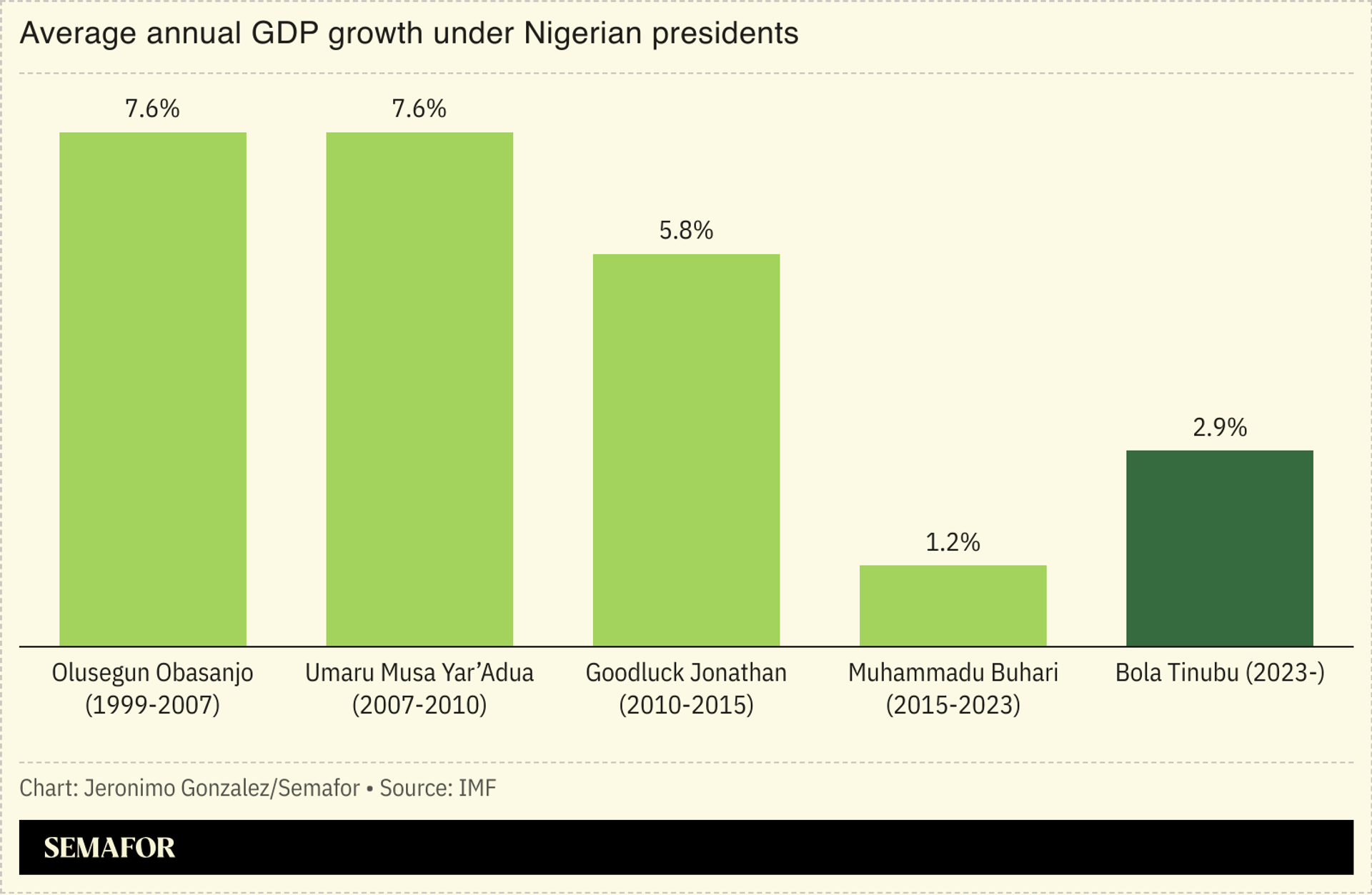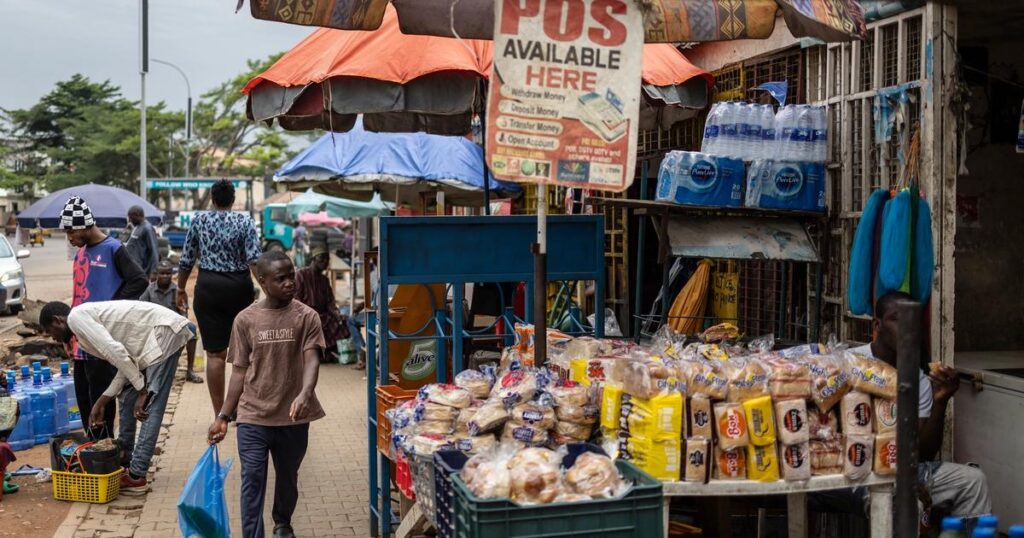
Nigeria’s GDP grew more than 3% in the second quarter compared with the same period last year, suggesting its economy may be recovering after the biggest crisis in a generation.
The positive figures came as the country’s central bank is due to decide whether to maintain its eyewatering 27.5% interest rate, one of the world’s highest.
Inflation peaked at 34% after the government cut a costly fuel subsidy in 2023 a move economists say was needed despite the short-term pain. The decision may have helped the Nigerian economy — sub-Saharan Africa’s second-biggest — turn a corner: The country’s stock market is up 18% this year with economic growth rising despite a fall in the price of oil, Nigeria’s main export.