
A months-long standoff over Kosovo’s next parliamentary speaker is dragging the tiny Balkan nation toward an unparalleled crisis, experts warn, ahead of a deadline this weekend.
On Friday, Kosovo’s MPs failed for a 52nd time to pick their new speaker, a key step toward Albin Kurti’s possible return to office.
Another vote is scheduled for Saturday, which will give lawmakers just hours to meet a court mandate.
“This is an unparallelled situation, an undefined vacuum and chaos,” law professor Mazllum Baraliu told AFP.
Although Kurti’s Vetevendosje party topped the February elections, it did not win the seats needed to install its chosen speaker, Albulena Haxhiu — a pick that opponents view as too political for the role.
Even if the Vetevendosje overcomes this impasse, the party will still need to negotiate its way to a majority to govern.
Last month, after dozens of failed votes, the Constitutional Court set a 30-day deadline, which expires at midnight on Saturday.
Baraliu said instead of cooperating to protect the state, 120 MPs instead had “trampled” it.
“That is absurd,” he said.
– ‘Circus of democracy’ –
Without a speaker, the parliament can’t be formed, and no new minister, including the prime minister, can be sworn in — forcing Kurti into a caretaker role for more than five months.
“The Assembly has turned into a circus of democracy,” Eugen Cakolli, from independent monitor the Kosovo Democratic Institute, said.
“Without a doubt, it is one of the most serious, longest and most consequential crises in the recent political history of Kosovo,” Cakolli said.
In Kosovo, the inaugural session of parliament must be reconvened every 48 hours until a speaker is elected.
Ordinarily, there is no legal time limit for how long this can continue.
“The citizens will pay the highest price from this political experiment that risks plunging the country into an institutional dead end,” economist Safet Gerxhaliu said.
Facing ongoing sanctions and a “frozen” accession process into the European Union, the situation was alarming for the continent’s newest country, he added.
“Kosovo has been forgotten by the EU,” said Gerxhaliu.
The lack of a functioning government also meant Kosovo risked losing EU funding of more than €883 million ($1.04 billion), said Njomza Arifi, a researcher at the Pristina-based think tank Group for Legal and Political Studies.
– Donkeys and deadlines –
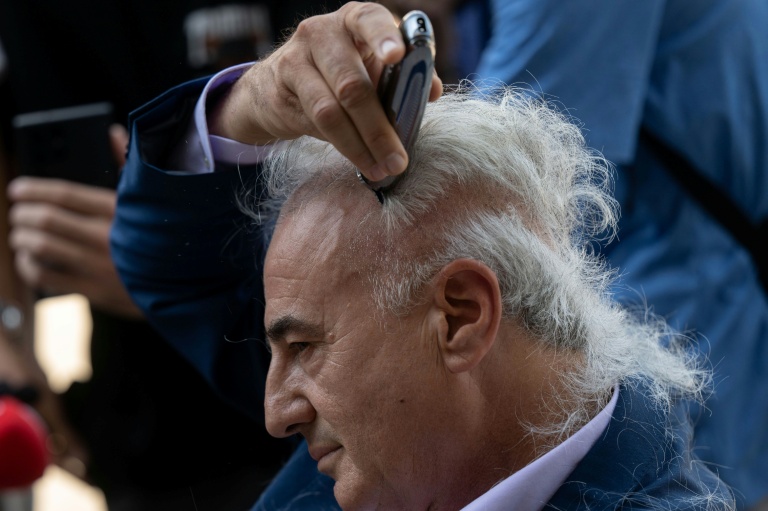
Outside Pristina’s parliament, there have been few signs of public outcry over the stalemate, but one man has become a symbol of protest.
“I have no other homeland — MPs, don’t make it collateral for stubbornness,” lawyer Arianit Koci told media after hacking at his hair with an electric trimmer in his latest stunt.
Earlier, he had brought four donkeys to the entrance of the Assembly, a not-so-subtle jibe at “who is leading Kosovo”.
His presence has meant most MPs pick up their pace when entering the Assembly. Inside, however, there has been little change.
On Thursday evening, responding to opposition legal challenges, the constitutional court issued a temporary ban on any further votes or decisions after the deadline passes.
The order, which would remain in effect until August 8, will give the court time to consider the current suits before lawmakers can make any further moves to form parliament.
But as the deadline approached, even the nation’s would-be leader was unsure of the outcome.
“I don’t know what will happen,” Kurti said in a brief response to reporters’ questions on Monday.
ih/al/yad