
Well,
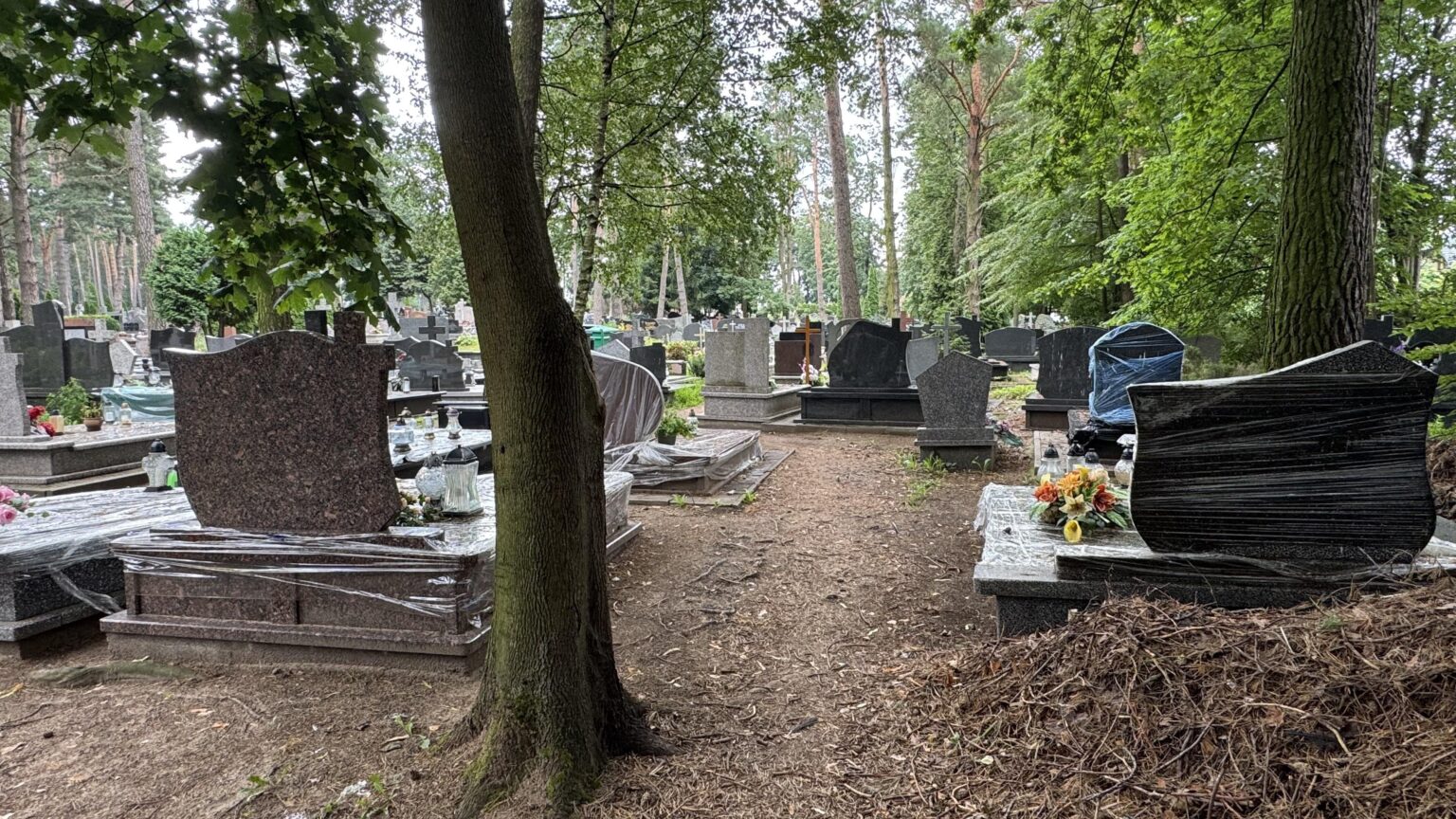
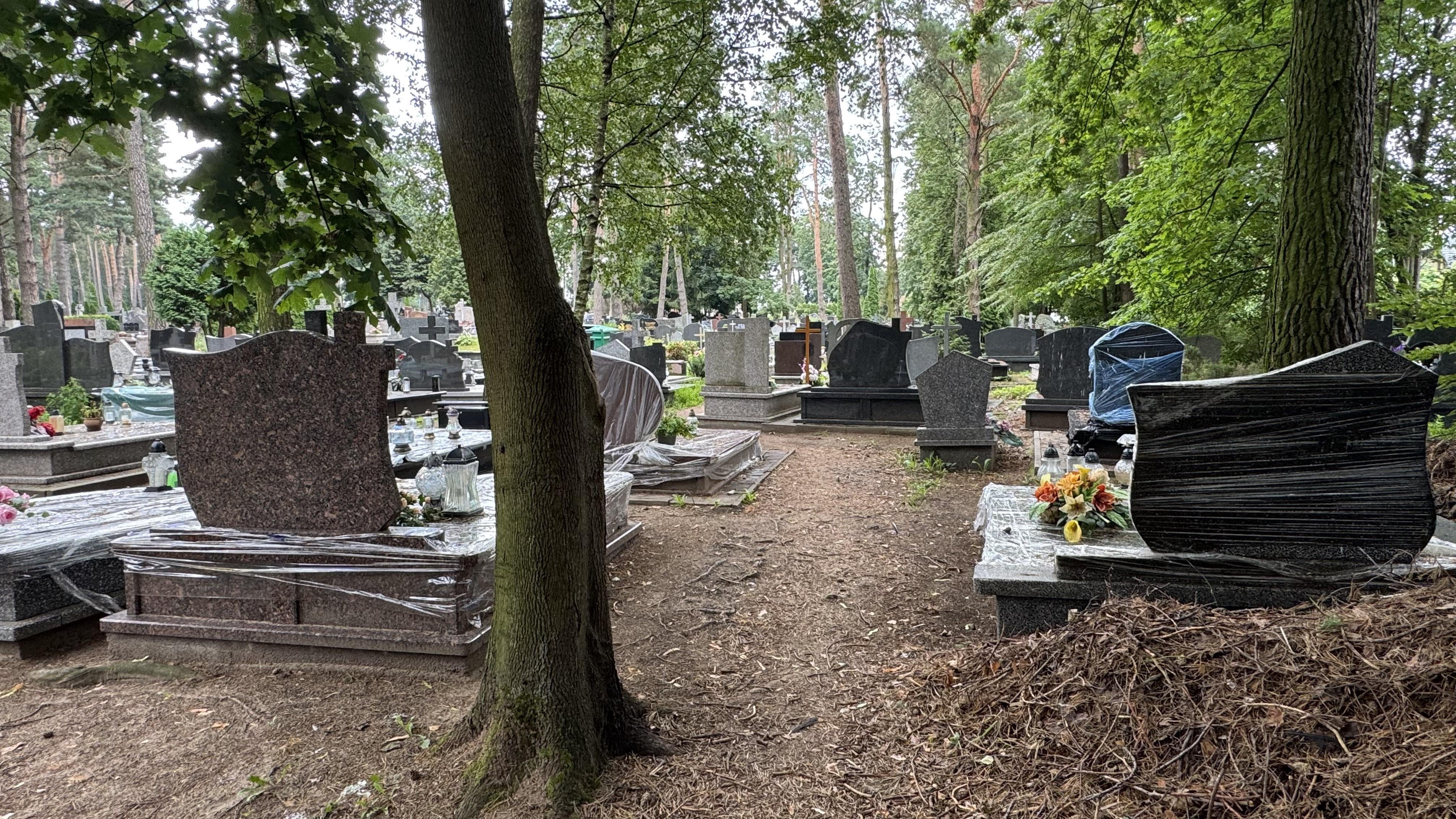
I just visited Poland and when passing by a cemetary I noticed that some grave and tombstones were entirely wrapped in plastics.
After paying a closer look I discovered more and more plastic wrapped graves. I have traveled many countries and visited some interesting cemeteries in each one, but never seen that before. Why is that? To protect the stone from the weather\birdpoop or does it have a superstitious background?
In the pic you can see at least 5 graves wrapped in plastics.
I also noticed you have massive huge cemeteries even in small towns. Where I come from you have to rent the graves for a certain amount of time and the contract needs to be extended after that period, if that ain’t happens they‘ll place other remains into that spot and discharge the old remains into an anonymous grave, as it’s concluded there are no remaining relatives who care anymore.
How is it in Poland? Judging from the size of the cemeteries, you either get unlimited resting time, or the care of the remaining relative goes really strong.
https://i.redd.it/976a96lmilff1.jpeg
Posted by Enaaiid
19 Comments
Weren’t the nearby trees marked to be cut down with spraypaint? I’d assume the plastic wrap is for some technical reason related to any works that could potentially taint the stones with paint or some other hard to remove things
I think plastic wrap is for new, blank graves that havent been yet “occupied”. Also I’m pretty sure graves are indefinite, you stay where you were buried forever, sans some specific situations.
If you go to old graveyards you can see people who died very long ago.
No idea why it’s wrapped. Maybe they don’t want to clean it up before All Saints Day in a few months.
You get a lease of 20 years that has to be renewed. Otherwise the grave is handled just like you said. Most people renew the lease, many times and it only gets removed when the grave is forgotten about, because there are no relatives that know about it.
Graves are serious matter in Poland. Our history is taught in a way that underlines suffering, sacrifice and death. Older people visit the graves a few times a year.
This is strange – I’ve visited a few large cemeteries in Poland a few times and never seen this, just one with a tarp over it, but figured it wasn’t complete.
The rent will depend on if it’s council or parish owned but typical you pay for about 20 years and then renew, but, that said, the parish plots, the church is very unlikely to destroy the grave and bury someone else there.
You may also notice that multiple close family members are buried in same plot – so paying again can extend thay plots life by another 20 years again.
Dobre 👍
New builds ready to be moved into.
Bir shit.
I thought you buy grave space for yourself or family not rent. Unless there are different options? Who can own these days?
This could be to protect the stone if there is some work done near them. If I visit a grave of loved ones and it’s covered in some cement or other stuff I will contact the cemetery administration to clean it. I recently paid for another 20 years for the grave of my great grandparents. I never met them. I will renovate it soon also. Maybe not extreme expensive. But my grandmother would be happy I care.
Others already mentioned the grave fees so I’m only going to add about Polish attitude to graves and graveyards. Caring for and visiting graves is really important in Poland. I know people who go to the cemetery at least once or twice a week. Obviously it’s different when your family is buried far away from you but even then people go at least a few times a year. All Saint’s Day is a big thing in Poland too, especially for older people. And most people pay for their family graves for a long time, even if it’s some distant aunt who died 40 years ago. As long as there are some living relatives the grave would be taken care of. My grandma even pays for her late neighbor grave who died several years ago without any family. And it might of course depend on a certain graveyard and who is managing it but in my experience they’re not so quick about demolishing old graves, even if they are not paid for. Usually there is at least a few years old grace period for the family to show up and settle the payment. Unpaid graves are only demolished when there’s no space for the new ones anymore.
Are the trees oaks specifically? I could imagine that, assuming they have spread to Poland at this point, this is a protective measure re: oak processionaries (Thaumetopoea processionea) which cause severe allergic reactions.
As to why it’s wrapped in plastic I have no idea but in regards of care for graves it’s typically strong with families extending leases for generations while some cemeteries that have space just allow the grave to stay if new graves can be set without problems, for example graveyard next to my local church has maybe 40% of space free since it bought out a forgotten field from a retired farmer and made a parking place and extended cemetery so those 3 or 4 graves where family left the country and rarely come just stay here, occassionally tended by other people during church cleaning so they look like proper graves and not some ancient relics.
Just fyi, dobre just means good like that’s good, contextually mainly used when someone makes a joke and another person is like „good one”
– „dobre”. If you wanna abbreviate dzień dobry just say dobry, but it’s not really common in writing. Better to just say Cześć or even Siema
There isn’t any grand mystery behind it. Those are either new marbles that did not get unwrapped for some reason (unlikely, since there are candles and flower wreaths on the graves) or there is some kind of construction / tree cutting going on in the cementary, and the graves were wrapped up to avoid accidental damage / dirt.
I got intrigued, so I looked into it. turns out there’s a very practical (and very Polish) reason behind it.
Some people in Poland wrap tombstones in plastic to keep them clean throughout the year, especially in preparation for All Saints’ Day. That’s the one time of year when many families visit the graves of loved ones, clean them up, and decorate them, sometimes quite elaborately. It’s honestly like a festival of kitschy grave decor: lanterns, flowers, sometimes even musical decorations (yes, like a rainbow snitch that plays a medley).
But to make the grave look “cared for,” it needs to be spotless, which is hard to achieve if it’s been exposed to 12 months of leaves, bird poop, and mud. Some people just hate the annual deep-cleaning or can’t afford it, so they wrap the tomb to save themselves the trouble. Also, tombstones can be really expensive, and for some families, it’s important to preserve the stone, especially if it’s meant to be reused for their own burial someday.
It might seem a bit odd from the outside, but it totally matches the Polish blend of pragmatism, maintaining appearances and traditionalism.
Probably there will be new digging for new grave. So it will protect other graves to be destroyed 🙂
Or they will be cutting the tree
It’s to keep the microplastics away from the graves
Old people often buy their graves while they’re still alive. My aunt did just that—she literally bought her own grave and monument while she was still alive, and it was wrapped in plastic until she died. The stonemason only carved the date of death; she chose the type of stone, the font on the grave, and the image she wanted. That might be a bit of an exaggeration, but she had the grave she dreamed of.
The only explanation I can think of is the owners are Twin Peaks fans [wrapped in plastic ](https://www.youtube.com/watch?v=cymp70Jn1UE)