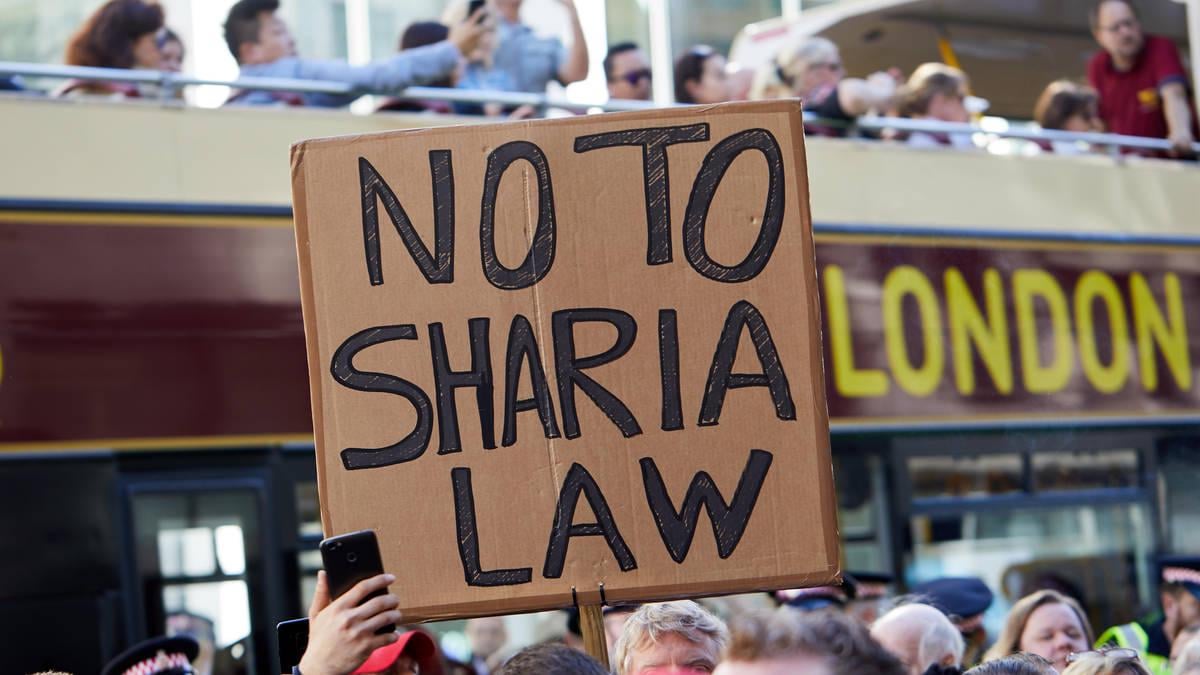
Advert for Sharia Law court job posted on government site sparks outrage as MPs warn of ‘parallel legal system’
https://www.lbc.co.uk/politics/uk-politics/advert-sharia-law-government-outrage/
Posted by pppppppppppppppppd

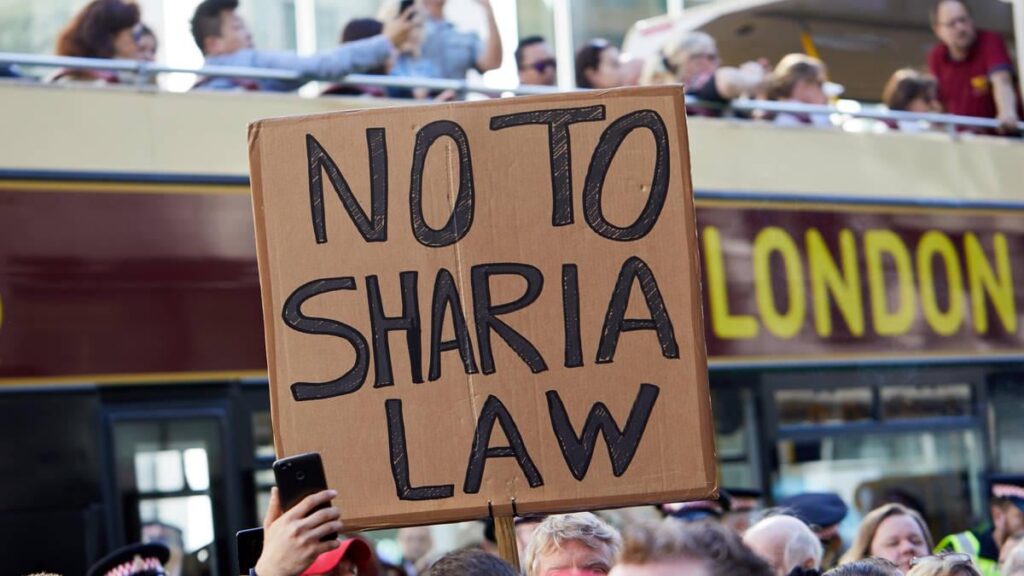
Advert for Sharia Law court job posted on government site sparks outrage as MPs warn of ‘parallel legal system’
https://www.lbc.co.uk/politics/uk-politics/advert-sharia-law-government-outrage/
Posted by pppppppppppppppppd
8 Comments
This is an abject failure pm someone’s part. There is no role for such ‘court’s in our land
A degree in a foreign legal system and experience working in a somewhat niche foreign legal environment, which will not have been in the English language. For this bilingual international lawyer, in a not overly cheap city, the employer will cheerfully offer a minimum wage admin job…
LBC love their shit-stirring and race-baiting, don’t they?
“Posted on government site” makes for a much more inflammatory headline than “posted on the DWP’s ‘find a job’ page”.
What, do we ban people from applying to jobs if they’re related to a religion now?
> “This is a position being advertised on the Find A Job portal by an independent registered charity and is not within DWP.
Non-story.
Religious “courts” have existed in the UK for *years* they have exactly the same power as any other legally binding arbitration, in fact exactly the same as the Jewish “court” system [(Beth Din)](https://www.bethdin.org.uk/).
I took the effort to have at least a basic look into the job and where you are employed.
The job was advertised on DWP, but not employed by it.
It was a job for Manchester Shariah Council.
That still sounds doggy, but reading into what they do it seems that they just do Religious Divorces and related matters.
You could be rigid with what that is, I suppose.
However, it simultaneously doesn’t seem too dissimilar to Catholic Marriage Tribunal which equally looks to nullify marriages based on Canonical Law (catholic law).
Where both the Catholic and Shiria one demand legal divorce first from my knowledge, then proceed to religious divorce/annulment.
It’s just that Catholic Marriage Tribunals tent to advertise privately and majority of their workforce are more centralised or clergy.
The Shiria council isn’t and uses more standard employees (admin) with some figures being religiously involved.
So on practical basis. It seems fair. (In some ways DWP could have more oversight over the employment and I suppose?). As to what exactly they each have power to do, how and what it means is something I am not knowledgeable about.
For example, Canonical law does not allow child marriage, Shiria does.
Canonical law is codified (set like a normal law, in writing). It is based on faith, but it’s very very structured and formalised. After all… Holy See is formalised, with a head and governing structures
(Not Vatican, Holy See. Holy See has Canon Law, Vatican has Vatican law)
Shiria is more spiritual, not codified what so ever.
Conclusion:
Is it suitable for DWP to advertise this – yes, it seems fair. They aren’t employing them, and both (or akin) could.
Should there be a Shiria Council? – yes it seems fair. You would in many ways have one regardless of the size of the population, as long as it’s a few thousand at least which is nothing.
Personally, I would advocate for more stringer naming conventions and not calling it a Council. It creates an unnecessary and misleading comparison to actual Councils. Tribunal seems a lot more sensible. But that’s perhaps nuances.
Content- that’s what is the most questionable and on which I cannot comment much beyond the fact that canon law is codified a d easily searchable per point like a standard law. It also administered by a united entity where as Shiria isn’t.
If you were to meddle and regulate, look into the last part.
Another deliberately misleading title – it was posted on a government website for jobs from all employers, it’s not a job within the government or funded by it in any way.
I’m not a massive fan of people using “courts” like this but they’re completely entitled to go to religious leaders to arbitrate on problems they may have *before* taking it to a court of law. There’s a long history of arbitration like this by religious leaders including in Christianity and Judaism in the UK.
The Sharia “courts” are neither sanctioned nor funded by the government and have no legal standing, this is no more a “parallel legal system” than using charity or independent arbitrators for disputes rather than taking someone to actual court.
Didn’t we have an article about this already yesterday?
It’s not a ‘parallel legal system’. ‘Sharia Law’ is what the rules that the Islamic faith promotes to its followers are called, just as ‘The Ten Commandments’ are the rules the Christian faith promotes to its own followers.
‘Sharia Law’ is no more a ‘parallel legal system to the law of the country’ than the political party ‘Reform’ is solely in charge of *all* possible uses of the word ‘reform’ across all possible instances in the country…