
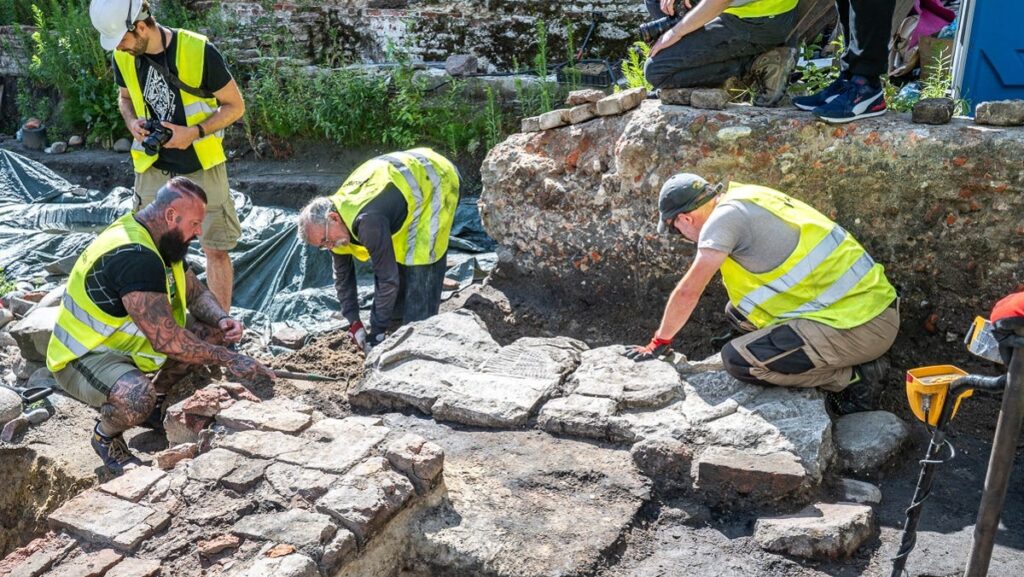
Other major discoveries have been found at the Polish site in recent years, including remains of small cottages from the 12th and 13th centuries.
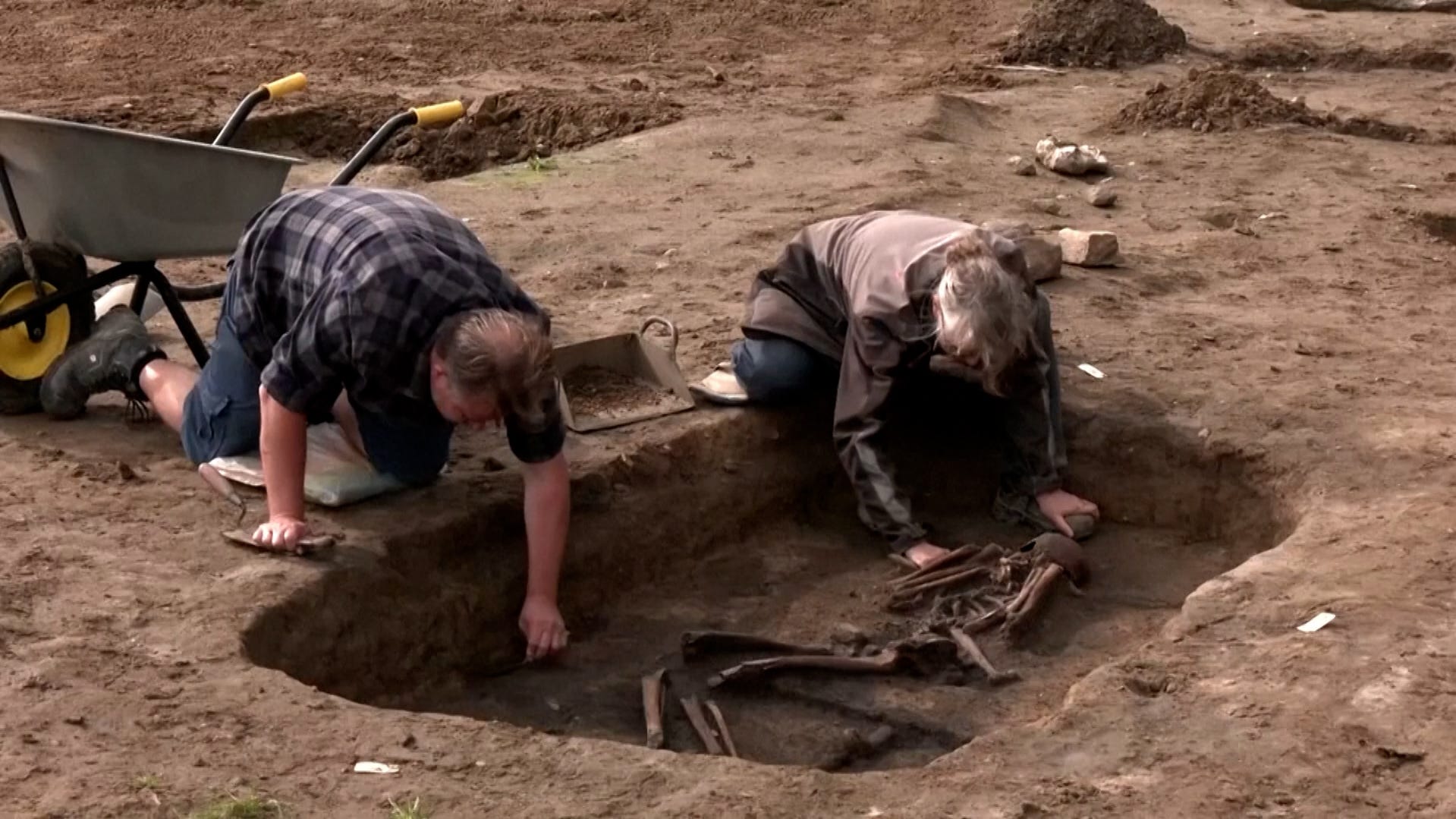

Danish archaeologists uncover 50 Viking-era skeletons
The excavation of a large Viking-era burial site in Denmark has unearthed 50 well-preserved skeletons, along with grave gifts.
Archeologists in Poland were served a cool treat at the site of a former ice cream shop – but not the edible kind.
Researchers with the company ArcheoScan unearthed the complete skeletal remains of a medieval knight underneath a busy street corner in Gdańsk, Poland, a popular port city on the Baltic Sea in early July.
They were digging at the former site of the Miś ice cream parlor in early July when they discovered a tombstone engraved with the image of a chain mail-clad knight. Early estimates dated the stone back to the 13th and 14th centuries, according to a translated news release from Poland’s national heritage agency.
Two days later, on July 10, the researchers uncovered the knight’s entire skeleton about five inches below where the tombstone sat.
Anthropologist Aleksandra Pudło, from the Archaeological Museum in Gdańsk, said the man was about 40 years old when he died and measured roughly 5 feet 7 inches tall, according to a post on the official Gdańsk website.
The small rectangular plot where he was discovered used to be home to the Miś ice cream parlor, a shop that opened in 1962 and has since moved to a new location. Other major discoveries have been found at the site in recent years, including the remains of small cottages from the 12th and 13th centuries and a wooden church built in 1140 – believed to be the oldest in Gdańsk.
The knight’s bones were found in what researchers believe is a medieval cemetery with nearly 300 other graves. Further analysis is needed to determine the origins and history of the knight and the site, the city said on its website.
Research will use 3D software to examine the tombstone, and archaeologists may attempt to reconstruct the object. Pudło, the anthropologist, said if all goes well, the team should have more information by next year.