
Electricity costs are rising faster other budgetary essentials, and experts believe political and technological developments will only accelerate this trend in the future.
According to analysis of government figures by data tech company and energy savings platform Arbor, average household electricity costs have risen from around 9 cents per kilowatt-hour (kWh) in 2004 to 19 cents as of June, a 111-percent increase that has outpaced both rent and groceries, as well as broader currency inflation over this period.
Why It Matters
Americans continue to grapple with high costs in 2025. Despite inflation cooling its 2022 peak of over 9 percent, it is still ticking above the Federal Reserve’s target 2-percent rate. Rising energy costs threaten to further strain households budgets, and are being driven by a variety of factors, including the increased use of the U.S. grid to power data centers, and growing uncertainty as to how America will meet nationwide energy demand.
What To Know
According to Arbor, monthly electricity costs have risen 34 percent since 2020, compared to 25 percent for groceries, based on the Labor Department’s “food at home” index. The firm dubbed electricity the “slow, silent inflation bomb ticking away in your monthly bill,” and noted that, unlike food, customers are largely unable to “swap brands” to reduce their costs.
It largely attributed this change, particularly the recent increases, to rising energy demands and the impacts on the U.S. energy grid.
Prices have been driven this summer by increased fuel costs, as well as the growing energy demand of nationwide data centers. The latter are expected to account for an increasing share of America’s energy needs—and bills—over the coming years.
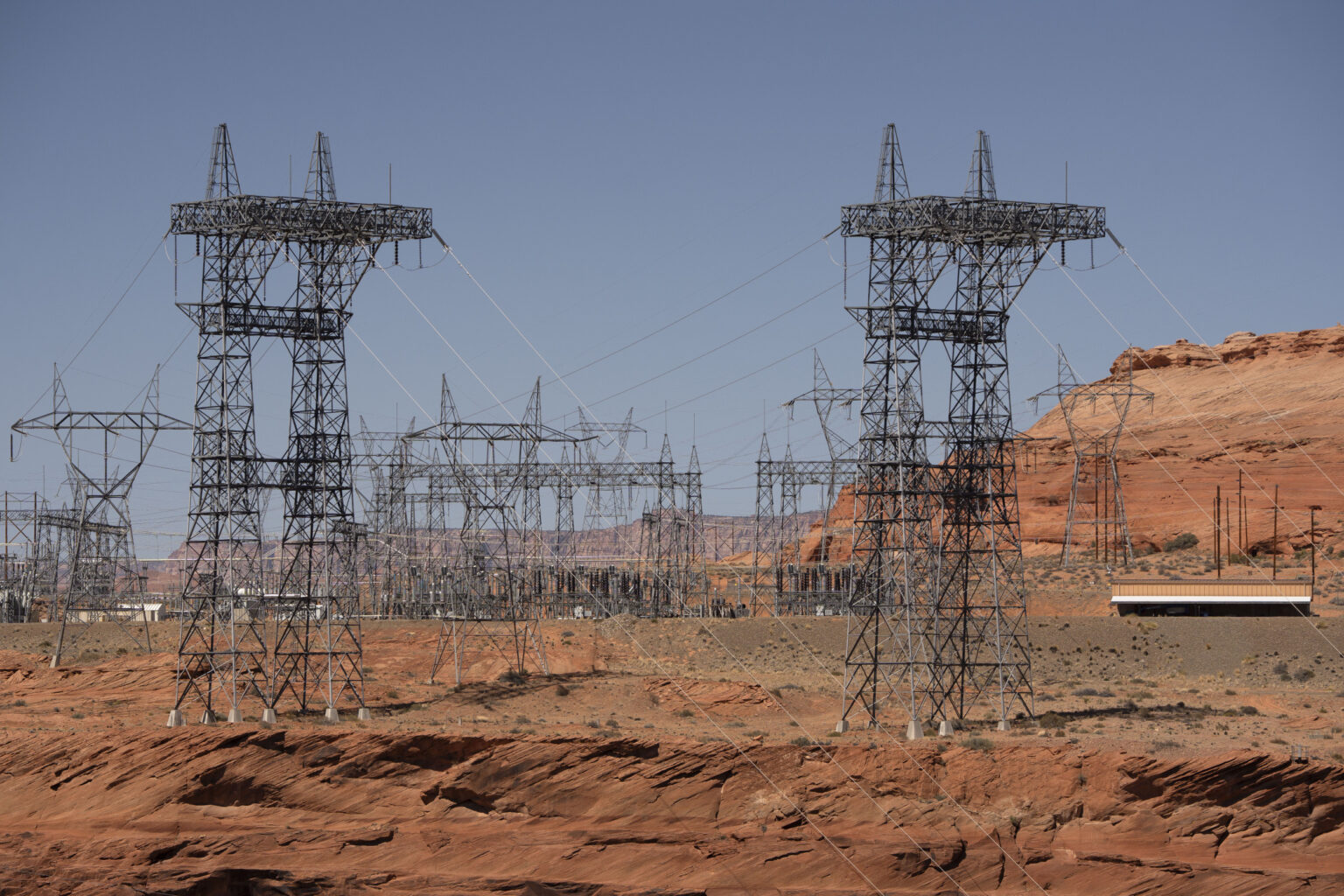
Transmission lines in Glen Canyon National Recreation Area on July 10, 2025, in Page, Arizona.
Transmission lines in Glen Canyon National Recreation Area on July 10, 2025, in Page, Arizona.
Rebecca Noble/Getty Images
A December report from the Department of Energy found that data centers consumed around 4 percent of total U.S. electricity in 2023, and predicted that this figure would rise to between 7 and 12 percent by 2028. More recent analysis by the International Energy Agency found that data centers are on track to account for nearly half the growth in energy demand by 2030, while BloombergNEF forecasts data-center energy demand doubling to 78 gigawatts by 2035.
America’s ability to meet this growing demand may also be stymied by recent political developments. Experts told Newsweek that clean energy grant programs revised or rescinded under the One Big Beautiful Bill Act (OBBBA) could jeopardize a significant number of renewables projects across the country. Energy Innovation, a California-based climate policy think tank, estimates that this will result in a 10 to 18 percent increase in energy bills for consumers by 2035.
In response to these concerns, the White House told Newsweek that the administration had taken “decisive steps to unleash American energy and drive oil and gas production to reduce the cost of energy,” and that the OBBBA would “turbocharge” domestic oil production.
What People Are Saying
Arbor researchers wrote in their report: “Unlike food, you can’t swap brands. You can’t skip a meal’s worth of electrons. Electricity is essential. And now, it’s expensive.”
“We’re heading toward a future where everything runs on electricity, and that’s not a bad thing. Electricity is magic—we should be able to use it,” they added. “But it only works if families can afford to plug in. If it’s affordable, and not wasteful.”
Andrew Meyer, founder of Arbor, told Newsweek: “Since 2004, household electricity prices have more than doubled. The AI boom is driving electricity demand through the roof, but households are the ones footing the bill.”
“We are entering the steepest electricity growth curve since World War II,” he added. “If we don’t modernize the grid now, power bills will be volatile, unpredictable, and unaffordable.”
Former U.S. Secretary of Energy Jennifer M. Granholm wrote in December that the U.S. had “seen an incredible investment in artificial intelligence and other breakthrough technologies over the last decade and a half, and this industrial renaissance has created greater demand on our domestic energy supply.”
Update 07/30/25, 10:52 a.m. ET: This article was updated with comment from Andrew Meyer.