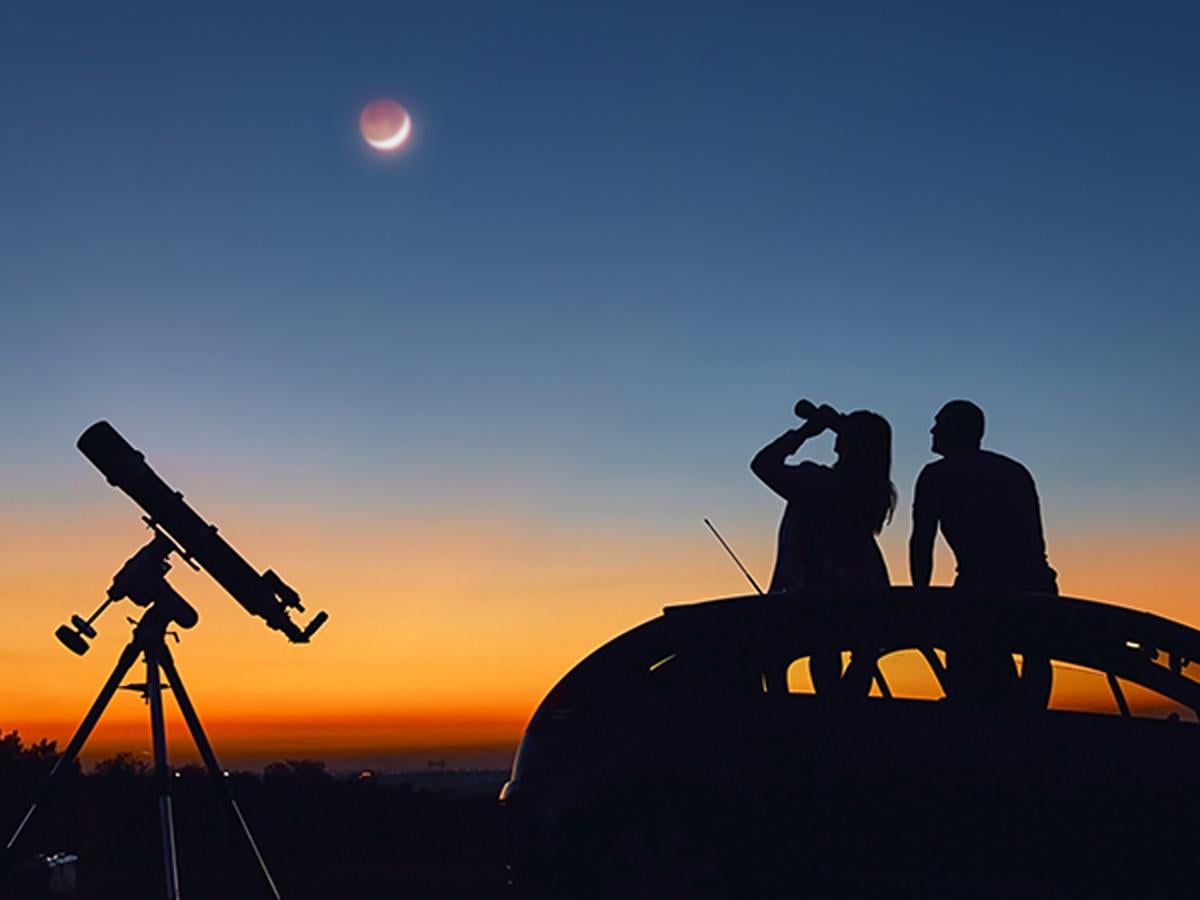
For example this photo from NASA: https://moon.nasa.gov/moon-observation/viewing-guide/
In photos of the moon, why can't I see stars in the background?
byu/Miserable-Dig-761 inspace

For example this photo from NASA: https://moon.nasa.gov/moon-observation/viewing-guide/
In photos of the moon, why can't I see stars in the background?
byu/Miserable-Dig-761 inspace
19 Comments
Reflection of the sunlight off of the regolith. Like a severe snow glare.
Stars are much much fainter
Likewise, it’s hard to see your phone in bright sun.
Because the moon is bright, so to get a properly exposed picture of the moon, the shutter has to be fairly fast, and that doesn’t allow time for the dim stars to be captured.
Ah, this one is easy.
You can’t see stars in photos of the Moon because the camera’s exposure is set for the Moon’s brightness, making the much dimmer stars too faint to appear.
Same reason you don’t see the stars in the daytime – exposure. The moon is quite bright compared to those stars so the camera needs to expose down so the moon isn’t blown out. That causes the stars to be too dim to appear.
It’s also possible that they edit the photos to remove background noise to just focus on the moon.
I recommend a book called Bad Astronomy.
If you know the first thing about astrophotography, you’ll know that a) stars are visible in many NASA images that don’t have bright background objects and b) the ones that aren’t are because you’re looking at the moon which is orders of magnitude brighter than anything else in the image (only the Earth/Sun are brighter), and your cameras will need to adjust – either the moon would look blindingly white if you tried to photograph the stars, or you can’t see the stars because you’ve had to dial-down the Moon.
Generally speaking, you do everything you can to have a long exposure when photographing starfield, which means not having any bright objects in shot. But when photographing the moon you want a very short exposure because it’s (comparatively) extremely bright.
This is a very common question. Objects illuminated by the sun but in the blackness of space are bright. Cameras (and eyes) adapt accordingly so as not to wash out or overexpose the objects. As a result, the stars – very dim by comparison – don’t show.
This is also normal in night photos taken on the Earth. For example, look at pictures of night sports brightly illuminated by floodlights. Wherever the sky is visible you won’t see stars, just black sky.
The moon is just too bright, and so you don’t see the stars.
In order to see the stars you’d either need to do a longer exposure and end up with a bright white blurry moon with stars in the background, or do two exposures, one for the moon and one for the stars, and combine them.
Two reasons.
The camera is adjusted for the Moons brightness, which is way more than stars. If you turned up the camera’s sensitivity to light, you’d see the stars, but so the details on the moon would get washed out and just look white.
If the moon is bright enough, though, when the light hits the atmosphere, some of it scatters to the side, so light that would normally miss you gets bounced back towards you. The end result is that the moon appears surrounded by a halo of light that can be brighter than the stars, making them impossible to see. It’s a similar effect to light pollution from cities
For the same reason as why you can’t see the stars during the day.
The moon is reflecting light from the sun, even if it’s a small amount. If it didn’t, night would be genuinely, pitch black. Blacker than closing your eyes in a dark room.
So you can imagine that the moon reflecting even a small amount of the suns light, illuminating hundreds of thousands of kilometres of the earth, is powerful enough to drown out the light of the much further stars, especially when looking directly at the moon.
same reason you can’t see a candle from 100 yards when it’s close to a car’s headlights.
the moon is so bright is washes out the stars.
Do you know anything about photography? How sensors and film work with exposure? I strongly suggest doing some reading and this will answer itself.
stars are very far away and relatively faint so in order to expose the stars in a photograph you have to take what’s called a long exposure, by the time you expose properly for stars, the moon would be so bright and over exposed the photo would be ruined which is why you never see the moon and stars in the same photo, not impossible but you won’t get the full experience due to exposure limitations
As other have said. Stars are really really really really far away and their light is very faint. On the other hand, the moon is the 2nd brightest object in the sky (after the sun)
Look for photography basics: Exposure. That will teach you all you need to know.
Viewing through a telescope, with the moon large enough in the view, your eyes will also not see the stars, because your eyes have limited dynamic range, like film or image sensors.
Think of how sound works. Imagine you are surrounded by a 500 piece brass band playing full blast, and a few people scattered about whispering. You won’t hear their whispers because the band is too loud.
Faint stars are whispers of light next to blaring spotlight of the moon.
Open your phone camera app, and go to pro mode. Point it at the moon at night. Move the exposure slider until you can see the details on the moon. observe if you can see stars. Then move the exposure slider the other way until you can see the stars. Observe the moon.
Because the moon is *radically* brighter than stars, and the [dynamic range](https://en.wikipedia.org/wiki/Dynamic_range) of human retinas is *dramatically* higher than almost all cameras.
If you [turned up your camera’s exposure until the moon was basically a white circle with way too much bloom, you’d be able to faintly see stars in the background](https://www.astronomy.com/wp-content/uploads/2024/09/Moon-occ-M45-Ernest-D.-Adams-1200×1000.jpg) – but this is a terrible configuration if you want a nice picture of the moon, and if you want pictures of stars it’s much easier to just wait for the moon to not be in the way.
Same reason you don’t see stars during the day on earth.
Use a telephoto lens. The aperture and shutterspeed are always with every moon phase f8 and 1/250s @ 100 ISO. Take a picture of the moon. Perfect. Now switch to a wide angle lens during nighttime and take a photo with the above parameters and you’ll see … nothing, but a faint dot which is the moon. Now wait until noon and take another picture with the above parameters and you got a normal daylight photo. The starlight is extremely faint, but every part of the moon is as bright as a grey cardboard at noon on earth. So for stars you’ll need a large diameter lens for collecting that faint light and additionally a looong exposure time. We are talking here of single photons they travel earthwards. And you’ll need about 10-15 photons for the faintest reaction of your camera sensor between totally black and 1 step above black. So when a distant galaxy sends 10 photons per minute, youÄll have to collect them for several minutes or even hours for a picture.