
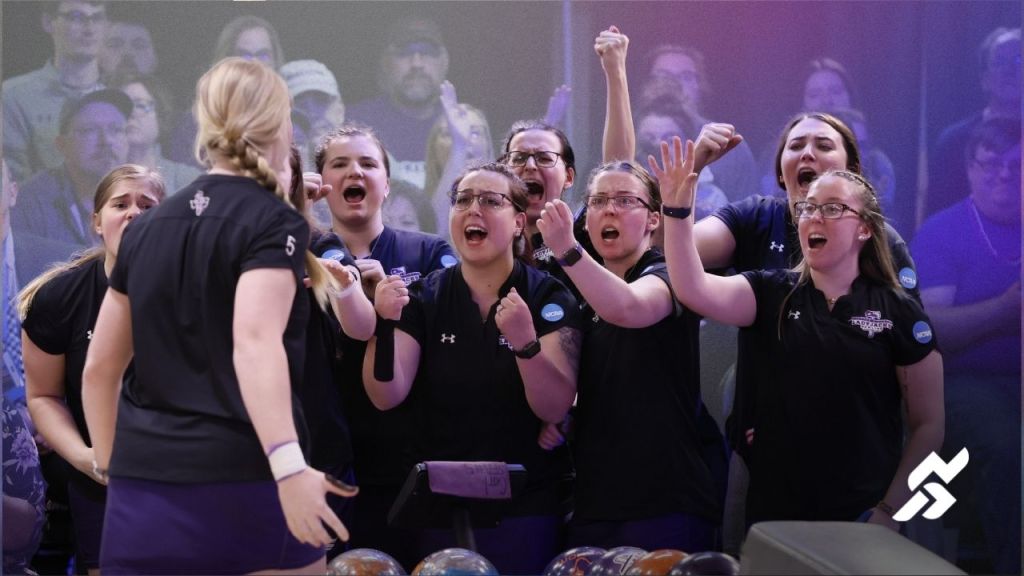
A federal judge has issued a preliminary injunction against Stephen F. Austin State University, temporarily preventing the school from eliminating its women’s beach volleyball, bowling and golf teams while a Title IX lawsuit filed by six female athletes proceeds.
The ruling, delivered Friday by U.S. District Judge Michael Truncale, came in response to an emergency motion submitted by the plaintiffs.
An SFA spokesperson told Sportico Saturday that the university plans to immediately file an appeal with the Fifth Circuit Court of Appeals.
“We remain confident in the legality and rationale behind our decision to reduce the number of sports we sponsor,” the spokesperson said in a statement. “The text of Title IX states that institutions may not discriminate on the basis of sex, and there was no evidence presented that SFA’s decision was based on sex. The evidence was overwhelming that the decision was based on economics.”
Attorney Arthur Bryant, co-counsel for the plaintiffs, hailed the injunction as a “huge victory for the women athletes at SFA and everyone who cares about gender equity.”
Bryant added: “SFA made a budget decision to eliminate three women’s teams and violate Title IX to save money. That’s sex discrimination, plain and simple, and against the law. The judge quite properly would not abide.”
Trancale’s ruling, though not definitive, may still serve as a warning to other universities considering cuts to women’s sports while opting into the House v. NCAA settlement.
In his order, Truncale dismissed what may have been the university’s most audacious legal defense: that the recent Supreme Court ruling in Loper Bright Enterprises v. Raimondo rendered moot the Department of Education’s long-standing three-part Title IX compliance test, which is overseen by the Office for Civil Rights (OCR).
Truncale, a Trump appointee, countered that argument by citing a different Supreme Court case, Kisor v. Wilkie, which, as he summarized, affirms that federal agencies retain “‘leeway’ to interpret [their] own regulatory language if ‘genuinely ambiguous’” and are permitted to “fill out the regulatory scheme Congress has placed under its supervision.”
According to Truncale, the Department of Education’s interpretation of its Title IX regulations remains entitled to judicial deference, so long as the court independently finds the interpretation reasonable and not in conflict with congressional intent.
He also pointed to Fifth Circuit rulings to support his analysis, concluding that it is consistent with Loper Bright’s emphasis on separation of powers and the judiciary’s defined role in interpreting the law. “To interject the Court’s own reading of the Executive Branch’s interpretations of its own regulations would exceed its limited role,” Truncale wrote.
Applying the OCR’s three-part test, Truncale found the plaintiffs likely to succeed on the merits of their claims. Their lawsuit asserts that the university fails to meet all three requirements: that opportunities for female athletes are not “substantially proportionate” to their enrollment; that the school lacks a history and continuing practice of expanding opportunities for the underrepresented sex; and that it has not “effectively accommodated” the interests and abilities of female athletes.
The university contended that including its club competitive cheer and dance teams in its count would bring it into compliance with Title IX. However, the judge noted those programs were not considered when the decision was made to eliminate the varsity teams. He also cited a supplemental report by plaintiffs’ expert Donna Lopiano, which concluded that even including cheer and dance, the university still failed to provide women with athletic opportunities proportional to their representation in the student body.
Truncale noted that SFA declined to address its compliance with the second, “continuing practice” prong of the test and therefore “conceded its failure to meet” it.
The university did attempt to argue that it satisfied the third prong—having “effectively accommodated” the interests of female athletes—by asserting that bowling and beach volleyball generated minimal interest among college athletes, particularly in Texas. For instance, the school noted that only 38 NCAA Division I schools sponsor bowling, and just 12 D-I beach volleyball programs exist in its region.
Truncale was not persuaded.
“None of this evidence to rebut the presumption negates the interest of the SFA student body or admitted students or that the university attempted to assess their students or prospective students about the viability of these programs,” he wrote.
In granting the temporary injunction, Truncale concluded that allowing the university to proceed with the cuts would cause “irreparable harm” to female athletes while the lawsuit remains unresolved. SFA countered that the harm was “both speculative and self-inflicted,” arguing the plaintiffs filed their lawsuit more than a month after the cuts were announced on May 22.
The judge dismissed that claim as “callous,” pointing out that the lawsuit was filed on June 30—just three days after settlement negotiations collapsed.
By that point, Truncale wrote, “the athletes were forced to make an impossible decision between remaining at SFA with no opportunity to play their sport or to transfer and potentially prolong their academic careers and not receive the same financial compensation.”
In its statement, SFA noted that prior to the cuts, it sponsored more varsity programs than any other D-I universities in Texas aside from the University of Texas and Texas A&M.
One day before Judge Truncale’s order, the University of Texas at Dallas—currently transitioning from Division III to Division II—announced it had reversed a decision made earlier in the week to eliminate its men’s and women’s track & field and cross country programs. The university attributed its reversal to feedback from “our community” and the leadership of the UT System, which SFA joined two years ago.
(This story has been updated with additional information in the last paragraph.)