
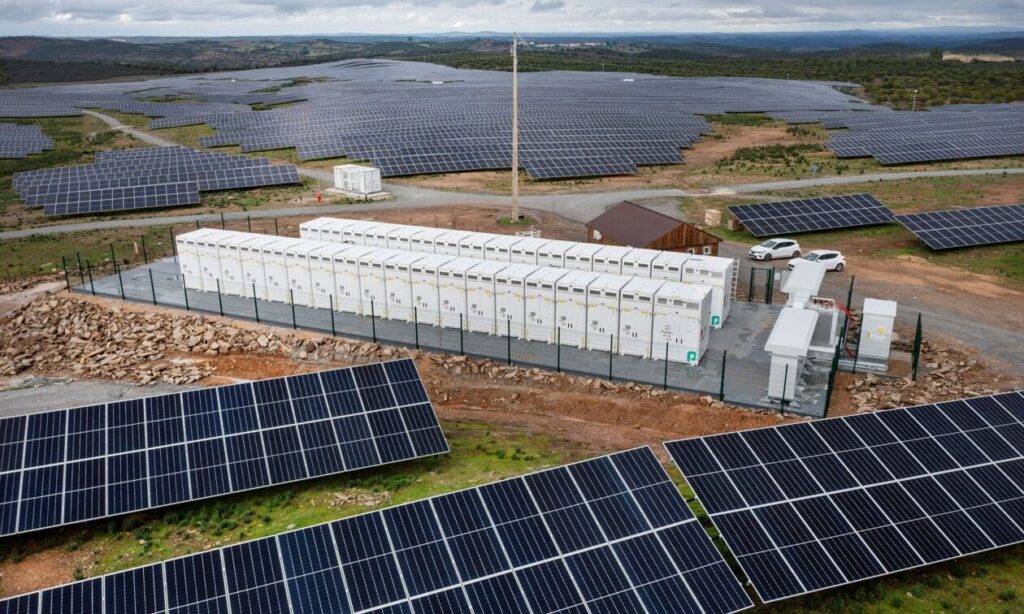
In Spain, Galp will install a 14MW/28 MWh BESS at a solar PV plant in Manzanares, in the Castilla-La Mancha region.
The operation and optimization of the BESS projects will be directed by Galp’s Control Center, a dispatch centre approved by REN and REE, in Portugal and Spain, respectively. The centre centralises real-time management of photovoltaic parks, energy storage units and industrial consumption, maximising the value of the energy produced, Galp said.
The BESS technology is being provided by China-based firm Sungrow, specifically its PowerTitan 2.0 solution. The projects will include grid-forming inverters. Galp said this means the projects will be able to participate in various energy markets and system services, including fast frequency reserve, voltage regulation and provide synthetic inertia services. Galp is already providing mFRR and aFRR ancillary services and voltage regulation, presumably with its 5MW/20MWh BESS.
The Spanish and Portuguese energy storage markets are set to grow as more renewables come online, in initially supported by the countries’ respective capex schemes. Spain has a €700 million programme for energy storage grants, officially launched earlier this year.
But the blackout which affected virtually the whole Iberian region earlier this year has also put the spotlight on the potential of BESS, particularly grid-forming BESS, to support the grid. For its part, Portugal this past week announced plans to invest €400 million to improve its grid management capabilities and up its BESS capacity, in addition to the €100 million scheme. Similar moves have been discussed, but not finalised, in Spain.
A substantial part of the business case for BESS in the region will be hybridisation with solar PV. To that end, the region’s first hybrid solar-and-storage power purchase agreement (PPA), announced by Zelestra and EDP this past week, is a positive development and possibly a sign of things to come.