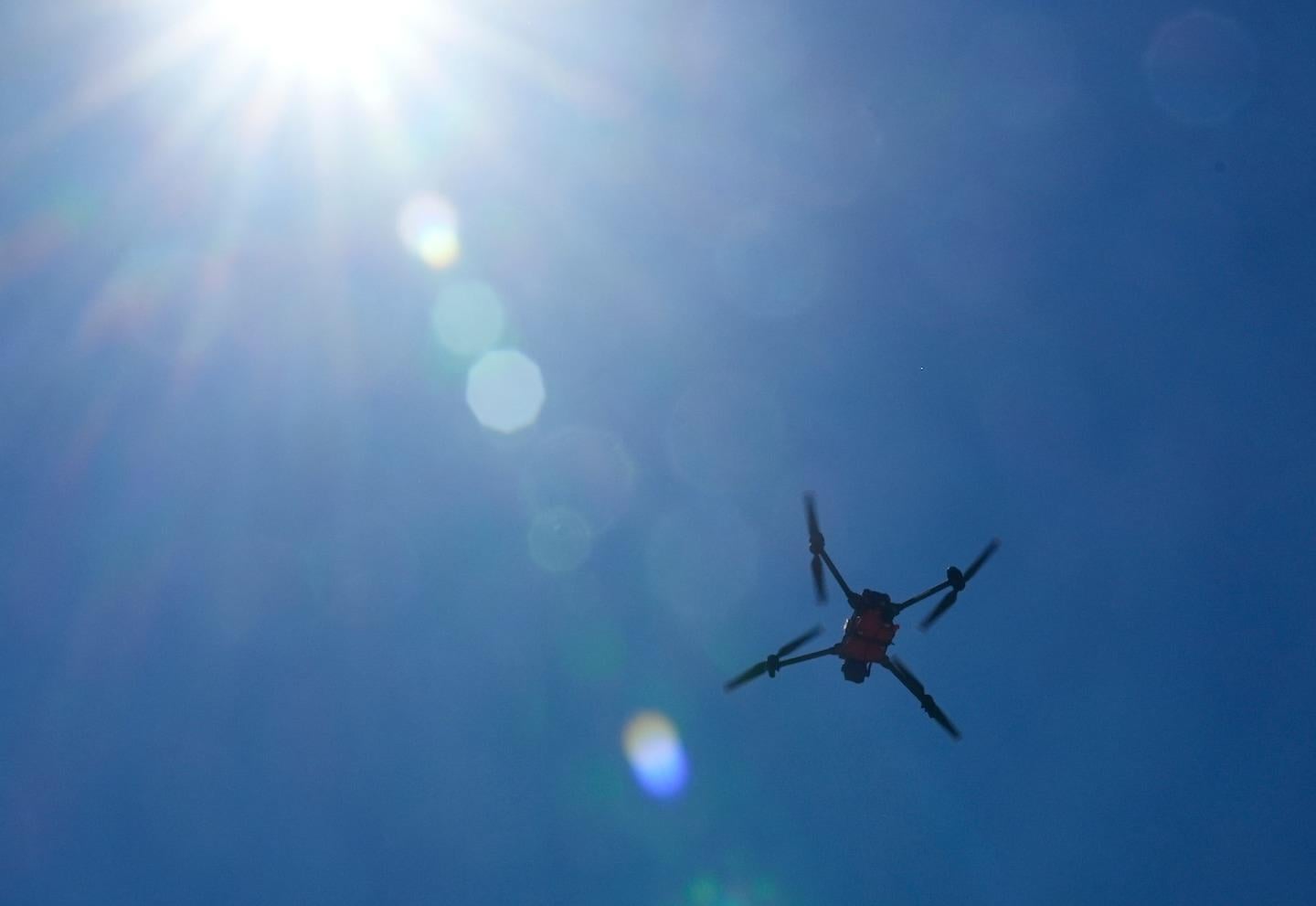
‘Drones as First Responders’ programs sweep city police departments
https://www.washingtonpost.com/nation/2025/08/04/drones-first-responders-police-departments/

‘Drones as First Responders’ programs sweep city police departments
https://www.washingtonpost.com/nation/2025/08/04/drones-first-responders-police-departments/
3 Comments
From the article
The technology behind that — “Drone as First Responder,” or DFR — has skyrocketed in popularity among police departments nationwide since the Federal Aviation Administration streamlined the process for agencies to adopt the program this spring. While it could previously take up to a year to get approval, it now often takes just days.
Law enforcement and drone industry leaders praise the technology as lifesaving, with the potential to help authorities in situations ranging from missing persons cases to active shooter incidents. But critics worry the programs encourage mass surveillance and violate the public’s privacy.
“When you have a camera in the sky that can see things that police officers can’t normally see, that offers a huge potential for privacy invasion,” said Beryl Lipton, a senior researcher with the Electronic Frontier Foundation, a digital rights group.
Many police abolitionists have been advocating for decoupling traffic stops and courtesy calls from armed officers who can become armed *thugs* at a moment’s notice. Given how many black men and dogs have fallen victim to trigger-happy officers in the past, it’s a reasonable suggestion.
The counterargument, usually, is that sending people to pull over potential gangbangers and drug dealers with nothing more than a clipboard and the implicit threat of a felony for obstruction is too dangerous for anyone to sign up for. Said criminals are hardly known for long term risk-reward thinking. However overstated that threat may or may not be, it’s a valid criticism in terms of risk to officers, even if it would reduce officer-intitiated violence by a greater amount.
I don’t know if drones will split the difference, though, because they have an even *lower* threshold for the perceived cost of ignoring, harassing, or destroying them – especially since you can probably do it by throwing a blanket, fishing net, or Big Gulp at them.
Whatever penalty the cops would *like* to assign to somebody who downs a police drone, it’s hard to argue before a judge and jury that property damage should carry the same or higher penalty as murder, and that would embolden criminals.
But the privacy concerns are much more prudent. Officers already abuse their right to say they “had a hunch”. Throw digitally alterable sensors into the mix under the guise of “objective data” and it could get even messier. That’s before you even get into the innacuracy of things like facial recognition having a higher failure rate for dark-skinned people.
For fire/medical/traffic first response though? 100%. Being able to talk someone through sub-critical fender benders and sprains rather than deploying a highway-stopping emergency vehicle as a first measure is an excellent idea.
I don’t trust American police (or indeed any police outside of maybe some isolated small towns in places like Costa Rica and New Zealand) with this sort of technology even if it’s clearly an improvement over the status quo. It’d be a lot better if it was administered by fire or EMS departments in terms of building trust with the community and avoiding Robocop/Terminator comparisons.