

Peter Dingli of San Diego, California writes:
In responding to the piece ‘Malta Women’s Lobby calls for urgent reform of “inhumane” abortion law’ (August 1), allow me to add my perspective on the subject.
Malta’s continued criminalisation of abortion is a shameful relic of a bygone era, where religious dogma and outdated superstition dictate public policy.
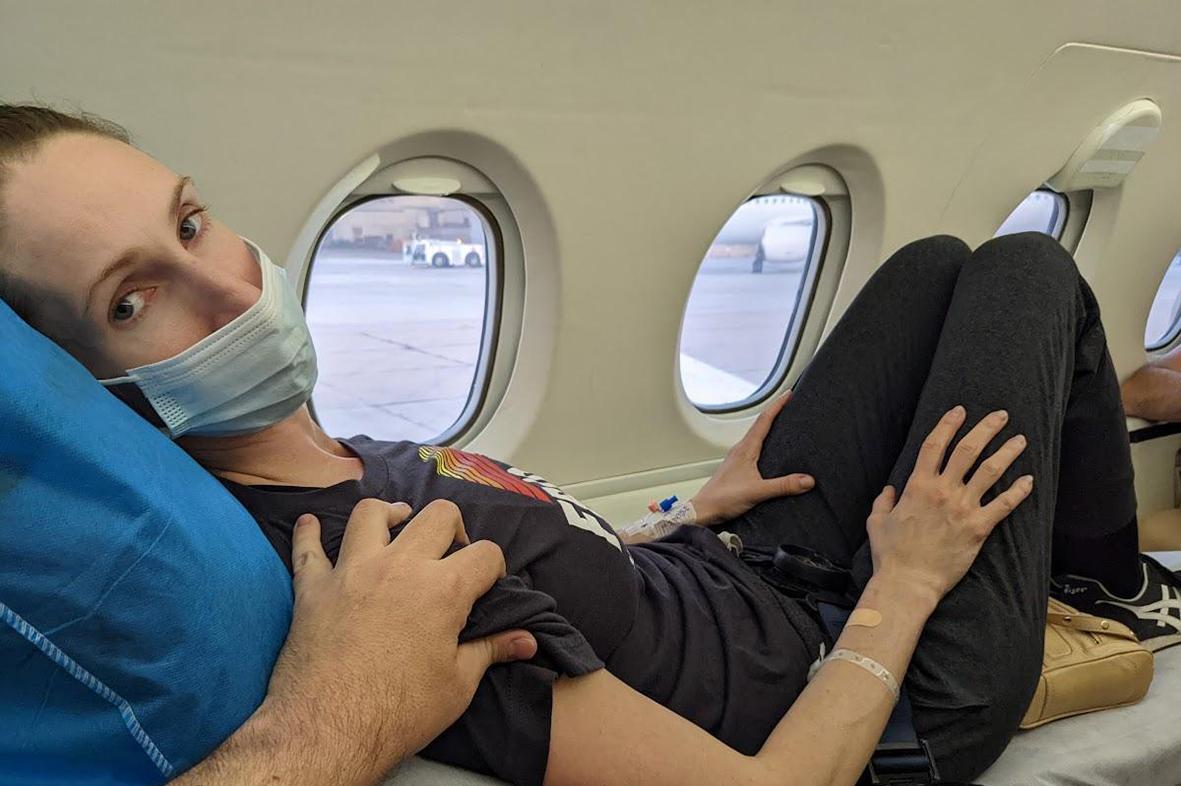 Andrea Prudente was airlifted from Malta to Spain after being denied a termination in July 2022. Photo: Jay Weeldreyer
As the only EU member state with such a restrictive law, Malta is an international outlier, consistently prioritising theological doctrine over the health and well-being of its citizens.
The recent prosecution and sentencing of a woman who sought medical help after a miscarriage is a stark reminder of the “terrifying consequences” of this medieval system, as the Malta Women’s Lobby so rightly stated.
This is not a matter of morality; it is a matter of fundamental human rights and public health. For too long, the fear of “kowtowing to religious superstition” has stifled progress, leading to a situation where women are forced to choose between life-saving medical care and the threat of imprisonment. This is the very definition of injustice. The fact that this legal persecution is still happening in a country that has recently liberalised other laws, such as divorce and same-sex marriage, is a testament to the powerful, yet, regressive, influence of religious institutions.
Prominent activists and organisations, such as the Voice for Choice coalition, have been at the forefront of this battle, tirelessly advocating for the decriminalisation of abortion and its recognition as essential healthcare. The case of Andrea Prudente, an American tourist who had to be airlifted out of Malta to receive an abortion after a miscarriage, brought international attention to the country’s draconian laws and forced a limited, though, ultimately, insufficient, legal amendment.
Lara Dimitrijevic, the founder of the Women’s Rights Foundation, and Isabel Stabile, from Doctors for Choice, have also been instrumental in pushing for reform, highlighting how the current laws violate the fundamental human rights of Maltese women.
Malta cannot pretend to be a modern European nation while simultaneously clinging to a legal framework that treats women as second-class citizens and subjects them to persecution for seeking basic medical care.
The time for half-measures and timid reforms is over. It is time for Malta to rise to a higher standard of care, compassion and justice by fully decriminalising abortion and putting an end to this dangerous and inhumane system.
British heritage
Alan Cooke of Gżira writes:
Once again (‘Valletta’s memorial landscape’, July 30), Charles Xuereb laments the number of colonial-era monuments in Malta.
Yet, only recently he led a successful attempt to prevent the ‘redevelopment’ of the remaining parts of the barracks at Fort Cambridge, a fine example of British colonial architecture which stands only a few metres from his home in Sliema.
Situated in an area where several streets are named after long-forgotten colonial figures, how appropriate it would be if it could be turned into a repository for the ‘colonial relics’ he so dislikes, with the Queen-Empress Victoria enthroned in the centre, gazing towards the sea – Malta’s very own ‘British Museum’.
But, of course, there would then follow years of argument about who should replace her in Republic Square…