
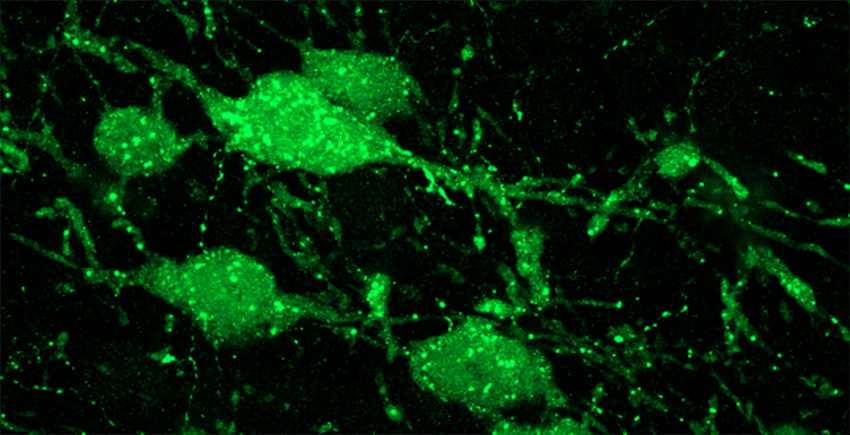
For most of human history, evolution was slow—etched into our DNA across countless generations. But now, we’re beginning to build tools that can listen to our biology in real time and deliver tiny, perfectly timed nudges toward better habits and healthier futures.
Recent research shows how AI is being used to decode epigenetic patterns from massive datasets—pinpointing how lifestyle and environment affect our biology at a molecular level. Other scientists are creating “AI-Driven Digital Organisms”—foundation models capable of simulating and programming biological processes across scales, from cells to entire organisms.
Imagine if our tech could not just predict our future states, but gently synchronize us to them—like evolution with a fast-forward button. Some of us are experimenting in that direction now: systems that align AI, physiology, and behavior to guide your next “you.” Not through brute strength—but through flow.
What do you think this kind of accelerated personal evolution could unlock… or risk?
https://hms.harvard.edu/news/meet-brain-cells-may-help-us-adapt-changes-day-length
7 Comments
For those asking about the science side of this vision, here are some relevant reads:
– AI decoding epigenetic aging patterns
– AI-Driven Digital Organisms (arxiv preprint)
– Harvard on circadian rhythms & adaptation
Makes me wonder: if we can already measure biological time, how long before we can steer it?
No it is not a thing. Just more AI, longevity, shiny future BS meant to distract us from reality.
Maybe we are AI driven digital organisms just simulating for someone else.
Roulette. That’s what it is. I wouldn’t fuck with that stuff. Mess with your kids dna. That sounds fun.
Sounds like the plot from Firefly. What could possibly go wrong.
I’ve read the headline and got so hopeful about returning to monke. Why you gotta do me like this?
We are past the “if” and entering the “how fast and how safely.” The same tools that can compress decades of natural selection into weeks can also compress decades of error into weeks. The decisive variable will not be the algorithms; it will be the social and regulatory firmware we wrap around them.